Explore Fukuoka's Art Scene with Avi: Four Places to Discover Art Today
- Date
Share


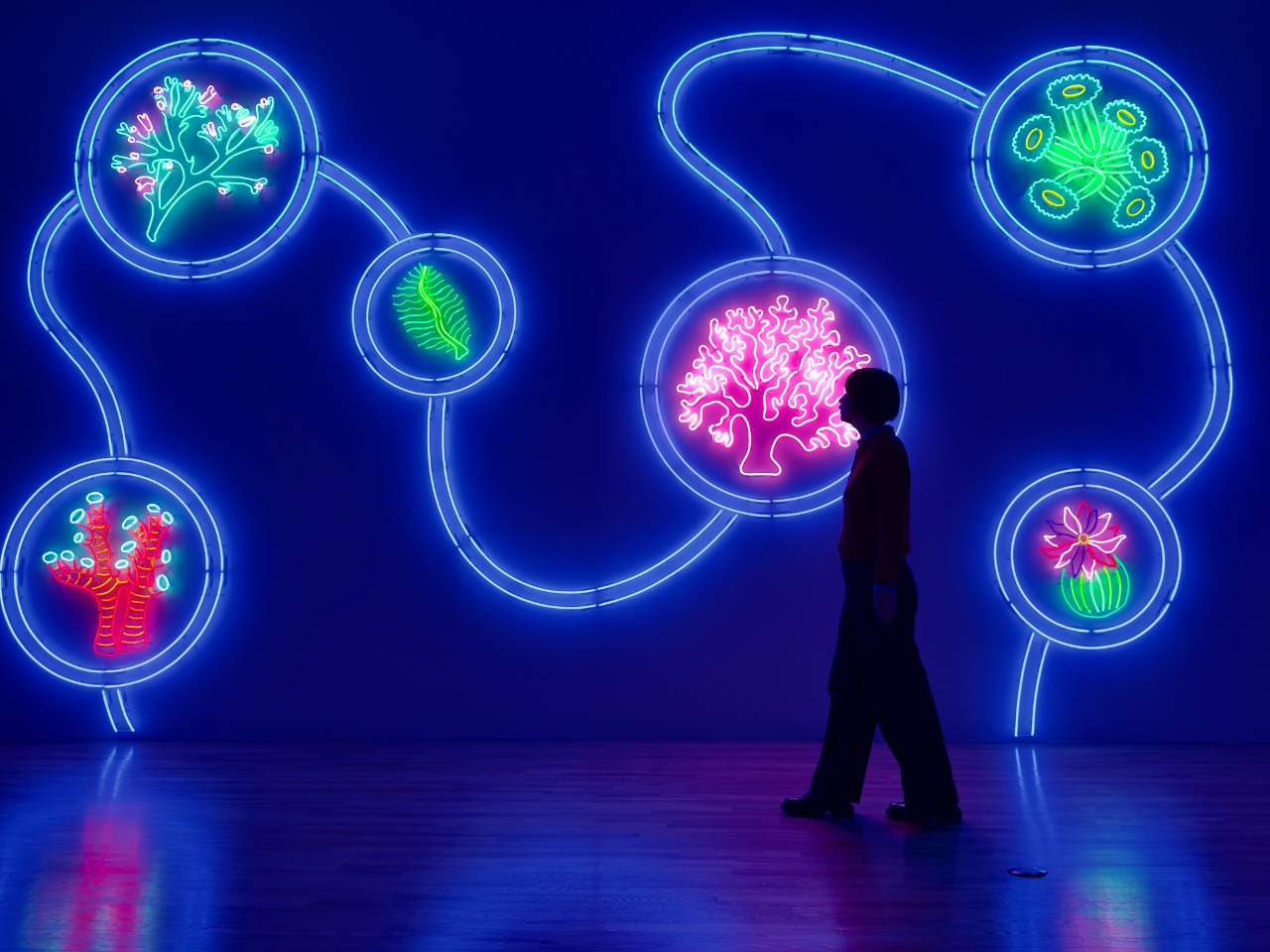
Take your time exploring artworks at a museum. Discover artists you've never encountered before in small galleries around the city. Visit the places where artists create their work. Or enjoy live music at a museum on a Friday evening. Fukuoka offers a wide variety of ways to experience art.
Inspired by Fukuoka Art Next Week (FaN Week), which was held from 19 September to 12 October 2026, we joined avi, who shares the appeal of art through online videos, to explore four art destinations across the city: Fukuoka Art Museum, Artas Gallery, Artist Cafe Fukuoka and Fukuoka Asian Art Museum. Together, we discovered the many ways art can be enjoyed in Fukuoka today.
Contents of this article
What Is FaN Week?
01|Fukuoka Art Museum
02|Artas Gallery
03|Artist Cafe Fukuoka
04|Fukuoka Asian Art Museum
What Is FaN Week?
Fukuoka Art Next Week (FaN Week) is an event held across Fukuoka City where visitors can enjoy art in a variety of ways. Throughout the event period, exhibitions and other activities take place at museums, galleries and various other locations across the city, providing opportunities to encounter art while exploring Fukuoka.
Joining Us on This Tour Is Avi, Creator of Audible Museum
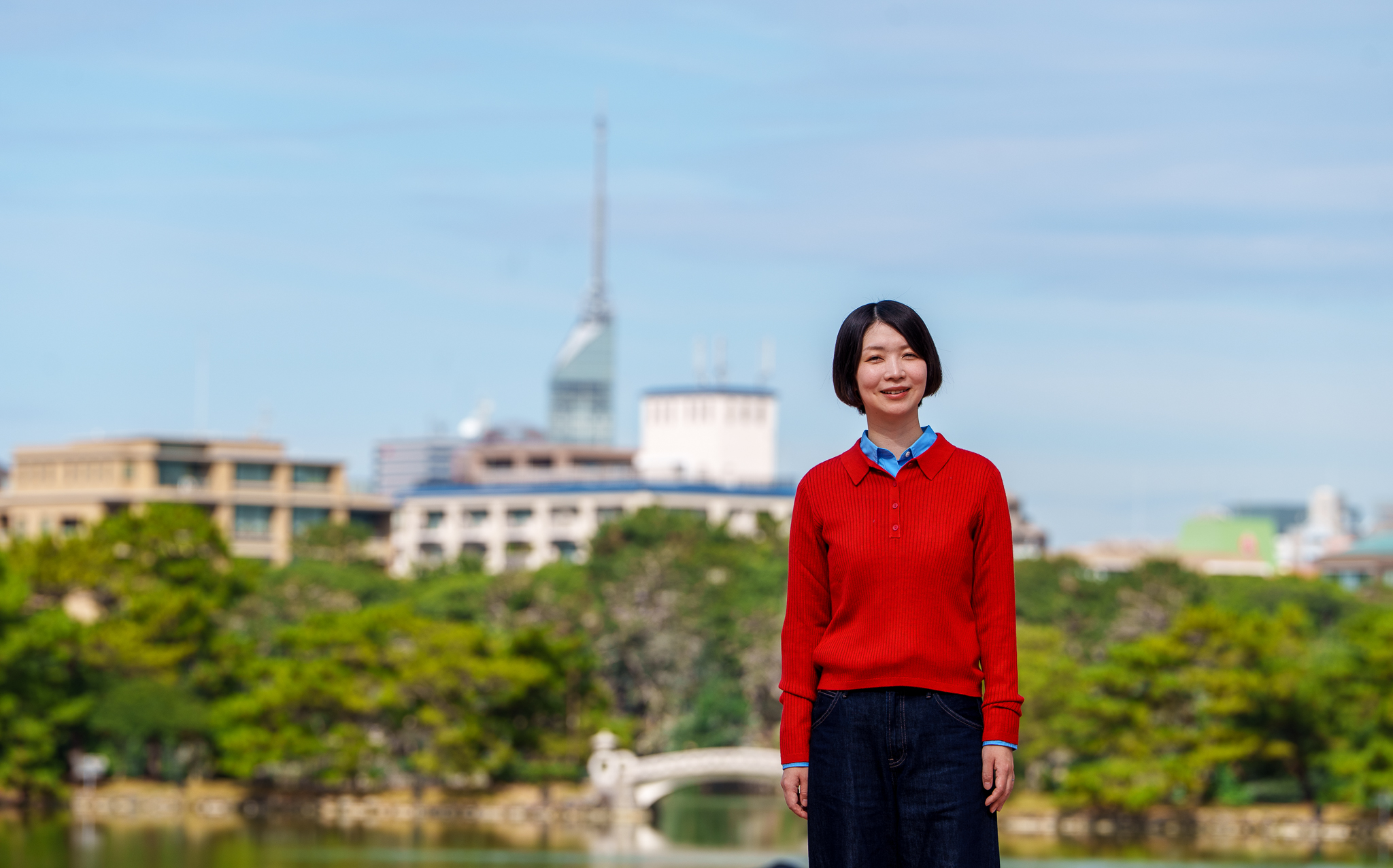
Born in Osaka Prefecture in 1992, she primarily shares the appeal of art via video platforms under the theme: "Let's Talk About Art That Moves The Soul."
She studied art education at university and obtained a teaching qualification. Through her engaging presentations, clear explanations, and distinctive calm voice, she introduces art to audiences who may not be familiar with it. She currently has more than 500,000 followers on social media platforms.
Instagram
01|Fukuoka Art Museum
An Art Museum Open to the City and the Park
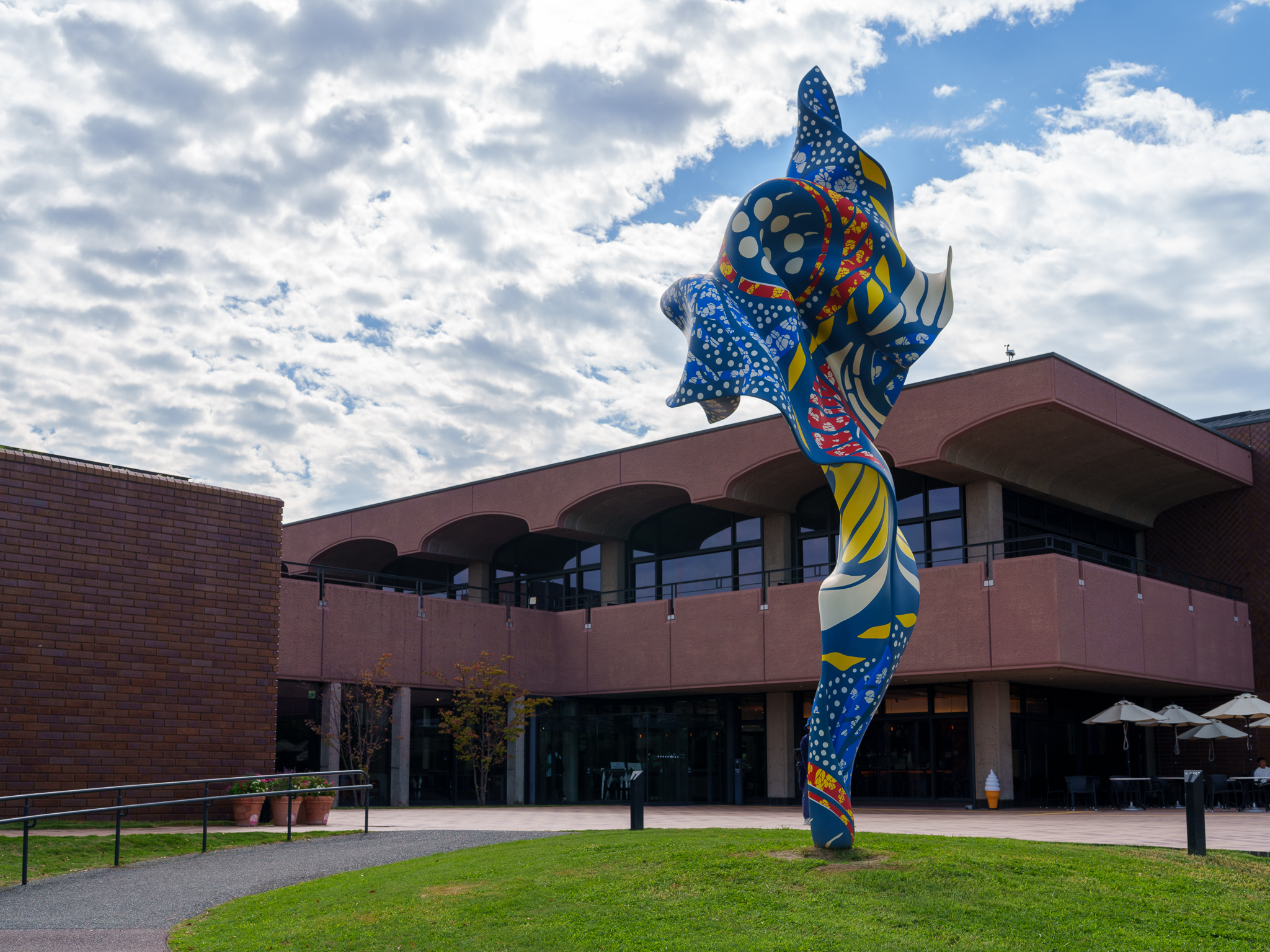
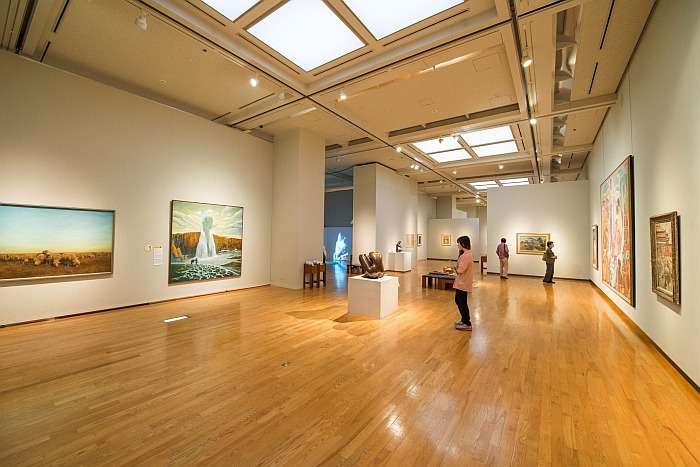
Our first stop was the Fukuoka City Art Museum, which is situated next to Ohori Park.
Visitors are greeted in front of the museum by Wind Sculpture (SG) II by Yinka Shonibare CBE.
This large-scale sculpture, standing at seven metres tall, depicts a piece of fabric undulating in intricate waves as it catches the wind. Other works, such as Yayoi Kusama’s Pumpkin, are dotted throughout the outdoor grounds.
The ability to enjoy art while strolling through the park is a unique feature of this museum.
Yamauchi Terue: The Shore of Living and Dying – An Exhibition Exploring the Sea and Human Life
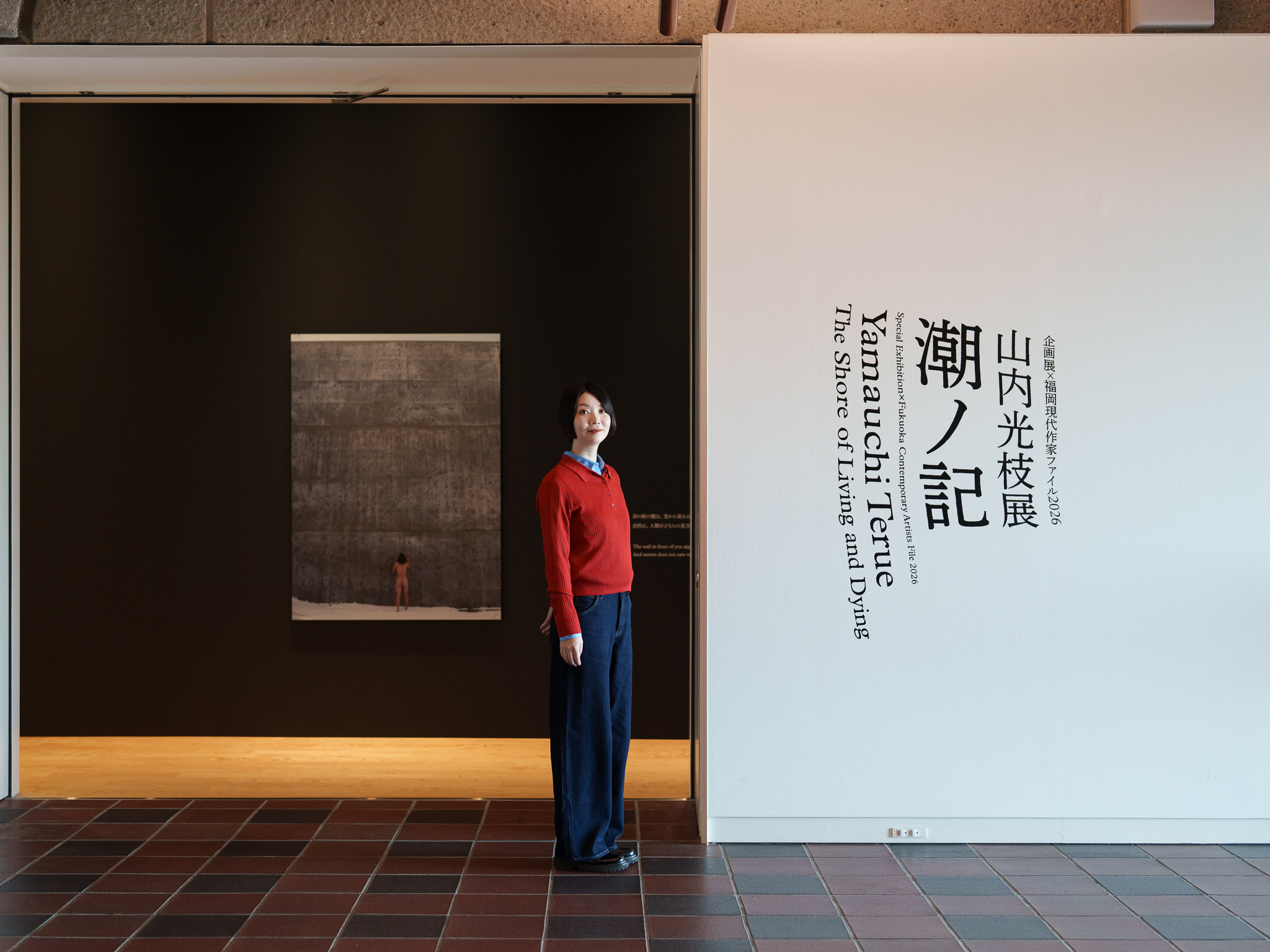
The special exhibition we visited with avi was Yamauchi Terue: The Shore of Living and Dying, held in the Modern and Contemporary Art Gallery on the second floor, as part of the Fukuoka Contemporary Artists File 2026 series.
Yamauchi Terue, an artist based in Fukuoka, has created works focusing on the lives and culture of people living in harmony with the sea.
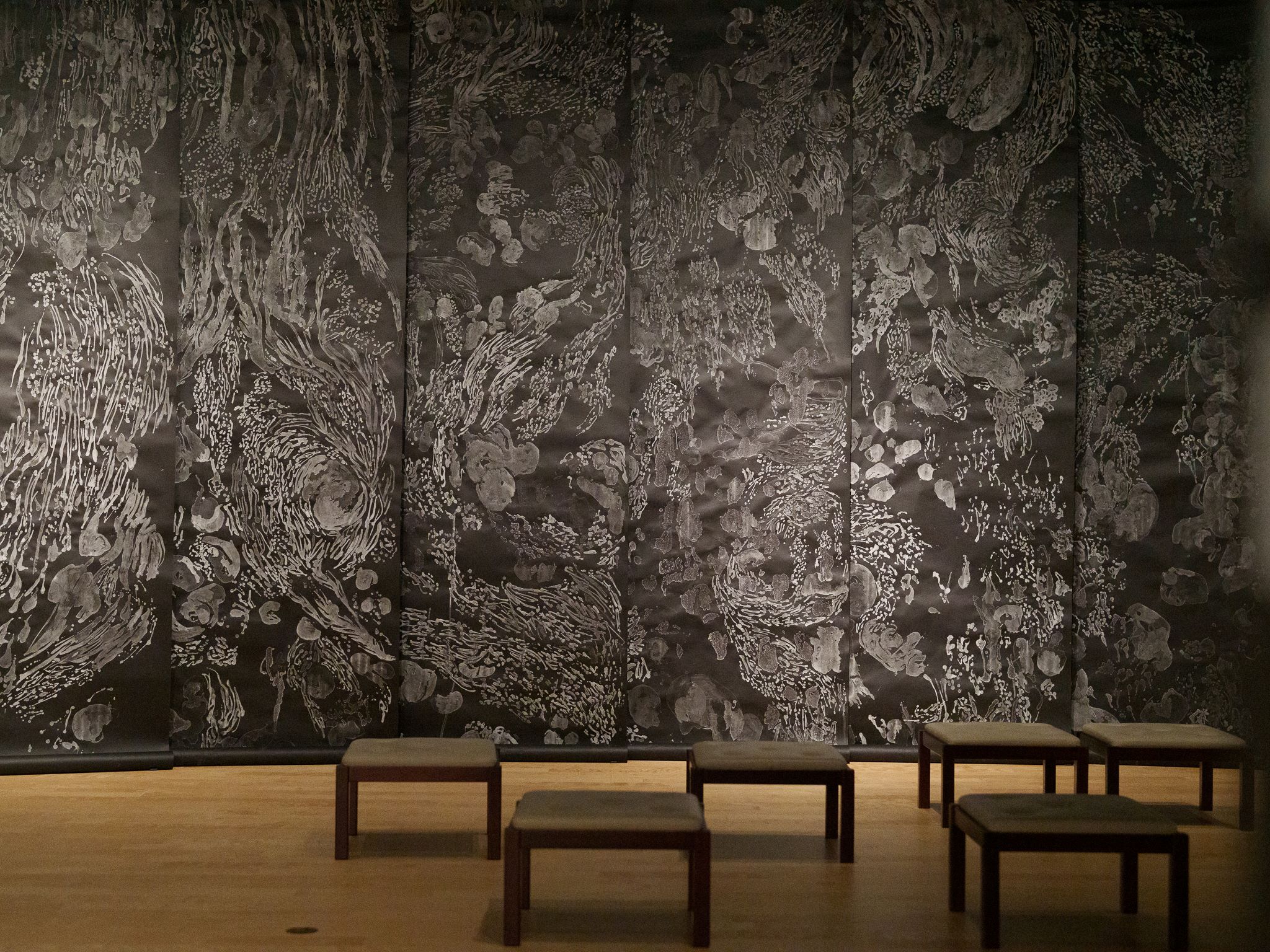
Upon entering the exhibition space, the Tide Drawings—which appear to float and spread amidst the subdued lighting—immediately catch our attention.
In these works, Yamauchi has depicted the seascapes she witnessed while diving in various locations, using salt and seawater from those regions. Standing before the drawings that cover the entire wall, we felt as though we were enveloped by the seascape. Videos are also regularly screened in the gallery, and as the sounds and sights of the sea overlap with the tranquil space of the drawings, a sense of realism emerges, as if you were actually submerged in the ocean.
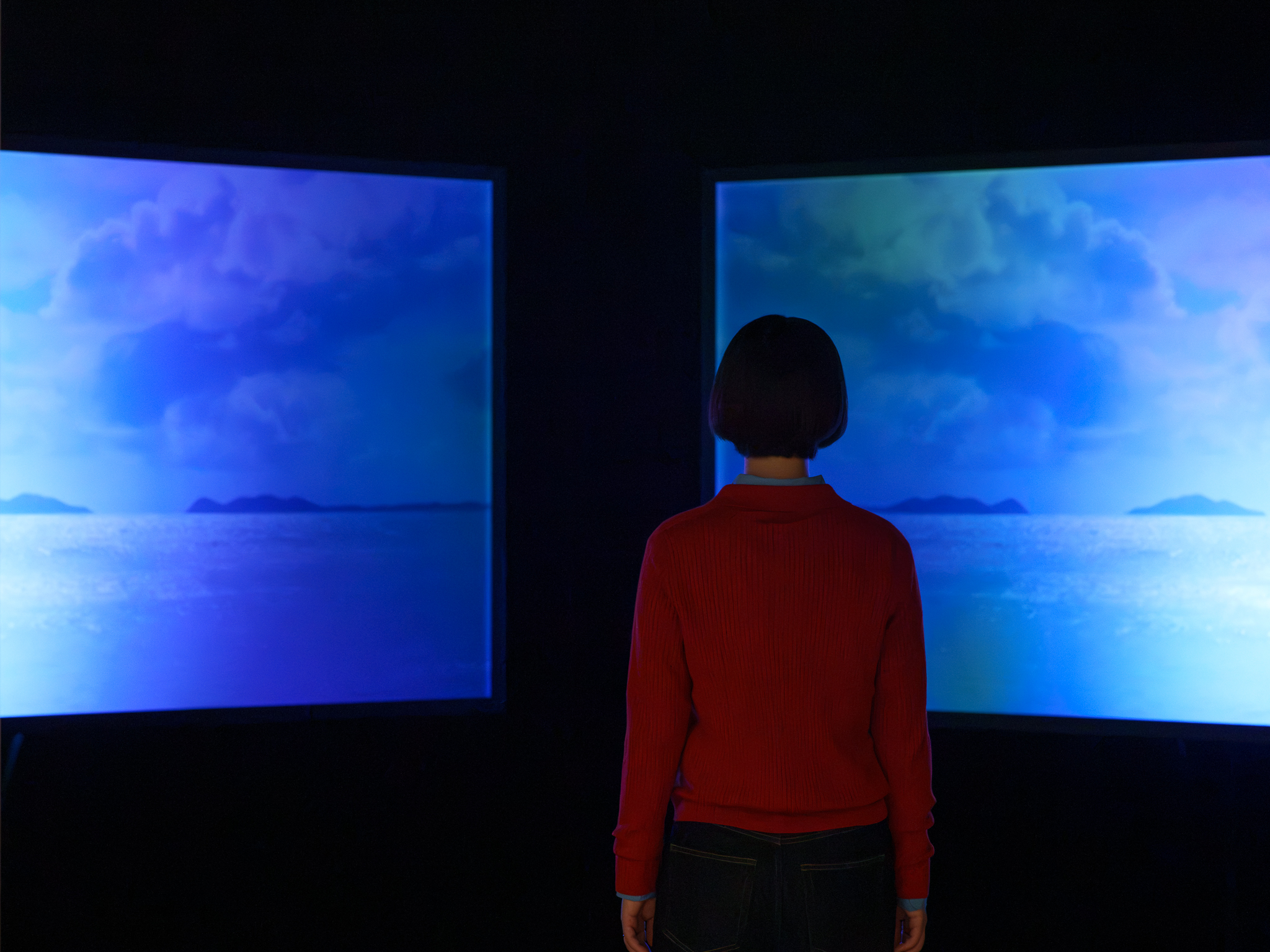
In Tides 2012–2021, the artist captures images of people practising free-diving to fish in the Kuroshio and Tsushima Warm Current regions, which stretch from Southeast Asia to East Asia. Their breathing is projected onto two adjacent screens. This piece establishes a connection between individuals who live with the sea in different regions by showcasing the rhythm of their breathing.
Yamauchi Terue: The Shore of Living and Dying explores the daily lives of people living with the sea and the memories etched into the land through various forms of expression, including drawings and videos. As you move through the exhibition, you are invited to reflect on the lives, histories and memories of people connected by the sea.
Special Exhibition × Contemporary Artists File 2026
Yamauchi Terue: The Shore of Living and Dying
Dates: 8 September (Tue.) – 20 December (Sun.) 2026
Hours: 9:30 a.m. – 5:30 p.m.
Fridays and Saturdays in September and October: 9:30 a.m. – 8:00 p.m.
*Last admission is 30 minutes before closing time.
Closed: Mondays
If Monday is a public holiday or substitute holiday, the museum will be closed the following weekday.
The museum will be open on 12 October (Mon., Public Holiday), 19 October (Mon.) and 23 November (Mon., Public Holiday), and closed on 6 October (Tue.), 13 October (Tue.), 20 October (Tue.), 21 October (Wed.) and 24 November (Tue.).
Please check the official website for information on room closures, temporary closures due to exhibition changes and special opening days.
Venue: 2nd Floor, Modern and Contemporary Art Gallery B
Admission: Adults: 200 yen (150 yen); High School and University Students: 150 yen (100 yen); Junior High School Students and Under: free
*Figures in brackets indicate group rates for parties of 20 or more.
It's Not Just About the Artworks. Take a Look at the Architecture, Too!
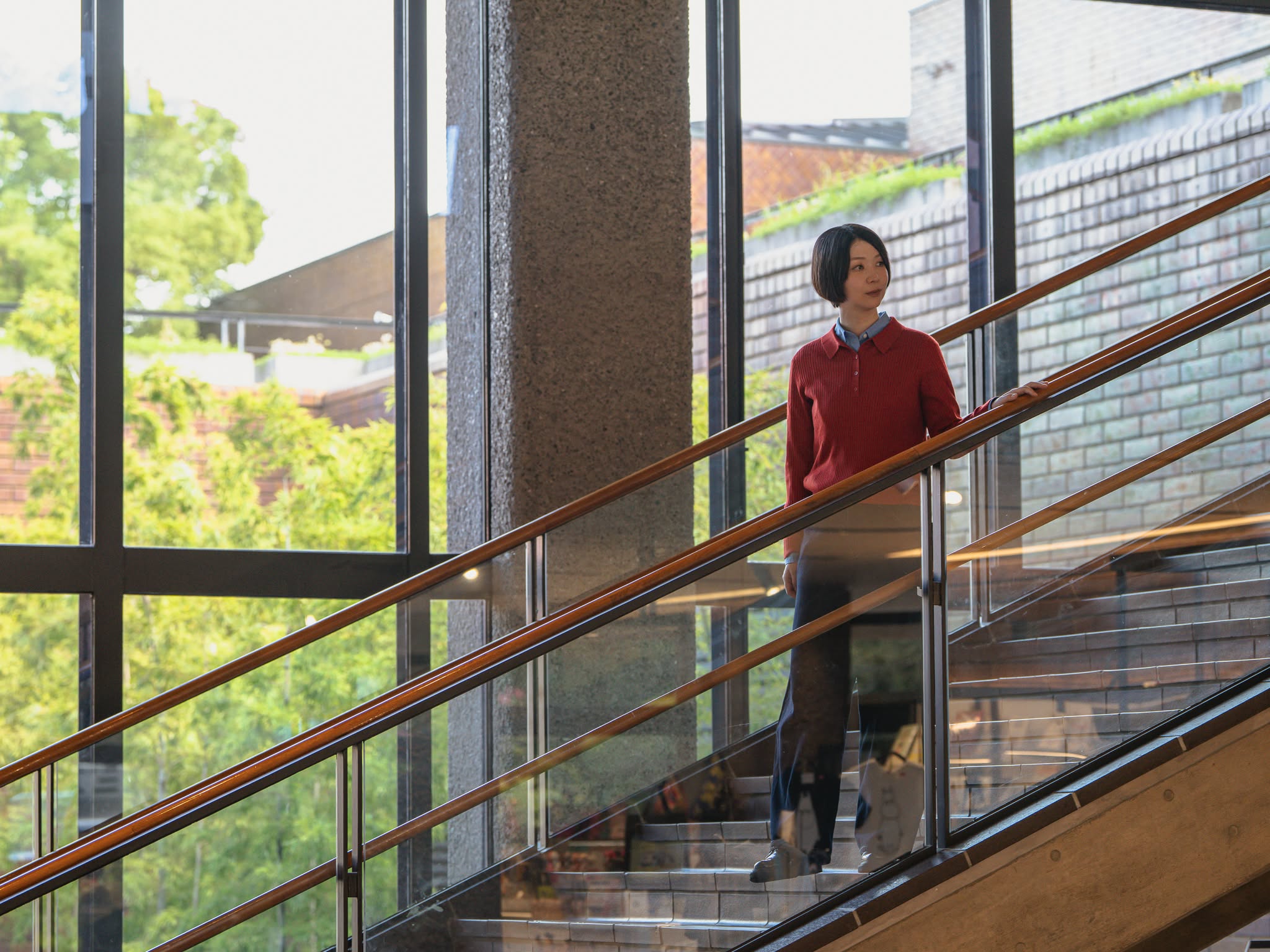
Once you’ve enjoyed the art, take a moment to admire the building itself.
Designed by Kunio Maekawa, one of the leading figures in modern Japanese architecture, the Fukuoka City Art Museum is a marvel in itself.
“The artworks were wonderful, of course, but the building itself was simply breathtaking. It’s connected to Ohori Park, giving it the feel of an art museum that’s truly open to the city,” said avi.
As well as viewing the artworks inside, why not admire the architecture, enjoy the outdoor installations or take a stroll through the adjacent park? Feel free to spend your time as you wish, moving back and forth between the museum and the park.
📍 Fukuoka Art Museum
Address: 1-6 Ohori Park, Chuo-ku, Fukuoka City
Hours: 9:30 a.m. – 5:30 p.m.
Fridays and Saturdays from July to October: 9:30 a.m. – 8:00 p.m.
Last admission is 30 minutes before closing time.
Closed: Mondays and 28 December – 4 January
If Monday is a public holiday or substitute holiday, the museum will be closed on the following weekday.
Opening hours and closure dates are subject to change.
Tel: 092-714-6051
Official Website
02|Artas Gallery
From Reading Manga to Interpreting It: Discovering New Forms of Expression at the Gallery
Next, we visited Artas Gallery in Tenya-machi, Hakata Ward. Quietly nestled on the second floor of a building, it is something of a hidden gem.
The exhibition on display was MANGA IS Contemporary Art: Interpreting Manga as Contemporary Art. Four artists took part: Takashi Arima, Ushio Tori, Saori Fukumiya, and Haruyo Higashi.
Manga As Artistic Expression.
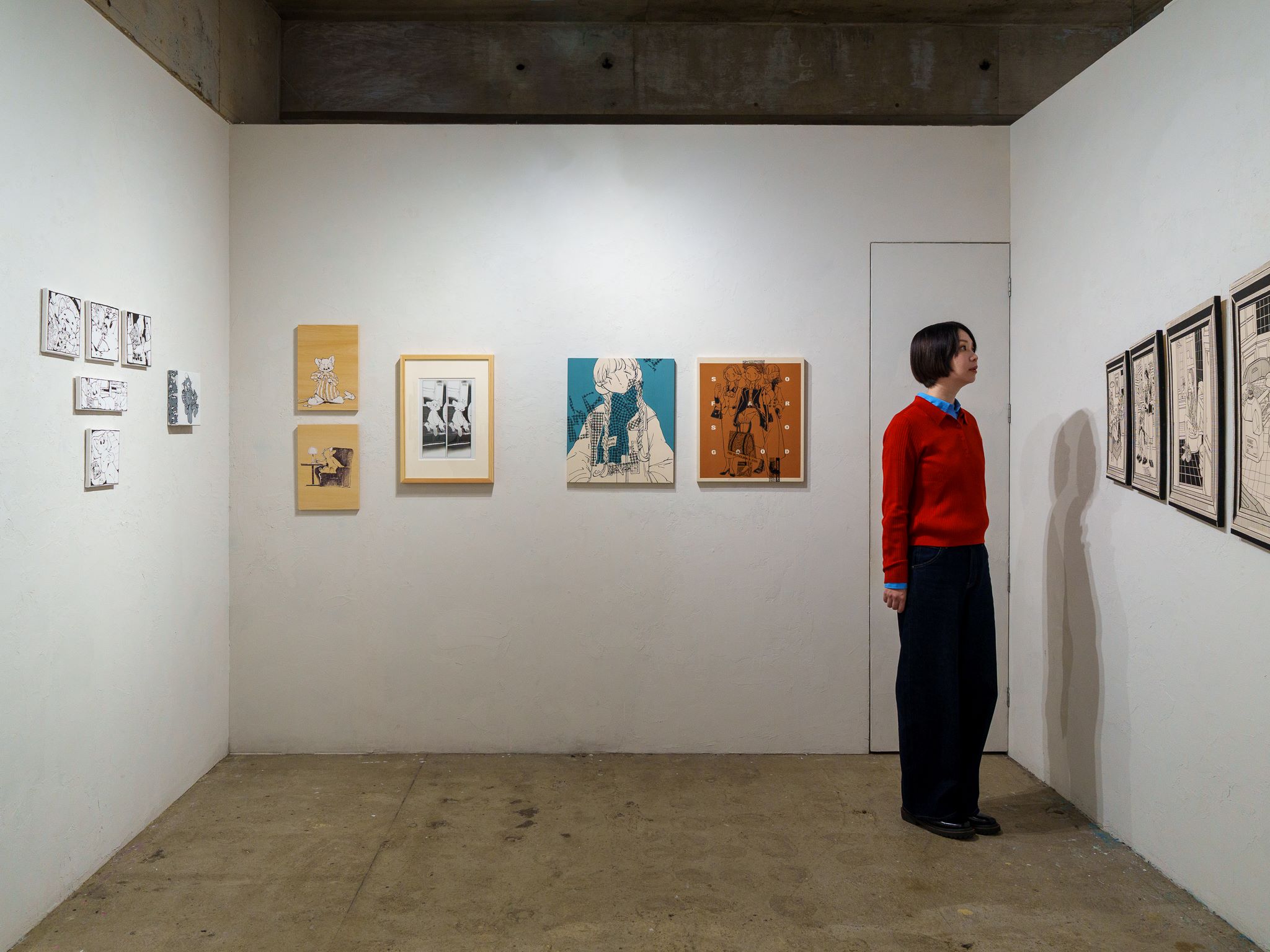
Left: Work by USHIO K
Right: Work by Haruyo Higashi
This exhibition focuses not only on manga stories and characters, but also on the expressive elements that make up the medium, including composition, linework, screen tones and text.
Rather than simply reading manga as entertainment, visitors are invited to interpret it as a form of artistic expression. By looking at familiar works from a different perspective, new aspects of manga begin to emerge.
Wait... Where Are the Artwork Titles?
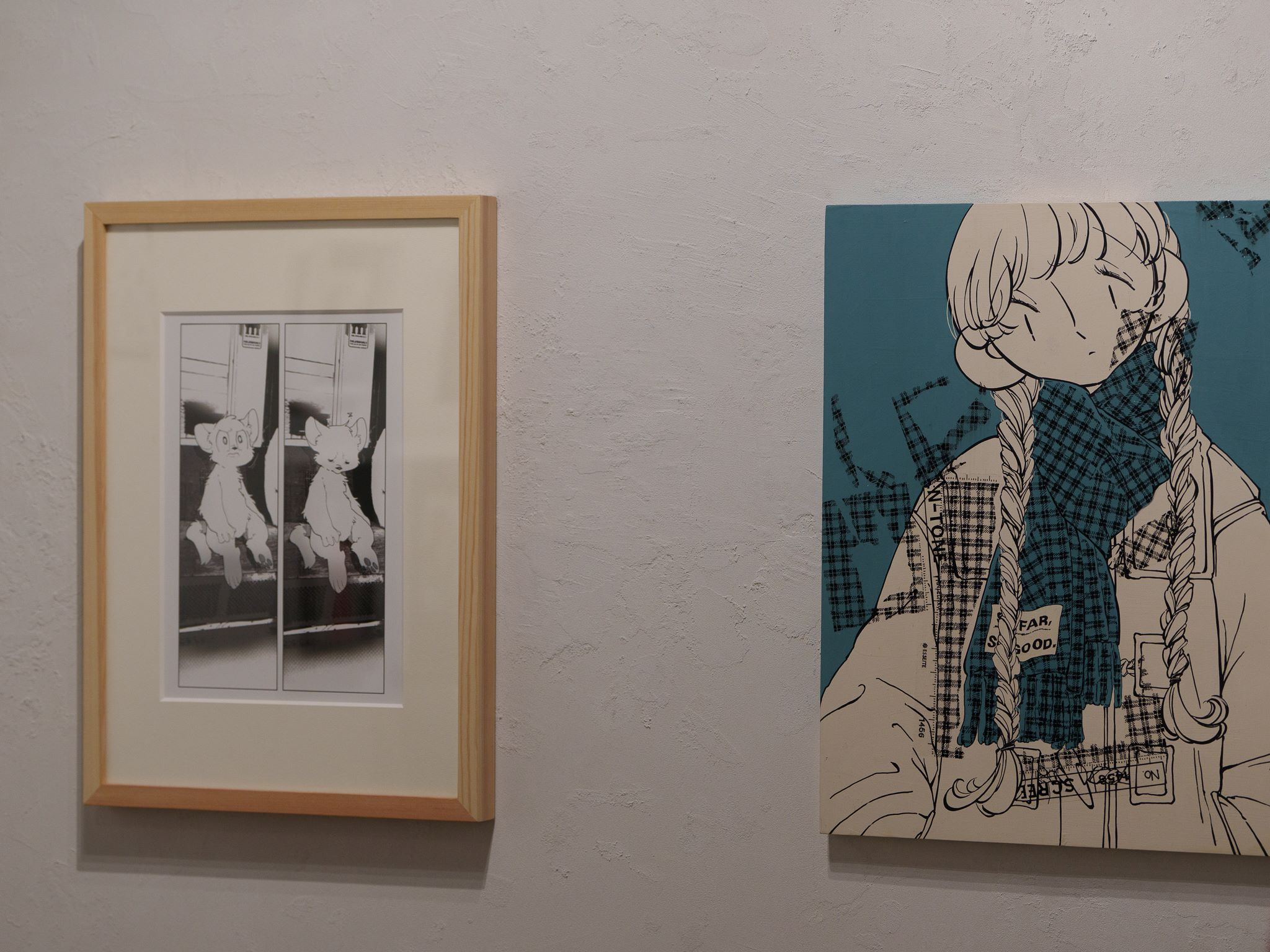
Left: Work by USHIO K
Right: Work by Haruyo Higashi
While viewing the exhibition, avi noticed something unusual: no artwork titles or prices were displayed alongside the pieces. At Artas Gallery, "thinking" is one of the gallery's central themes. Visitors are encouraged to encounter each work without prior information and form their own impressions first.
"Without any information, I found myself trying to draw meaning directly from the artwork, so I looked much more closely than I normally would," said avi.
As she spent time studying the works, she realised that she might not always pay as much attention to the artworks themselves as she had assumed.
Rather than learning about a work before seeing it, visitors are encouraged to look carefully, think for themselves, and develop their own interpretations. This distinctive approach to viewing art is one of the gallery's most appealing features.
Discovering Artists You Have Never Encountered Before
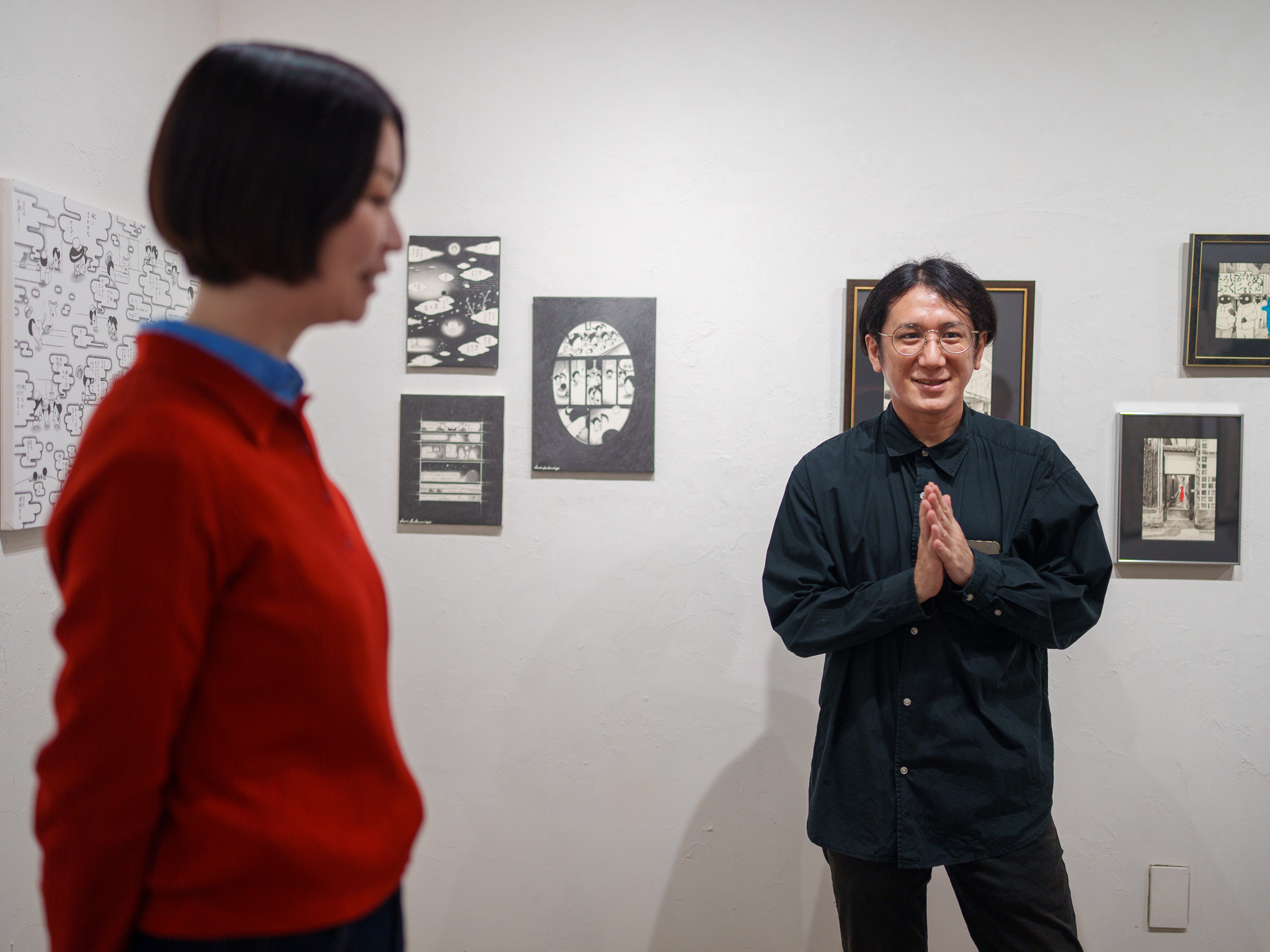
Left: Work by Saori Fukumiya
Right: Mr Murakami, the owner, speaking in front of a work by Takashi Arima
Artas Gallery actively introduces emerging artists. Owner Murakami regularly visits graduation exhibitions and other shows at local universities, seeking out promising artists who have not yet made their professional debut and, in some cases, inviting them to exhibit at the gallery.
Speaking about Murakami, avi said, "He is someone with tremendous passion for art. I hope people will come not only to see the artworks, but also to meet him."
One of the pleasures of visiting a gallery is not only discovering new artworks, but also meeting the people who find and support the artists behind them.
📍Artas Gallery
Address: Room 205, Chowa Building, 4-8 Tenya-machi, Hakata-ku, Fukuoka City
Hours: 1:00 p.m.–7:00 p.m.
Closed: Mondays, Tuesdays and Wednesdays (closed at all times outside exhibition periods)
Tel: 092-287-5599
Official website
Official Social Media: Instagram: @artasgallery205
Next Exhibition: Kiyu Namura Solo Exhibition, 7 November (Sat.) –22 November (Sun.) 2026
03|Artist Cafe Fukuoka
Connecting Artists with the City: An Art Hub in a Former Junior High School
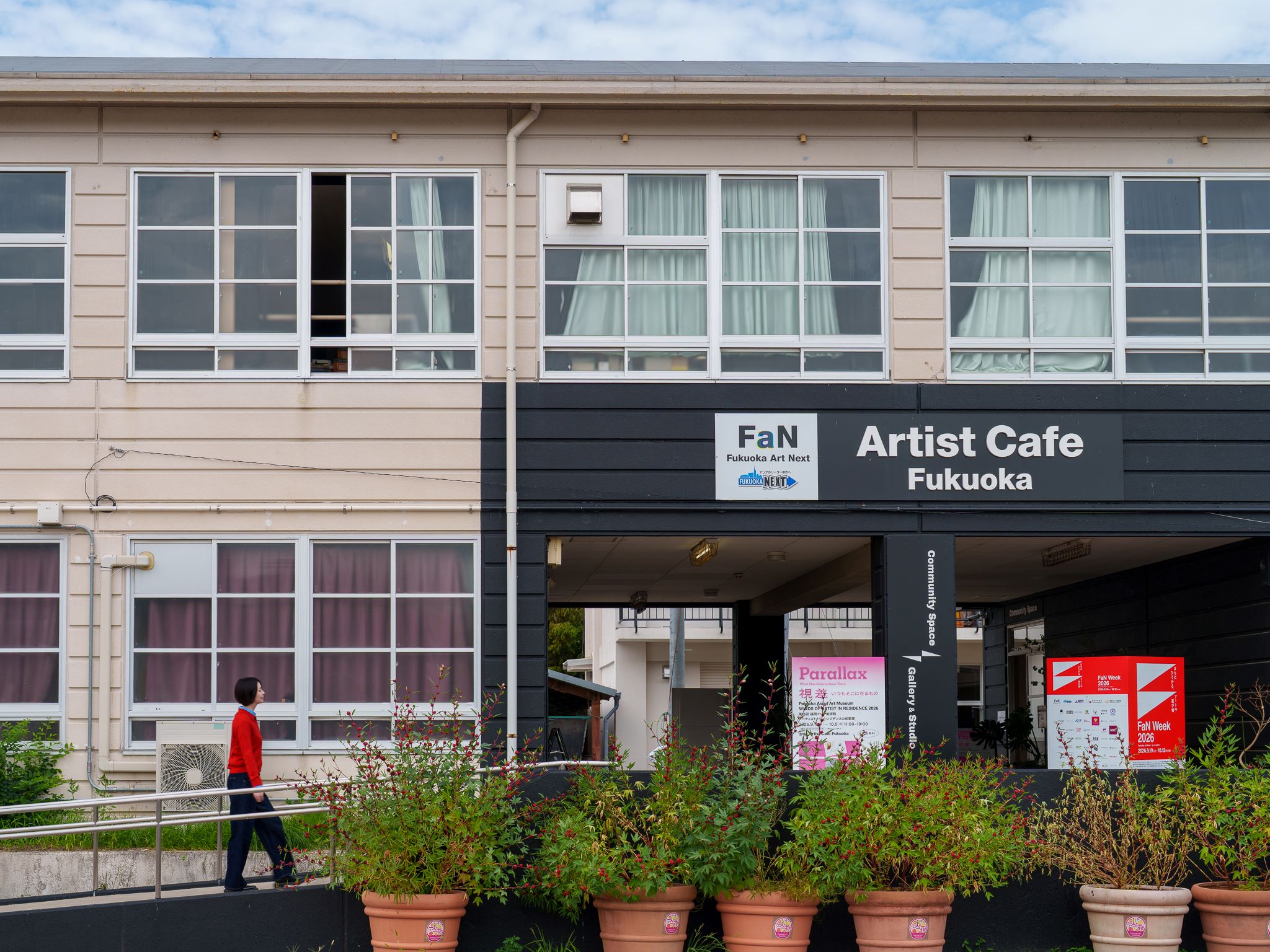
Next, we visited Artist Cafe Fukuoka, located in the former Maizuru Junior High School.
Despite its name, Artist Cafe Fukuoka is much more than a cafe. It serves as a creative hub that supports artists' activities and development while fostering connections between art, local residents and businesses. There is also an actual cafe on site, making it an easy place for anyone to drop by.
Fukuoka Through the Eyes of Artists-in-Residence
The first exhibition we viewed was Parallax: What Has Always Been There, the results exhibition for the Fukuoka Asian Art Museum Artist-in-Residence Program FY 2026.
It features works created by international artists who stayed in Fukuoka while walking the streets, meeting local people and conducting research.
The former school building still contains a number of small rooms that once served as classrooms. Each artist's work is displayed in a separate space, creating a different world in every room and allowing visitors to immerse themselves fully in each artist's vision.
A Landscape Inspired by Places That People Living in Fukuoka Call Home
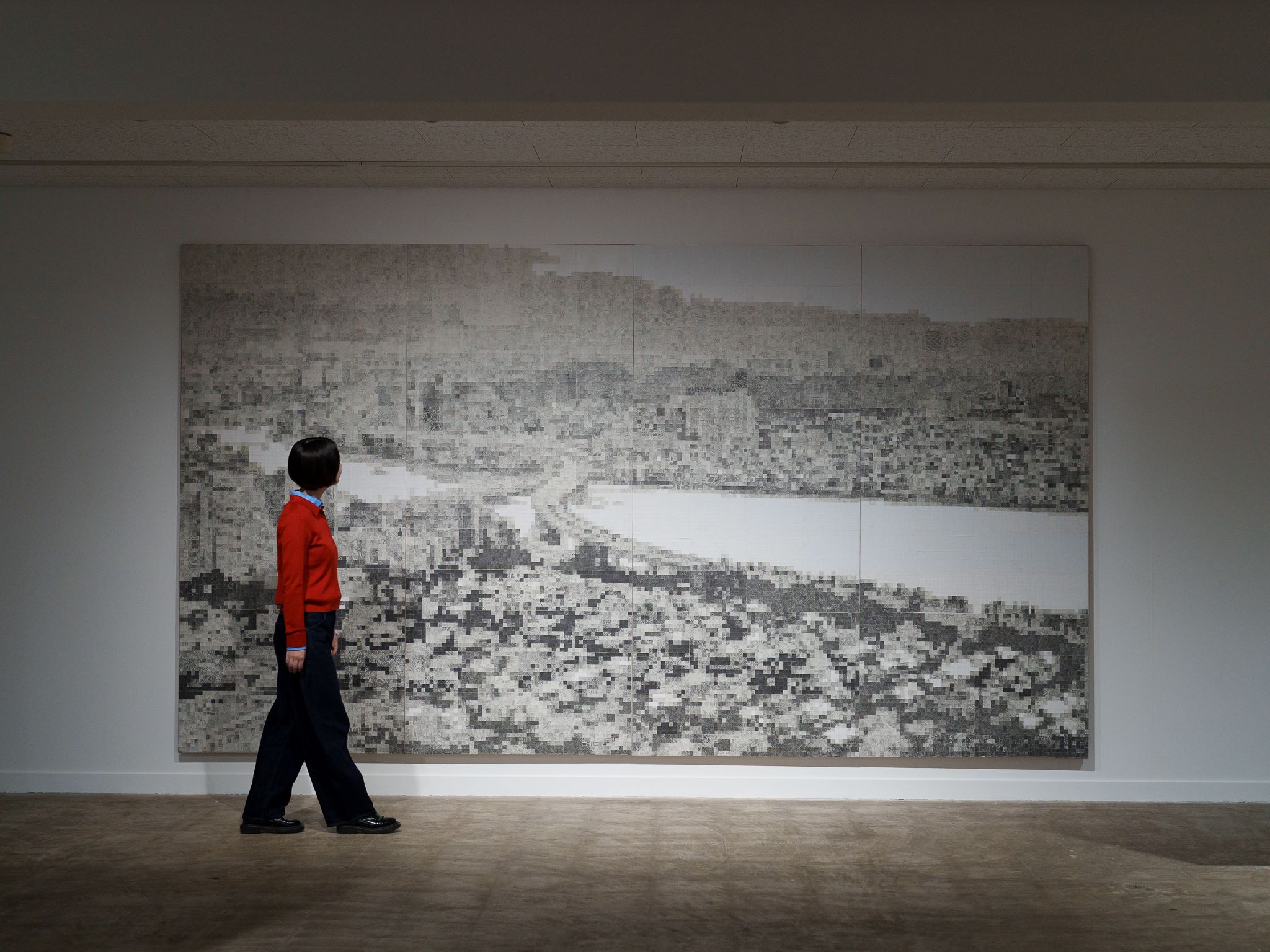
This work was created by Amshad Snuwar.
The artist invited people he met in Fukuoka to make frottages (rubbings) of places and objects that gave them a sense of belonging. He then cut these images apart and reassembled them into a single work of art.
Swings in a park, trees, workplaces and living rooms at home. Memories of places that hold personal meaning for different individuals come together and are transformed, through the artist's perspective, into a new landscape of Fukuoka.
Melting and Changing: Time as Part of the Artwork
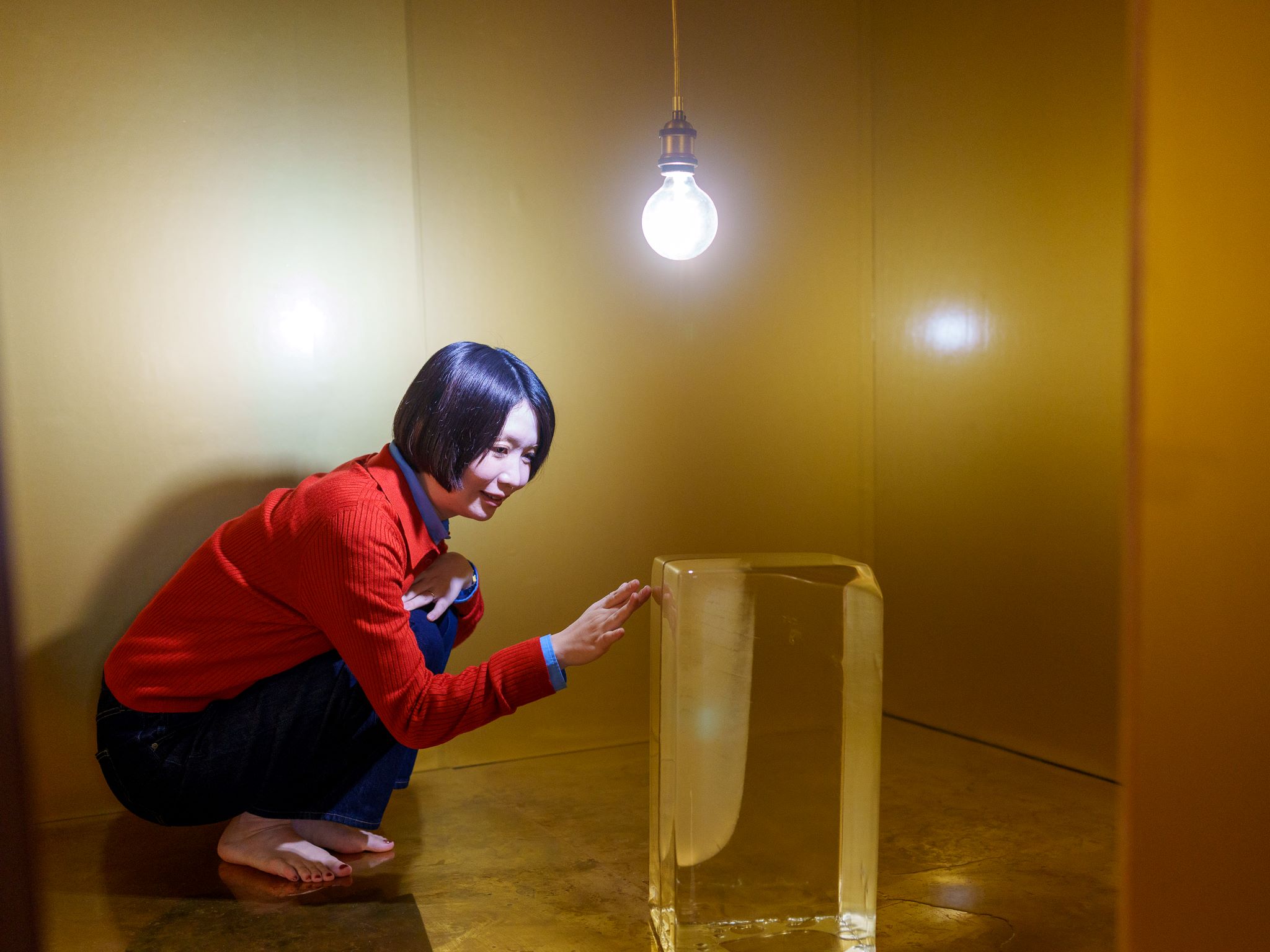
Created by Vietnamese artist Hang Hang during her residency in Fukuoka, Bare Feet: A Dialogue with Ice invites visitors into a small hut where they encounter a block of ice.
The floor is made of brass. As the ice gradually melts and changes shape, traces left by both the ice and the people who visit become slowly etched into the brass surface.
Inside the hut, there is nothing to focus on except the ice itself. By quietly observing its continual transformation, visitors are encouraged to experience a different way of seeing and reflecting on the world around them.
These works emerged from encounters with people and places in Fukuoka, combined with extensive research. Through the perspectives of the participating artists, visitors are invited to view familiar streets and everyday life from a fresh angle.
Another highlight is the Grand Studio, formerly the school's gymnasium.
Fukuoka Landscapes Fill an Entire Gymnasium
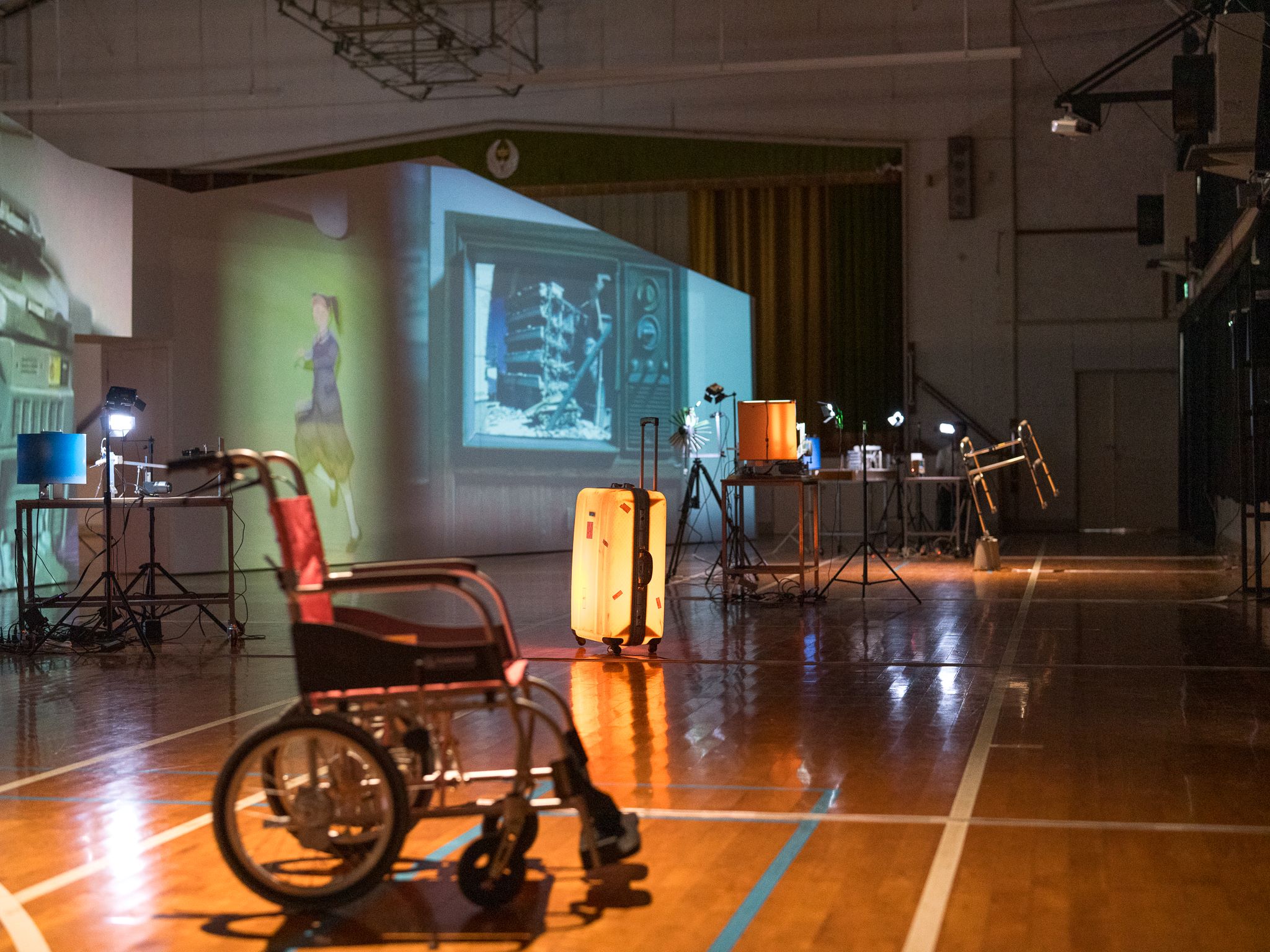
The exhibition Ryusuke Ito: Fukuoka Women Leaping Through Time! was on view in the Grand Studio.
Yusuke Ito is known for combining intricately crafted kinetic models with live video projections that capture their movements in real time.
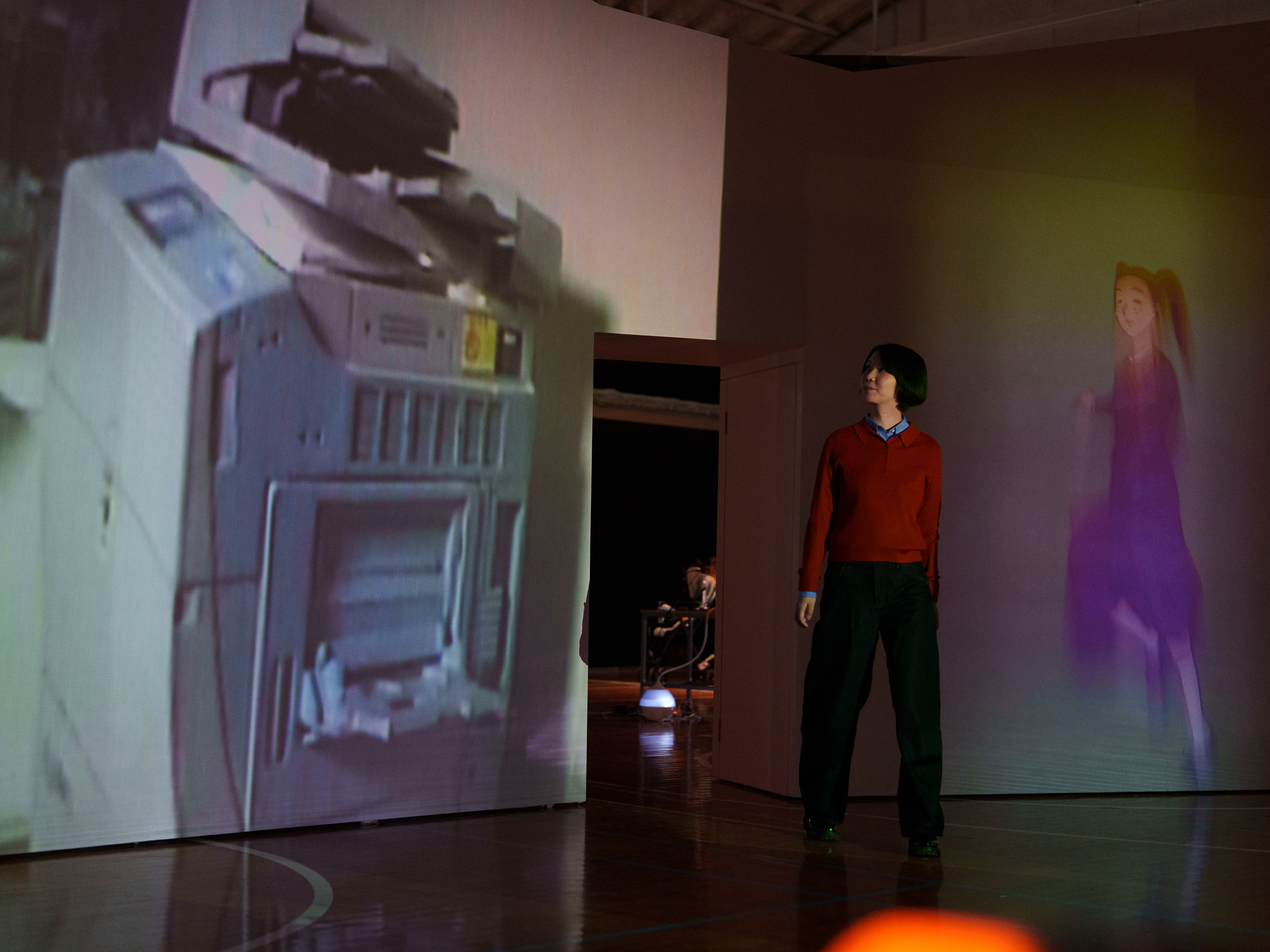
Making use of the expansive Grand Studio, the exhibition presents a dynamic installation exploring Fukuoka's accumulated history and the connections between its people. Through works such as The Running Woman, Ito expresses the energy of Fukuoka from the Yayoi period (approx. 300 BC-AD 300) to the present day, while also featuring collaborations with manga and anime connected to the city.
Discovering Art While Visiting a Cafe
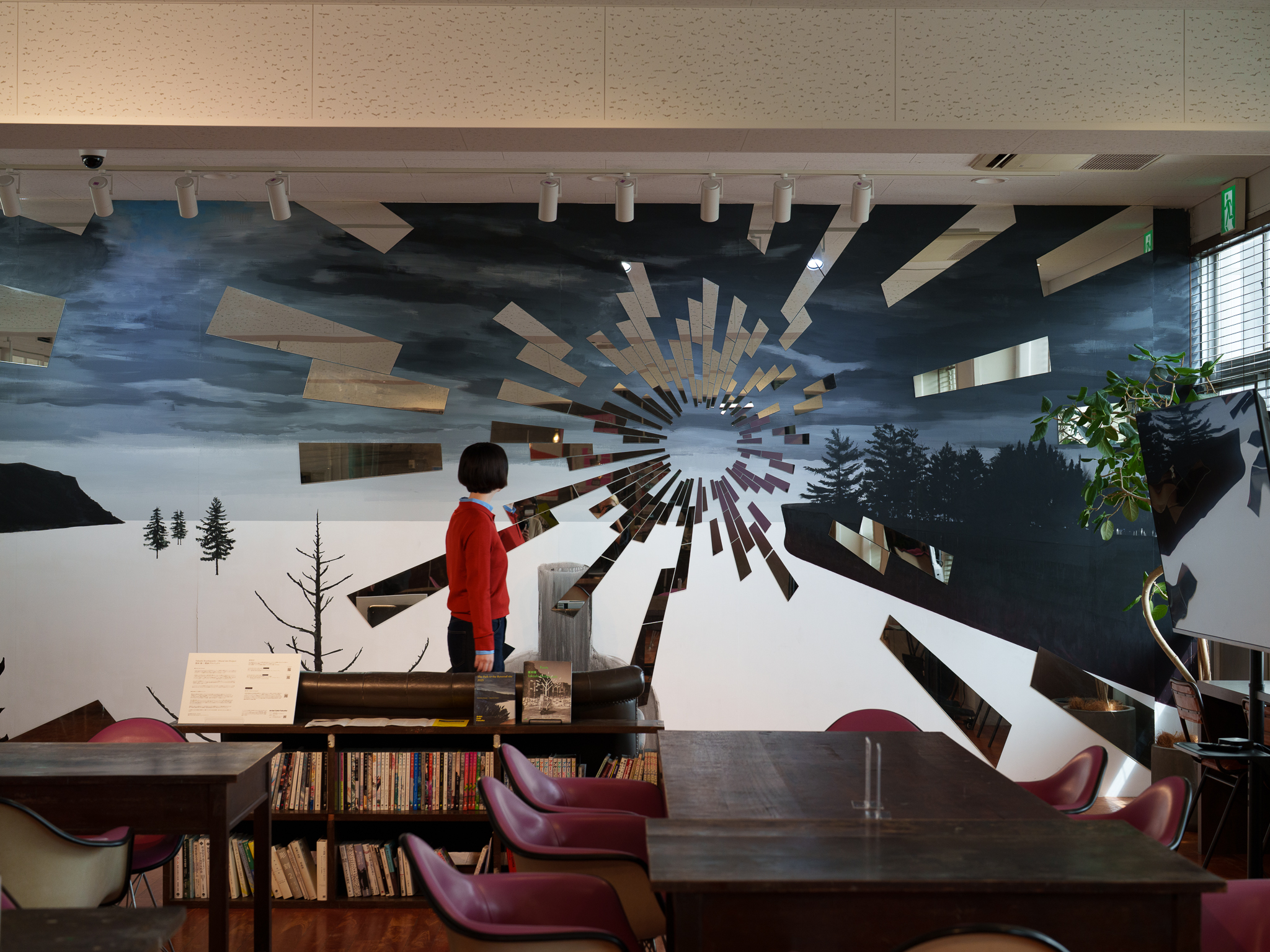
What impressed avi most was the sense of openness that comes from the building's former life as a school.
"You can simply stop by for a cup of tea, and while you're here, take a look at the exhibitions. I think there's a sense of openness that comes from it having once been a school, which helps remove the sense of intimidation that galleries can sometimes have."
In addition to exhibitions, Artist Cafe Fukuoka offers hands-on art experiences for children, programs for artists, and initiatives that connect artists with businesses.
You can visit specifically to see the artworks, take a break in the cafe, or simply drop by. One of the most appealing aspects of Artist Cafe Fukuoka is that you do not have to think of it solely as an art venue; you are free to spend time here in whatever way you like.
📍 Artist Cafe Fukuoka
Address: 2-5 Jonai, Chuo-ku, Fukuoka City
Hours: 11:00 a.m.–7:00 p.m.
Closed: Mondays and over the New Year period
If a Monday falls on a public holiday or substitute holiday, the cafe will be closed the following weekday.
Tel: 070-4195-0289
Official Website
04|Fukuoka Asian Art Museum
A Gateway to Asian Art Opened by the Question: “Is This Art, Too?”
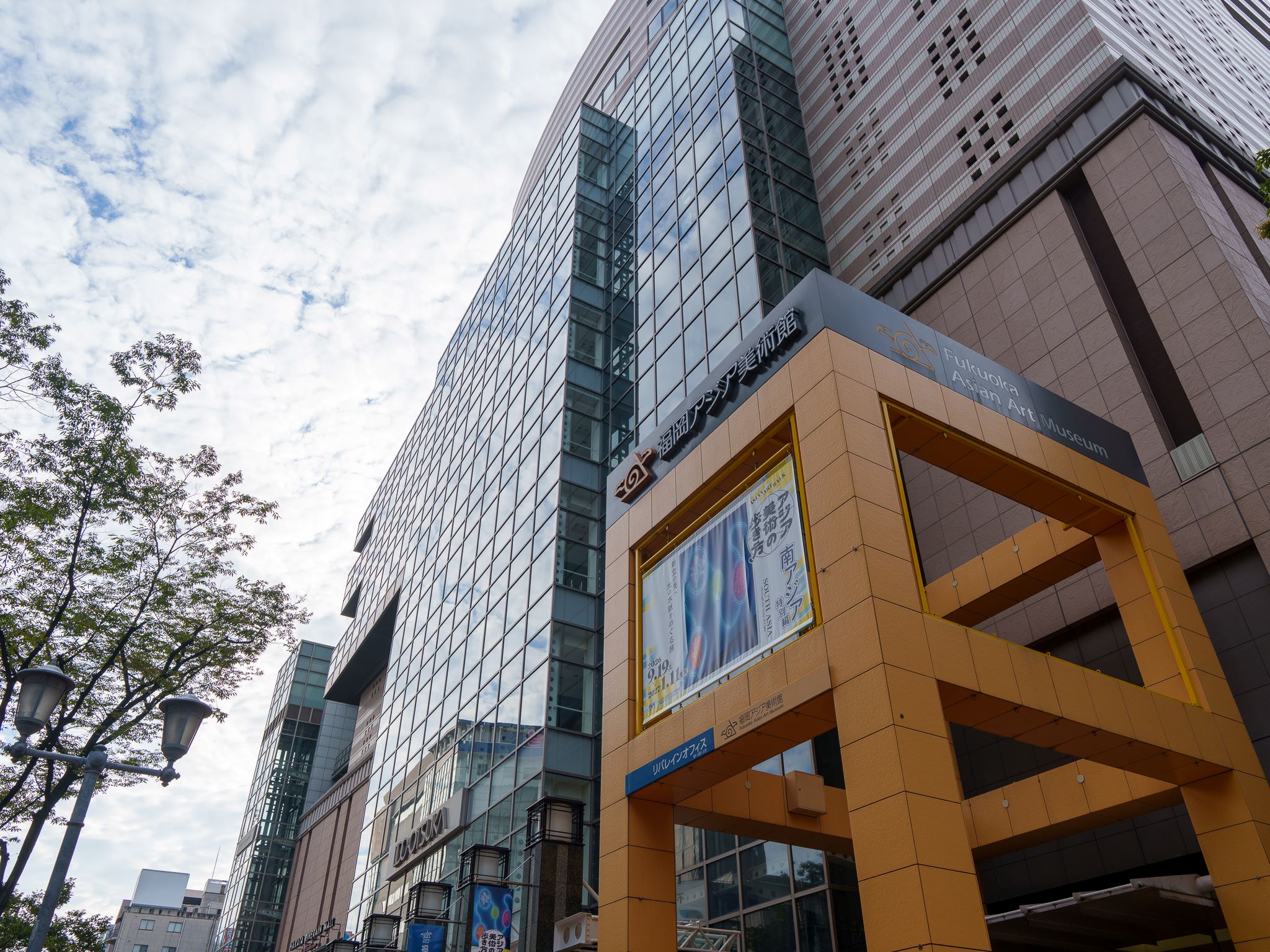
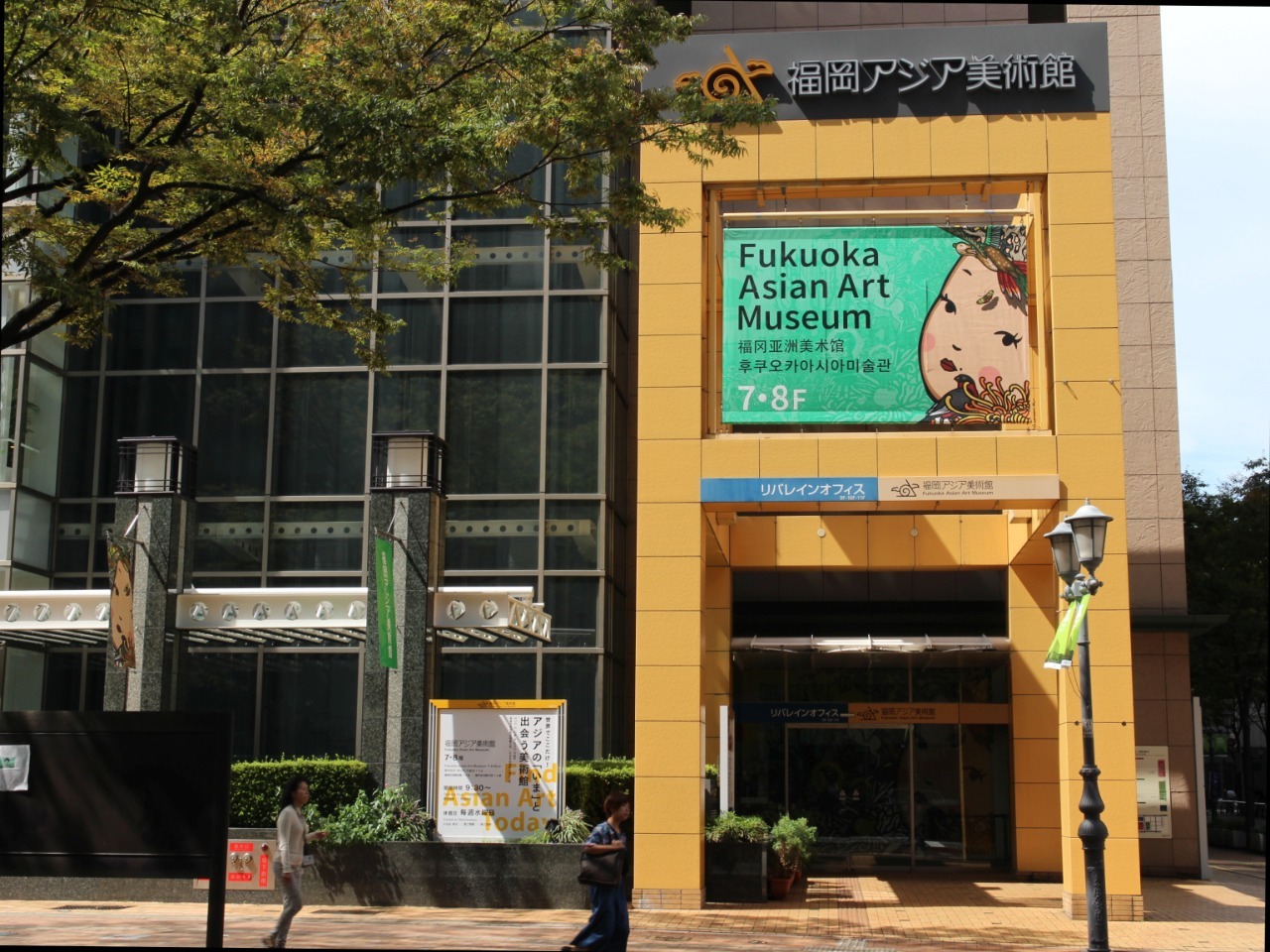
Our final stop was the Fukuoka Asian Art Museum in Nakasu-Kawabata. This one-of-a-kind museum systematically collects and exhibits modern and contemporary art from 23 countries and regions across Asia.
Since opening in 1999, the museum has not only collected and exhibited artworks but has also promoted artist residencies (Artist in Residence Program) and cultural exchange, connecting Fukuoka with the rest of Asia through art.
The museum also offers spaces that can be enjoyed without a ticket, including an Art Cafe where visitors can browse books on Asia and art, a children's corner and a museum shop.
It is a place where you can do more than visit exhibitions; you can also drop in casually while exploring the city.
The exhibition we visited was Asian Art Walk: South Asia Through the Veins of Light.
Featuring works from seven South Asian countries, the exhibition offers a diverse introduction to the region's contemporary artistic expressions.
It's Okay to Start with “Wow!”
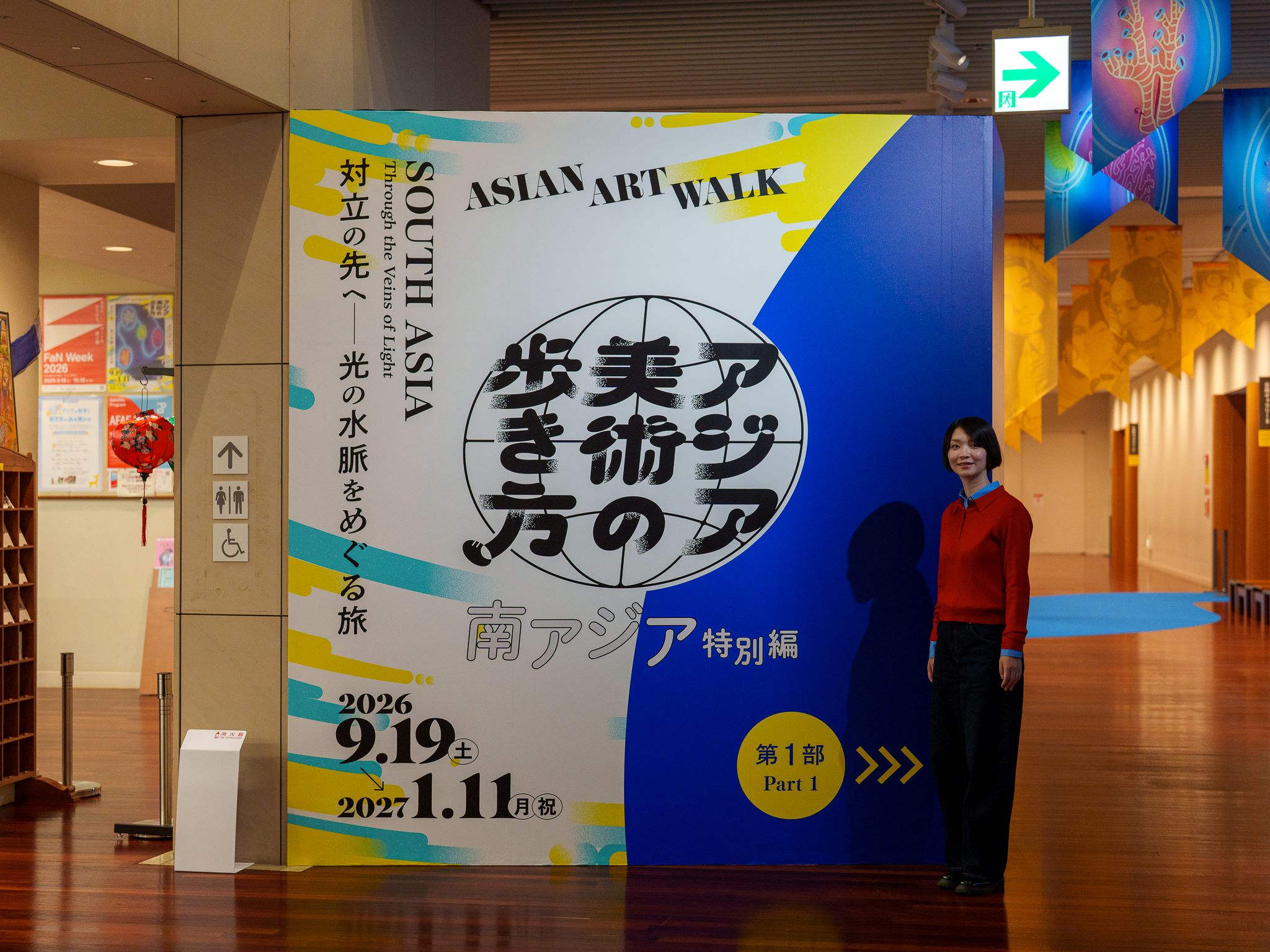
When people hear the term "Asian art", they may wonder whether they need knowledge of history or religion to appreciate it. In reality, there is no need to understand everything from the outset.
As one of the museum curators explained, "It's not about how we want people to view the works. We simply want them to encounter them first."
The exhibition is divided into two parts.
Part I, Leading Artists of Contemporary South Asian Art, introduces individual artists and traces the evolution of their works from earlier pieces to the present day.
"What is this?" "That's amazing!"
Why not begin with these simple, instinctive reactions?
The Shape of Home as Seen Through an Unsteady Cow
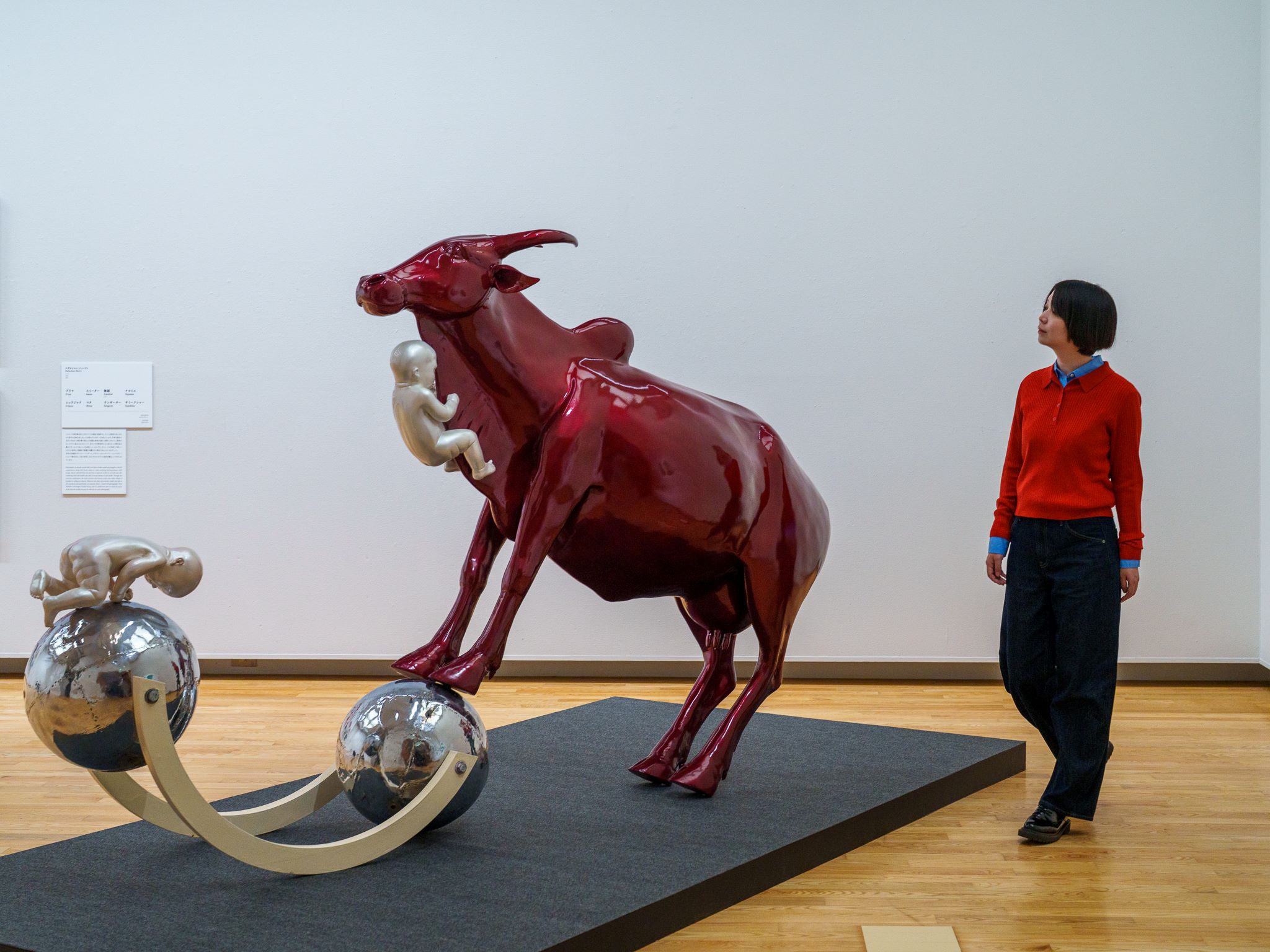
The first work to catch the eye was Home by Indian artist Sudarshan Shetty.
A red cow balances on a cradle-like sphere while a baby clings to its neck. The unstable pose, which appears as though it could collapse at any moment, leaves a lasting impression.
Embedded within the work is the idea of home: a place of comfort and security, yet also one that can contain uncertainty and vulnerability.
Artworks that initially leave you wondering what is happening can begin to look very different once you learn about their titles and background.
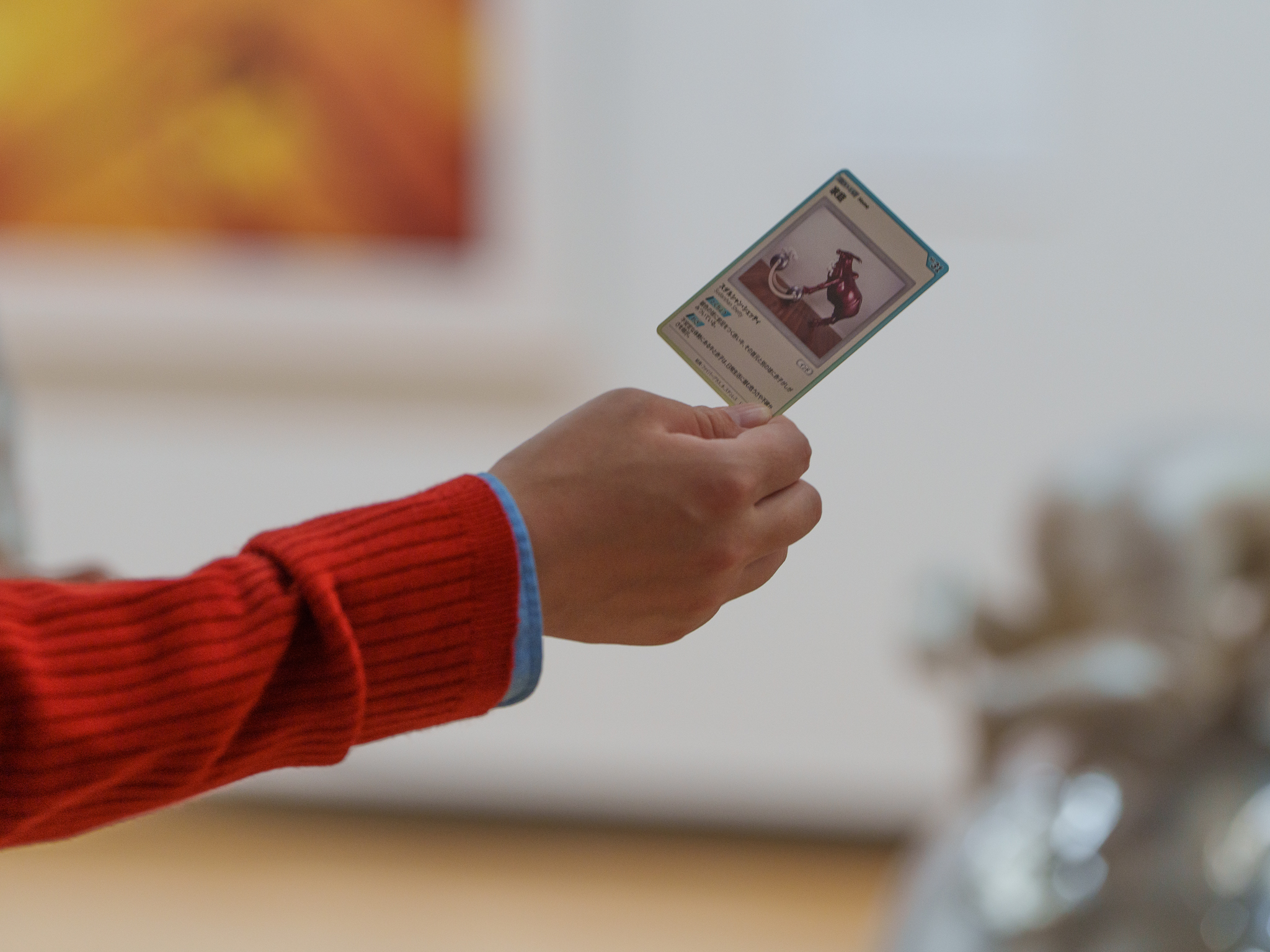
After viewing the exhibition, be sure to check out the Collection Cards displayed nearby. Visitors can take home free cards featuring selected artworks.
A total of 100 different cards covering East Asia, South Asia and Southeast Asia are scheduled to be released throughout the year, offering a memorable keepsake from your visit and perhaps inspiring you to collect them all.
Look Closer and Discover a World of Countless Needles
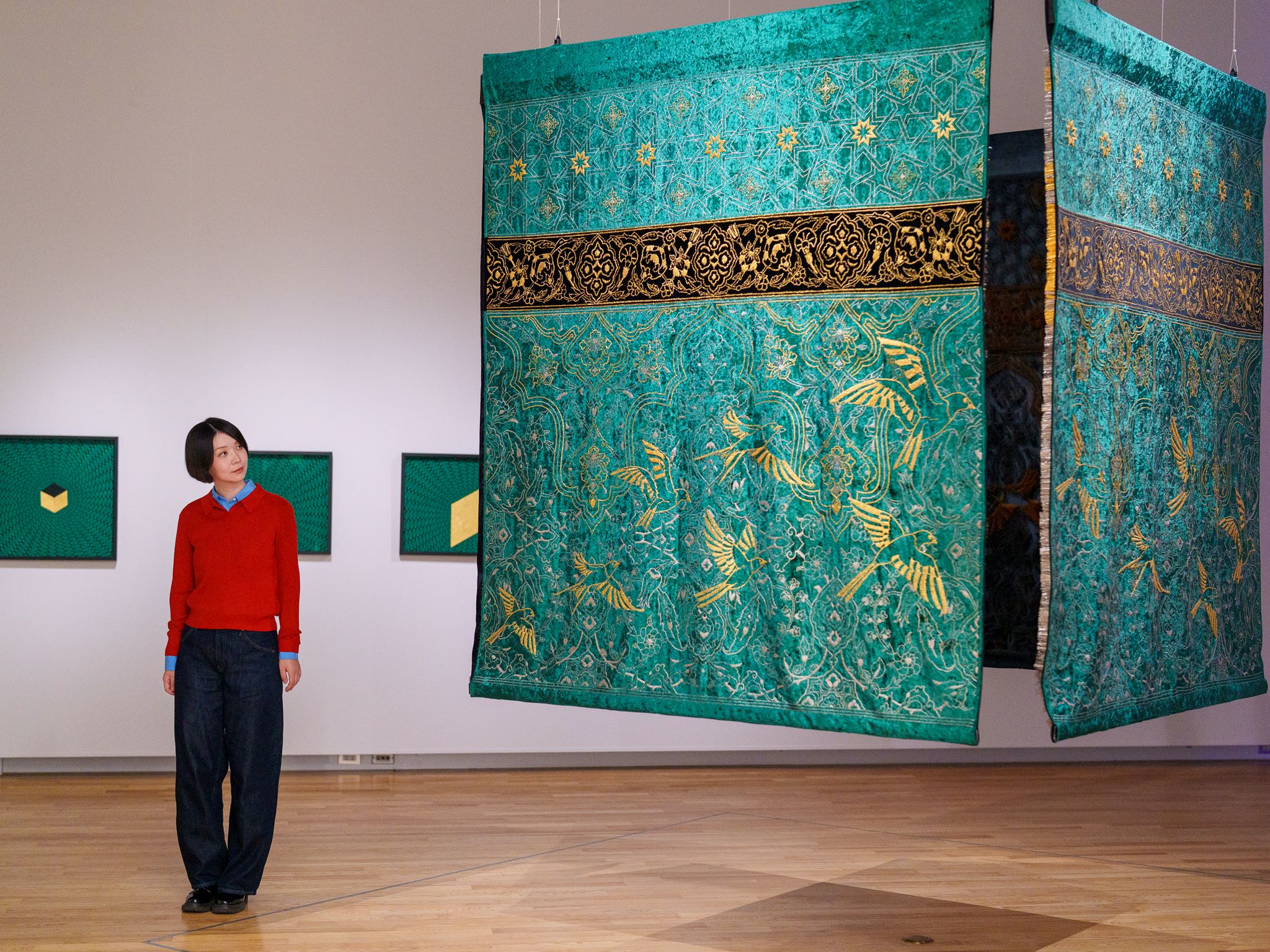
At first glance, The Garden of Love Is Green Without Limit by Pakistani artist Aisha Khalid appears to be an intricately patterned tapestry.
A closer look reveals something unexpected: the work is covered with tens of thousands of needles.
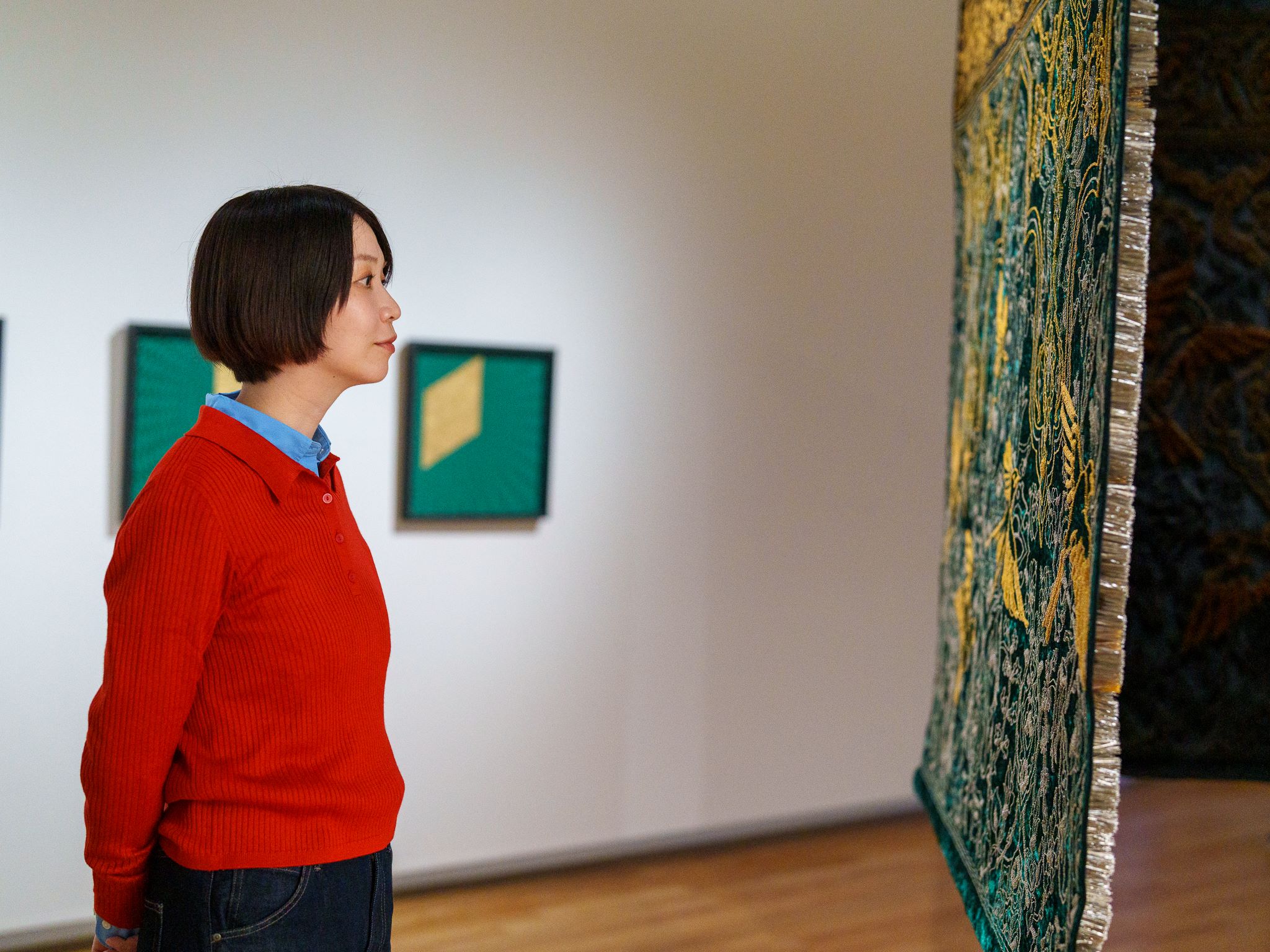
Traditional motifs and birds reminiscent of Persian carpets are rendered in gold and silver needles on a large green tapestry. Turn to the reverse side and you will find a dense field of needle tips covering almost every inch.
Having originally studied miniature painting, Aisha Khalid has replaced her paintbrush with a needle, expanding her practice from two-dimensional images into three-dimensional space.
Using materials traditionally associated with women's work, such as fabric and needles, she also explores the social realities surrounding women, including various forms of oppression.
Drawn in by the beauty of the patterns, viewers are often surprised when they discover the countless needles hidden on the reverse side. The work changes dramatically depending on where and how it is viewed.
Marine Life Floating in Beautiful Light
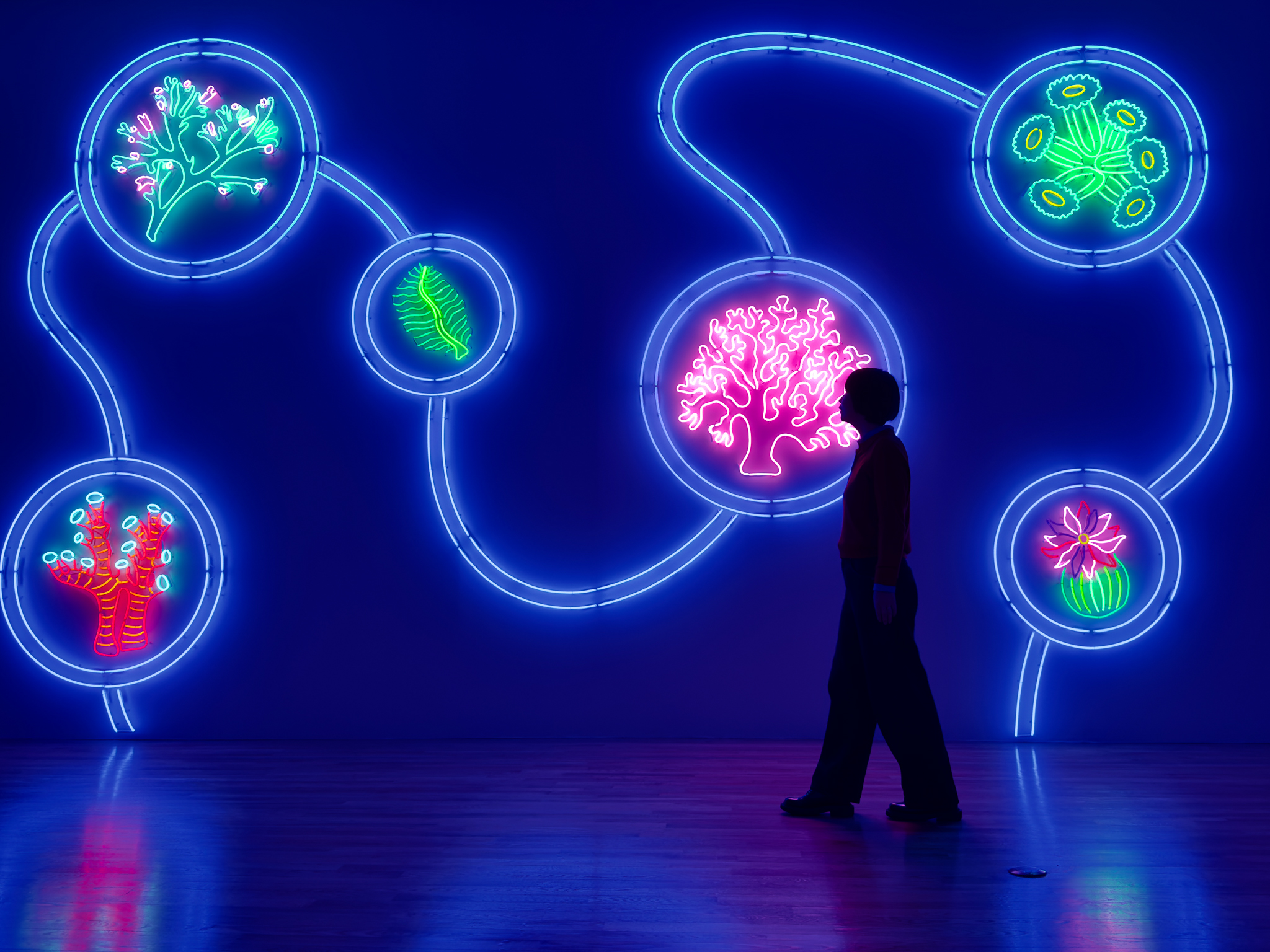
Subaqueous by Iftikhar Dadi and Elizabeth Dadi is composed of neon tubes shaped like marine organisms, including corals and sea anemones.
Connected by lines of blue light, these forms suggest the interconnectedness of marine life.
Yet behind the work's beauty lies a reflection on the reality of oceans threatened by pollution. Through vivid neon light, the artists explore both the interconnectedness and fragility of life.
Works that initially prompt the question "What is this?" often reveal a wealth of ideas once you stop and spend time with them.
It all begins with encountering a work that sparks your curiosity. The way Asian art opens the door to new perspectives is part of what makes it so fascinating.
Discover the Stories Behind the Artworks
Part II, Narratives of South Asian Art, takes visitors one step further, exploring the societies, histories and cultures that form the backdrop to the artworks. By learning about the history of a place and the lives of the people who live there, visitors begin to see the artworks in a new light.
Even the Rickshaws That Travel Through the Streets Become Art!
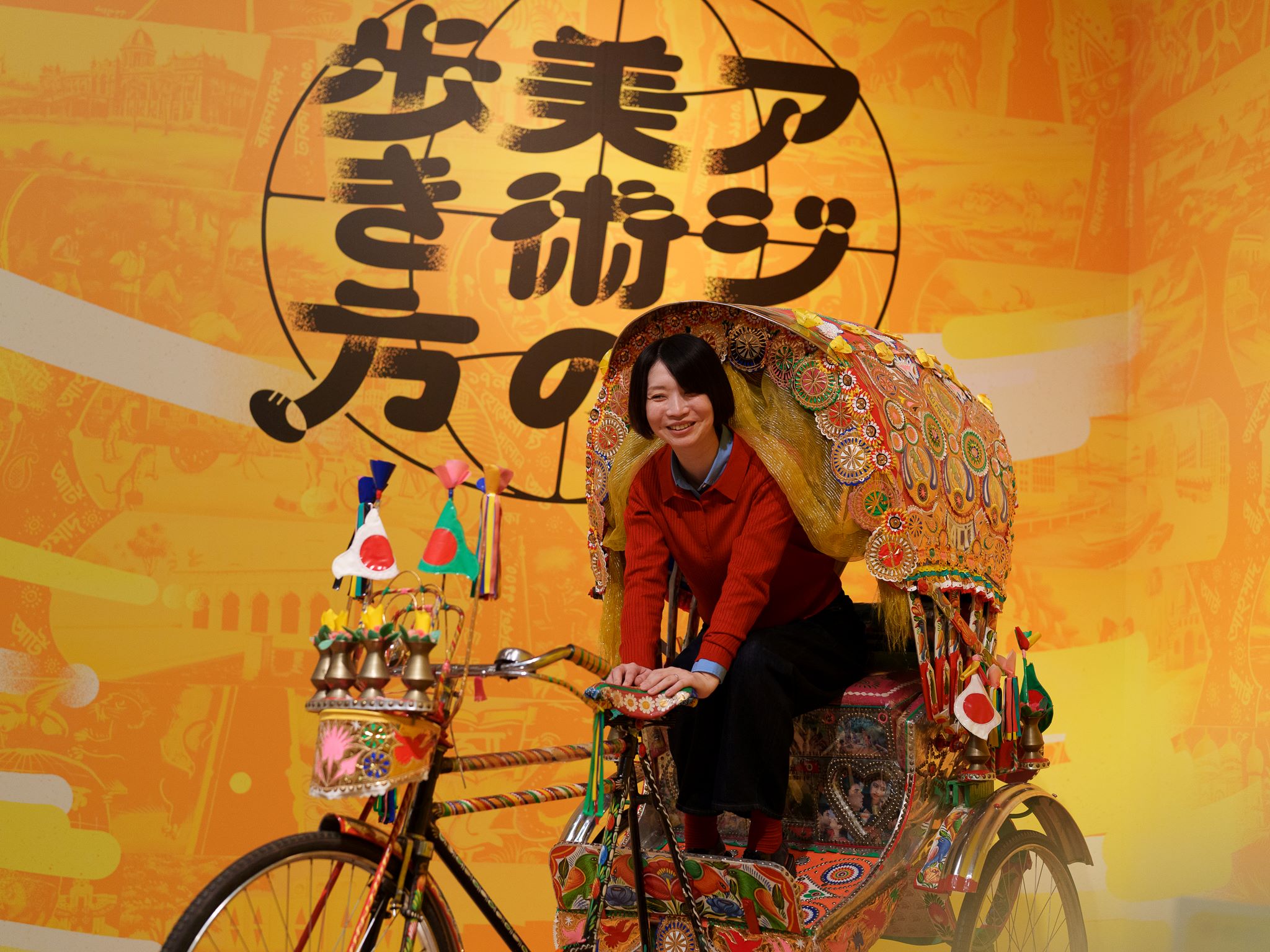
A particular highlight of Part II is the vibrant painting that decorates the rickshaws that travel the streets of Bangladesh.
The backs and canopies of these vehicles have long been decorated with colourful imagery ranging from film stars to aspirational scenes and symbols.
Although they are a familiar part of everyday life, their distinctive forms and vivid colours have also influenced contemporary artists.
The creators of these paintings are not fine artists in the conventional sense, but craftspeople who specialise in rickshaw painting.
A World Revealed by the Question: “Is This Art, Too?”
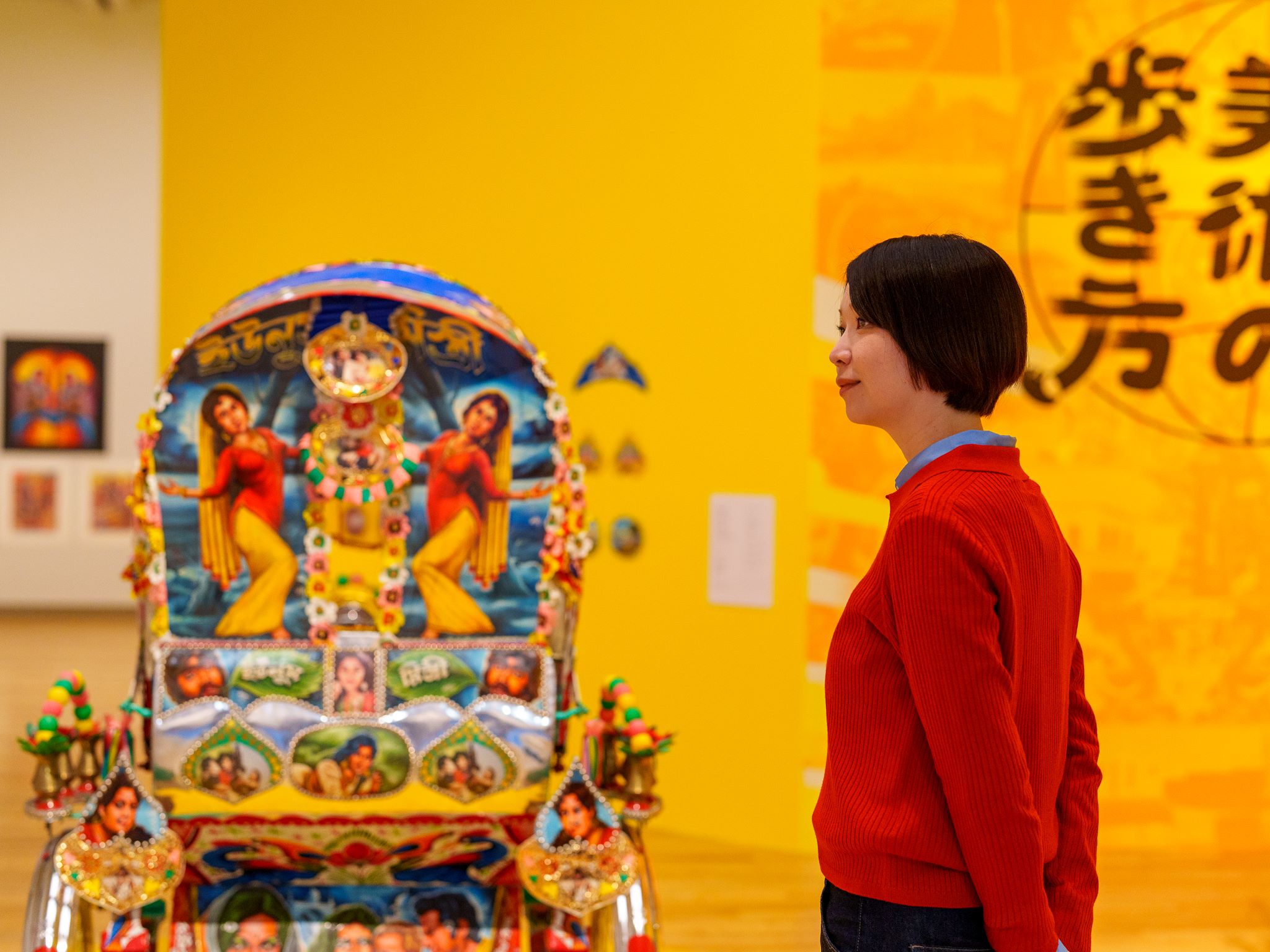
The Fukuoka Asian Art Museum has long focused not only on works by established artists but also on forms of expression rooted in everyday life, such as rickshaw painting and traditional craftsmanship.
These cultural practices are essential to understanding modern and contemporary Asian art.
At the Heart of This Approach Is a Simple Question: What Exactly Is Art?
When we move beyond conventional ideas of what art is and look at artistic expression across Asia, we begin to discover the unique aesthetic values and creative traditions that have developed in different regions.
"So this is art, too!" Moments like these gradually broaden our understanding of what art can be, and that is one of the museum's greatest attractions.
Avi also notes that whenever she visits Fukuoka, she is reminded of how closely connected the city is to Asia. As she walks through the city and experiences its food and culture, she says she feels as though "Asia is just around the corner."
After encountering artistic expressions from across Asia, you may find that the familiar sights of Fukuoka look a little different.
Asian Art Walk: South Asia Through the Veins of Light
Dates: 19 September (Sat.) 2026 – 11 January (Mon., Public Holiday) 2027
Venue: Fukuoka Asian Art Museum, 7th Floor: Special Exhibition Gallery and Asia Gallery
Hours: 9:30 a.m. – 6:00 p.m. (until 8:00 p.m. on Fridays and Saturdays)
Last admission is 30 minutes before closing time.
Closed: Wednesdays (or the following weekday if Wednesday is a public holiday) and 26 December – 1 January.
Admission: Adults: 1,000 yen
High School and University Students: 800 yen
Junior High School Students and Under: Free
Admission to Part II (Asia Gallery) only: Adults: 200 yen
High School and University Students: 150 yen
Official Exhibition Website
Friday Nights: Music at the Art Museum
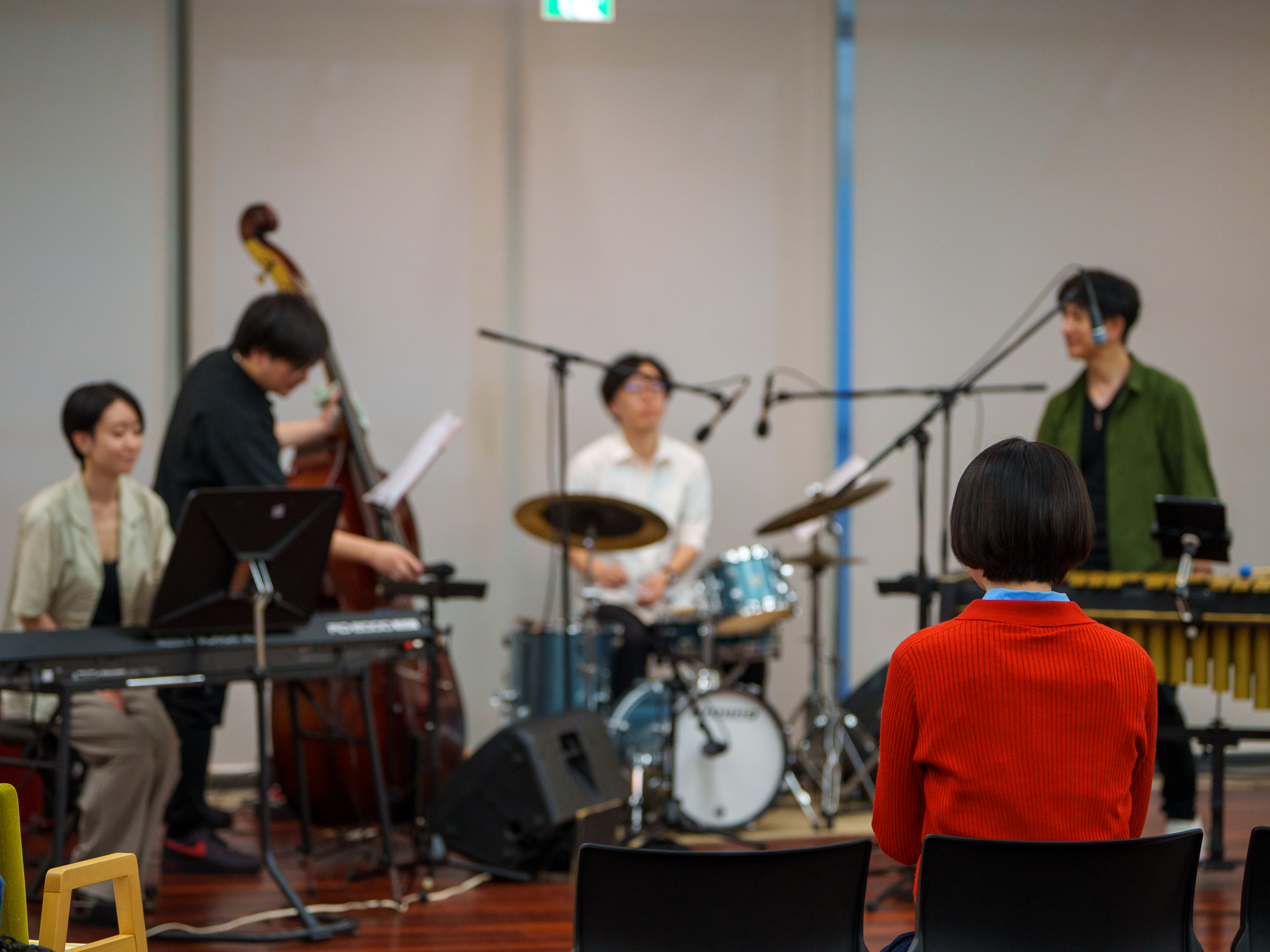
If you’re visiting the Fukuoka Asian Art Museum, another event worth noting is Live@Museum.
This initiative allows visitors to enjoy a variety of live performances against the backdrop of the museum. On this occasion, the performers were VibrArt, a jazz quartet comprising vibraphone, piano, bass and drums.
“It’s not often we get the chance to perform in a space surrounded by art and books, so it felt quite refreshing,” said the members of VibrArt. In keeping with the museum setting, they included pieces with classical influences alongside standard jazz numbers, making the performance accessible even to those unfamiliar with jazz.
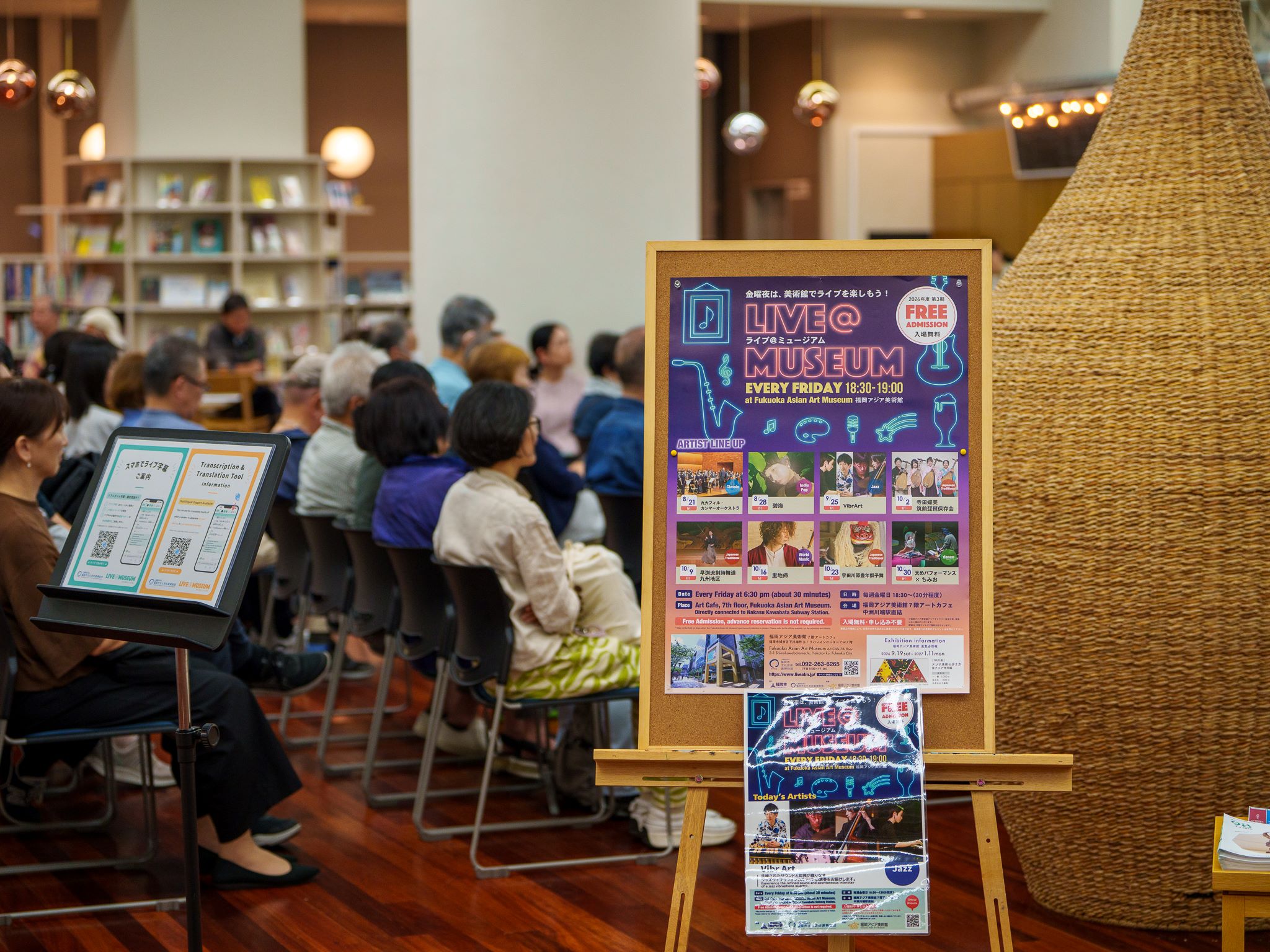
After exploring the artworks, why not stay and enjoy a live musical performance as well? Spend an evening in Fukuoka and experience a completely different atmosphere to that of the daytime. The live series offers tourists a new way to enjoy an evening in Fukuoka, provides people on their way home from work with a chance to experience culture, and gives local artists opportunities to share their work and connect with new audiences.
Live@Museum
Fukuoka City Foundation for Arts and Cultural Promotion
Dates: Every Friday from 24 April 2026 to 19 March 2027
Time: 6:30 p.m.–7:00 p.m.
Venue: Art Cafe, 7th Floor, Fukuoka Asian Art Museum
Free admission. No booking required.
Tel: 092-263-6265
Official Website
📍Fukuoka Asian Art Museum
Address: 7th and 8th Floors, Riverain Center Building, 3-1 Shimokawabata-machi, Hakata-ku, Fukuoka City
Museum Opening Hours: 9:30 a.m. – 7:30 p.m., until 8:00 p.m. on Fridays and Saturdays
Gallery Opening Hours: 9:30 a.m. – 6:00 p.m., until 8:00 p.m. on Fridays and Saturdays
Last admission to the galleries is 30 minutes before closing time.
Closed: Wednesdays (or the following weekday if Wednesday is a public holiday), and during the year-end and New Year holidays (26 December – 1 January).
Tel: 092-263-1100
Official Website
Find Your Own Way to Enjoy Art in Fukuoka
Viewing artworks at art museums. Visiting small galleries.
Heading to places where artists are active. In the evening, enjoying music at an art museum.
As we explored these four spots with avi, we realised that Fukuoka offers many ways to enjoy art.
Even if you do not immediately understand what a work means, moments when you find yourself thinking, “What is this?”, “That’s interesting!”, or “I think I like this” may be the very beginning of your enjoyment of art.
So why not use FaN Week, held annually in Fukuoka, as an opportunity to visit a place that catches your interest? Even in the Fukuoka you know so well, new encounters with art may be waiting for you.