Spirits and Yokai Exhibition at the Fukuoka City Museum
- Date
Share


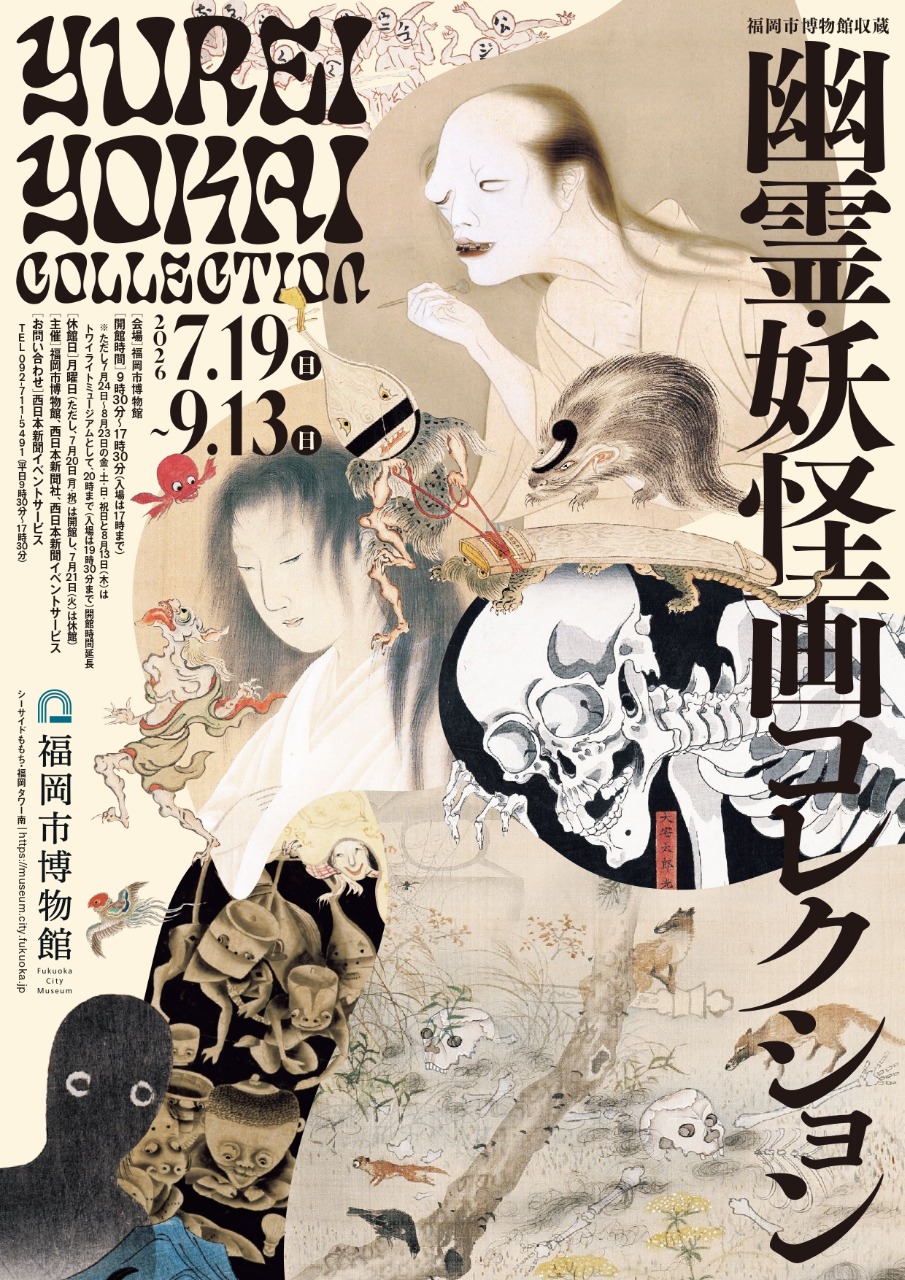
Do you know about Japan’s spirits and yokai? An all-new exhibit at the Fukuoka City Museum will be displaying paintings depicting these mystical beings.
Do you know about Japan’s spirits and yokai? An all-new exhibit at the Fukuoka City Museum will be displaying paintings depicting these mystical beings.
Spirits and yokai are important parts of folklore in Japan and have existed in accounts from ancient times. At this exhibit you will be able to take a look at artistic depictions of these entities.
People tend to find these kinds of supernatural figures frightening, to say the least. However, in Japan, there is a belief that hanging up artwork depicting them is considered a good thing. This naturally raises the following question: why do the Japanese consider the painting and displaying of these spooky specters so auspicious?
For this reason, this exhibit will not only display these artworks, but also delve into the state of mind of the artists who made them, as well as that of those who view these pieces.
The Fukuoka City Museum has an extensive collection of pieces depicting spirits and yokai. Among the works displayed are those made by famed artists like Ito Jakuchu and Kawanabe Kyosai. This exhibit will feature approximately 100 different pieces made primarily during the 18th to 19th centuries and rounded out by some more modern pieces.
Not all the pieces on display are frightening, with there being some dreamy and beautiful pieces in addition to more comical themes. We hope you will enjoy the idiosyncrasies and quirks of the pieces on exhibit here and the worldviews they depict.
Exhibition contents
Paintings featuring corpses and skeletons are frightening, aren’t they? While they may not be ethereal like the spirits or the yokai, the first section of the exhibit focuses on these as its theme.
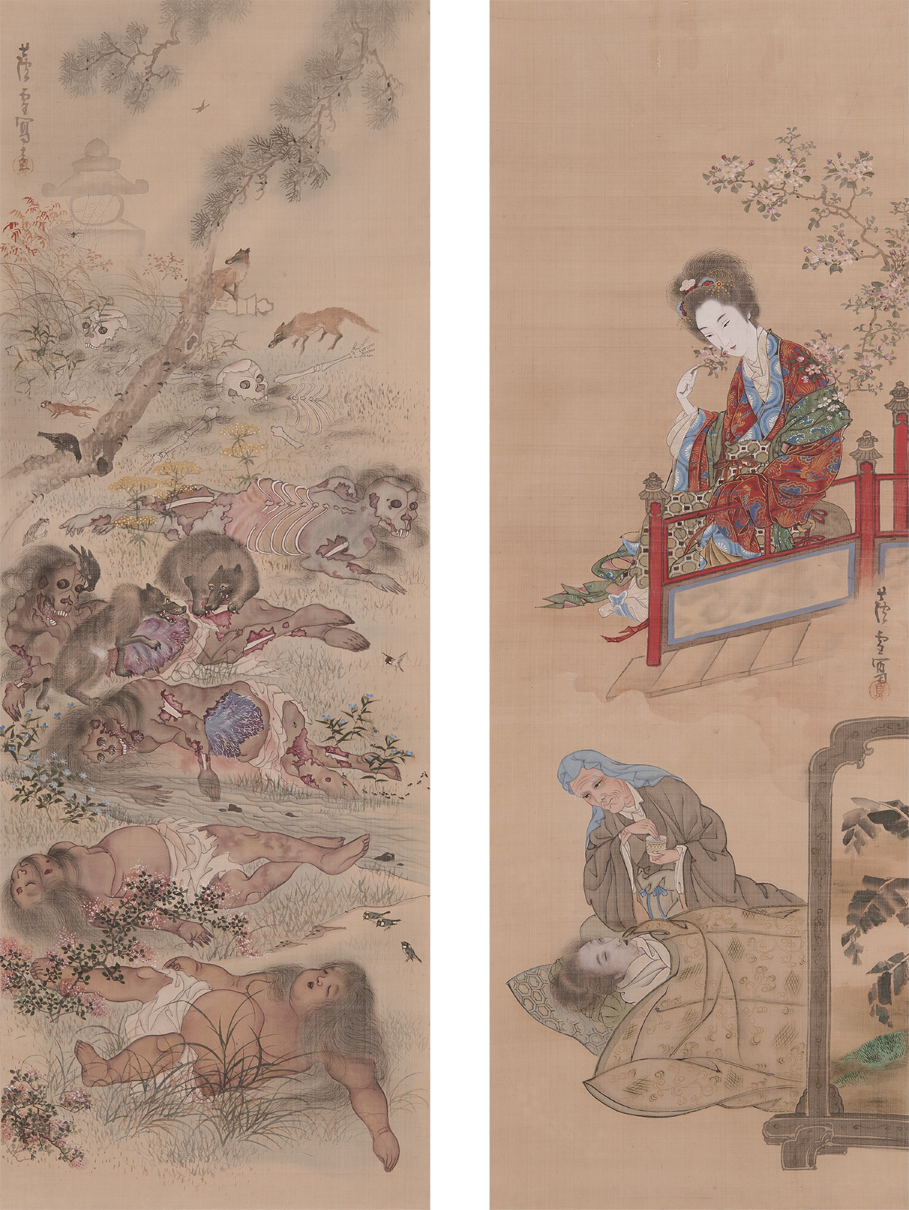
▲九相圖/長澤芦雪/江戸時代中期(18世紀)
The Nine Stages of Change of the Deceased Remains, Rosetsu Nagasawa, 18th century
Beauty is not eternal. The remains we leave behind in death inexorably transform into something that leaves our bodies unrecognizable. This masterful painting depicts the transformation a corpse undergoes as it decomposes.
Part one: depictions of yokai
Yokai refer to inexplicable or supernatural phenomena and the beings responsible for causing them.
By depicting the feelings of terror and fright in art, humans provide them with form and substance. By transforming these raw sensations into figures that can be explained and related to, they gradually become interesting and even alluring to us.
The first main section of the exhibit deals with these yokai and the feelings they stem from, and how by depicting them in art viewers were able to understand, overcome, and even find a form of enjoyment in the things that scared them.
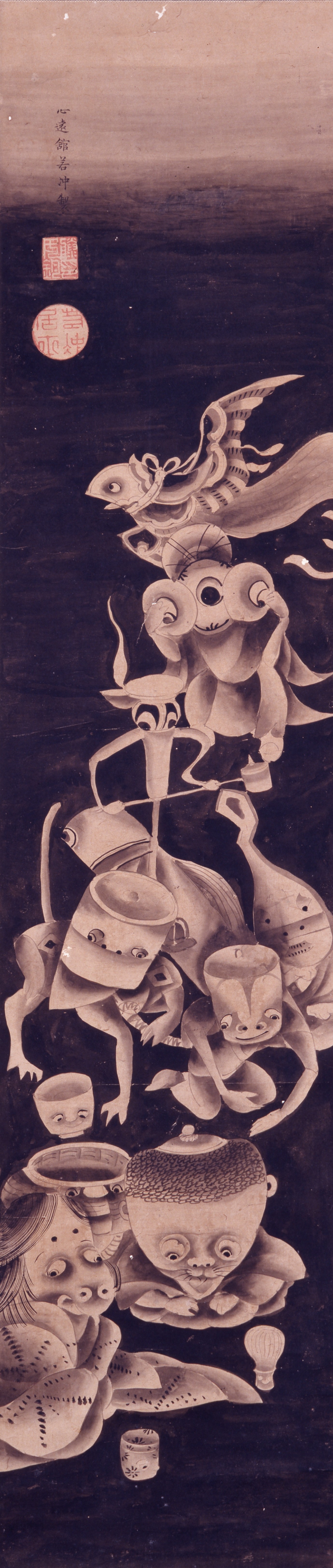
▲付喪神圖/伊藤若冲/江戸時代中期~後期(18世紀)
Tsukumogamizu, Ito Jakuchu, 18th century
In Japanese folklore there is a belief that inanimate objects can become a kind of yokai known as an obake, or shapeshifting apparition, by housing a spirit. In this 18th century painting, popular artist Ito Jakuchu shows a variety of appliances becoming such obake.
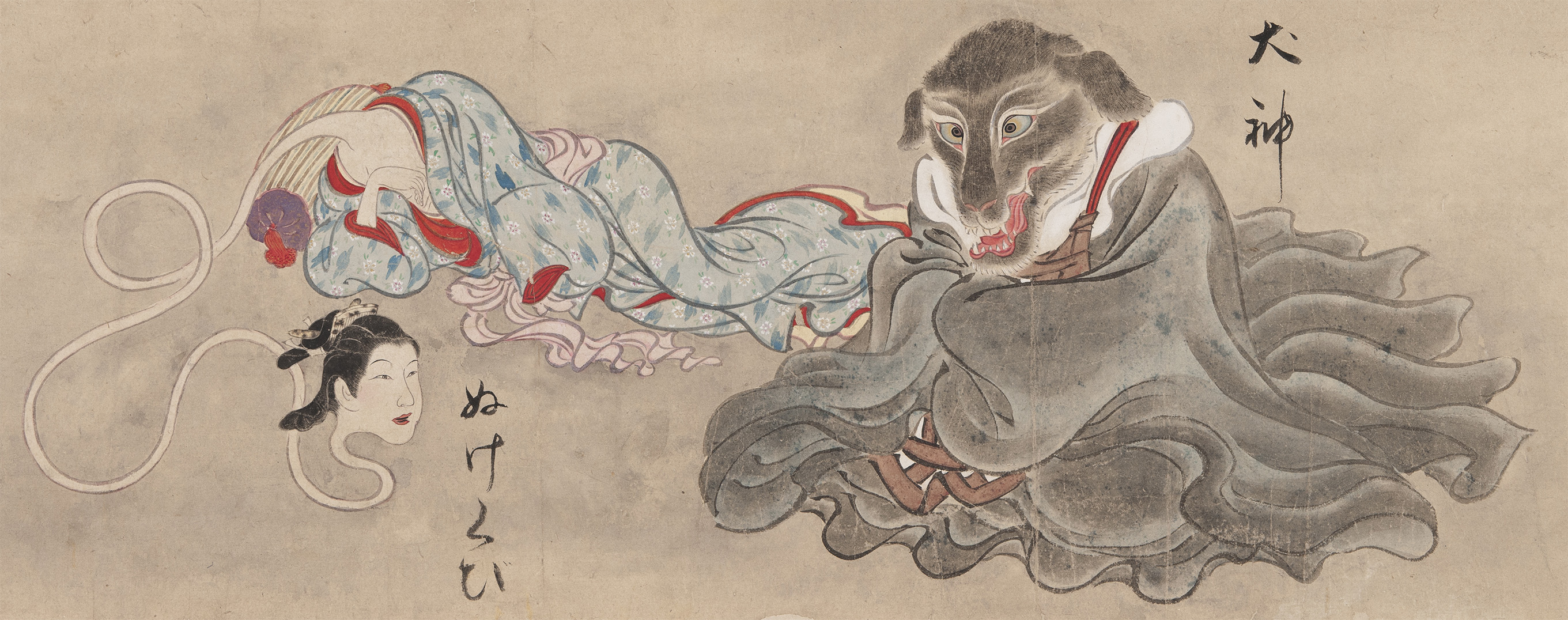
▲百怪圖巻(部分)「犬神/長脖子」/佐脇嵩之/元文2年(1737)
Hyakkai-zukan (excerpt) Dog Spirit/Nukekubi, Suushi Sawaki, 1737
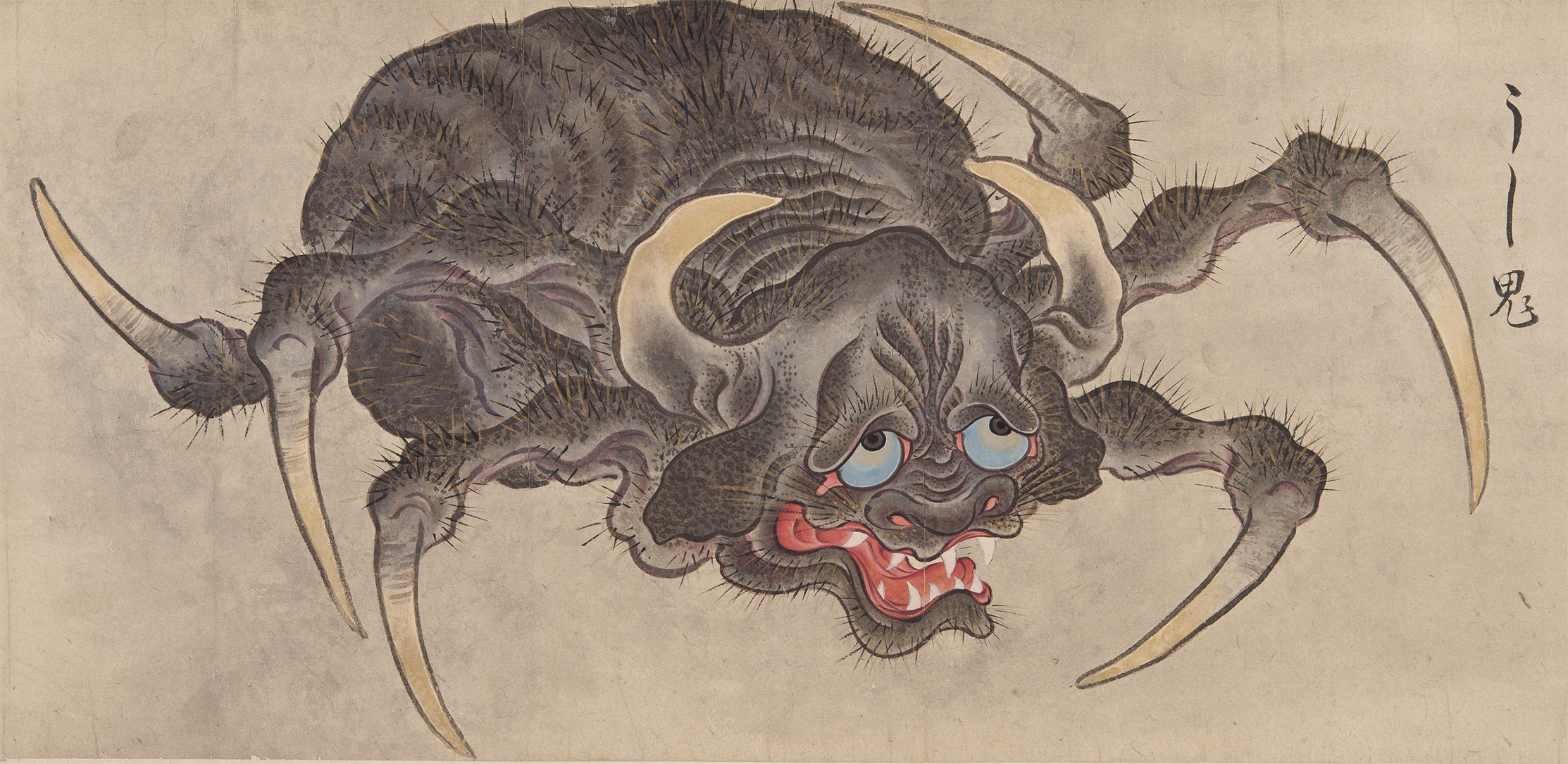
▲百怪圖巻(部分)「牛鬼」/佐脇嵩之/元文2年(1737)
Hyakkai-zukan (excerpt) Bull Demon, Suushi Sawaki, 1737
If you are a fan of manga or anime there are probably several yokai that you will be able to recognize. The Hyakkai-zukan is a kind of collection of yokai that has had a great influence on depictions until the present day.
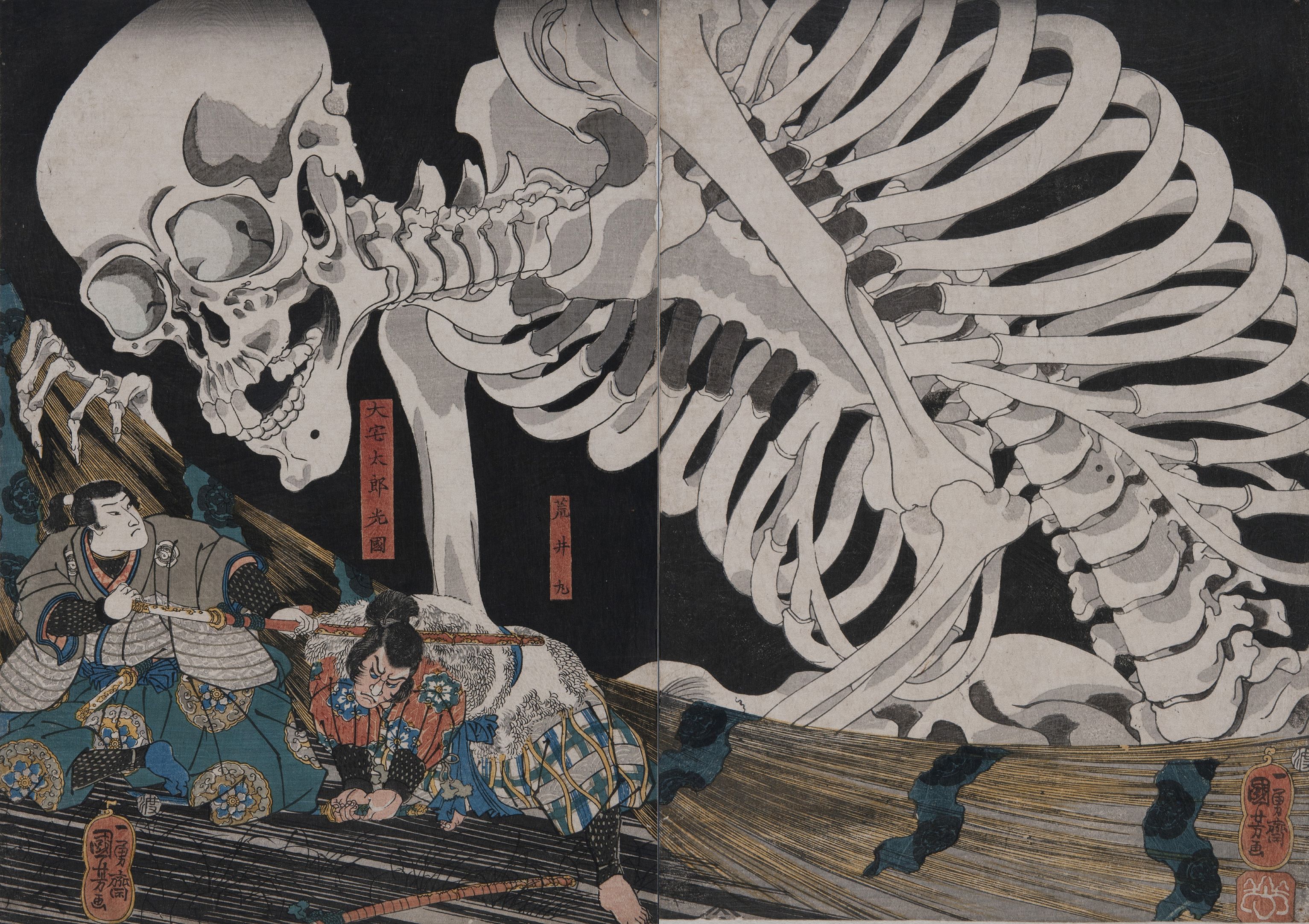
▲相馬的古内裏/歌川國芳/弘化2~3年(1845~46)
Soma no Furudairi, Utagawa Kuniyoshi, 1845-1846
What a tremendous presence! The looming giant skeleton is quite a sight to behold, overwhelming those who behold it. The skill and craft of the artist is on full display in this painting.
Part two: depictions of ghosts and spirits
In contrast to yokai, ghosts refer to the spirits of those who have passed on.
In ancient Japan, these ghosts and spirits were said to be among the different types of yokai, however as time went on, they grew to be increasingly distinguished from one another. Eventually, ghosts became an artistic theme in their own right.
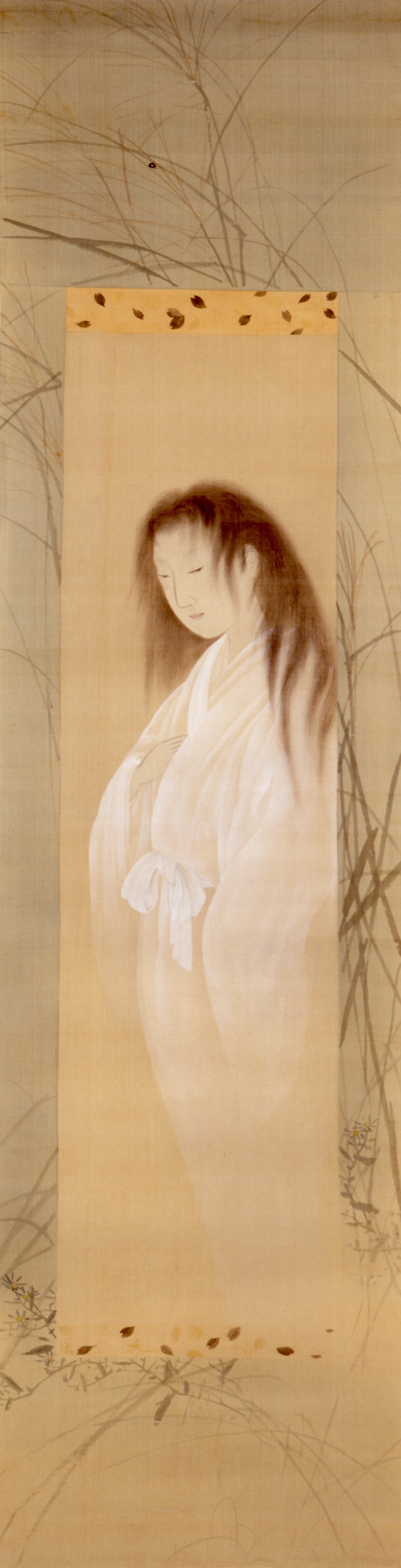
▲幽靈圖/傳 圓山應舉/江戸時代中期(18世紀)
Yurei-zu, Attributed to Oukyo Maruyama, 18th century
Ghosts are supposed to be frightening, but this one has an oddly kind and calm expression. A spirit one might not mind meeting again.
Epilogue: until we meet again
This unique exhibit introduces paintings of spirits that manifest in everyday items as well as those that appear only on festival nights.
Although society and people’s ways of thinking have changed over time, these monsters have always existed between the everyday world and the extraordinary world, and it feels as though they are still right beside us today.
Admission:
General: 1,500 yen (1,300 yen);
High school and college students: 800 yen (600 yen);
Junior high school students and younger: Free
*Prices in parentheses are advance ticket prices and group rates for 20 or more people.
*Students must present a student ID upon entry.
* Admission is free for holders of a Physical Disability Certificate, Developmental Disability Certificate, or Mental Health and Welfare Certificate, along with one caregiver, as well as for holders of a Specific Disease Medical Benefits Certificate, a Specific Medical Expenses (Designated Intractable Diseases) Benefits Certificate, a Congenital Blood Coagulation Factor Disorder Medical Benefits Certificate, or a Pediatric Chronic Specific Disease Medical Benefits Certificate. *The “Mirairo ID” disability certificate app can also be used.
*Tickets purchased during the exhibition period will be sold at the same-day rate. Various handling fees may apply when purchasing e-tickets, depending on the ticketing service.
Ticket sales:
Available at Altone Ticket, Lawson Ticket (L-Code 84070), Seven Ticket, and other outlets.
Organizers:
Fukuoka City Museum, Nishinippon Shinbun, Nishinihon Shinbun Evet Service
Information
- Address
- Fukuoka City Museum, Special Exhibition Room (3-1-1 Momochihama, Sawara-ku, Fukuoka City)
- TEL
- 092-711-5491 (Weekdays 9:30 ~ 17:30) Nishinippon Shinbun Event Service
- Opening hours
- Jul 19, 2026 (Sun) ~ Sep 13, 2026 (Sun)
Museum hours from 9:30 ~ 17:30 (last entrance at 17:00)
*Note: the Twilight Museum program will open until 20:00 (last entrance at 19:30) on Fridays, Saturdays, Sundays, and Holidays from Jul 24 ~ Aug 13. - Closed days
- The museum is closed on Mondays (except for July 20, where it will close on July 21 (Tuesday) instead)