Explore History in Hakata Old Town with Husband-and-Wife Combo Ryoumai!
- Date
Share


Nowadays Fukuoka is perhaps best known for its delicious food and yatai culture, but the spirit of Japan’s Middle Ages can still be felt if you know where to find it.
In this article influencer power couple Ryoumai took a walk around the Hakata Old Town area to explore the history and culture that still permeates the neighborhood. Close to Hakata Station, it’s the perfect place for a small detour and filled with interesting historical spots to check out.
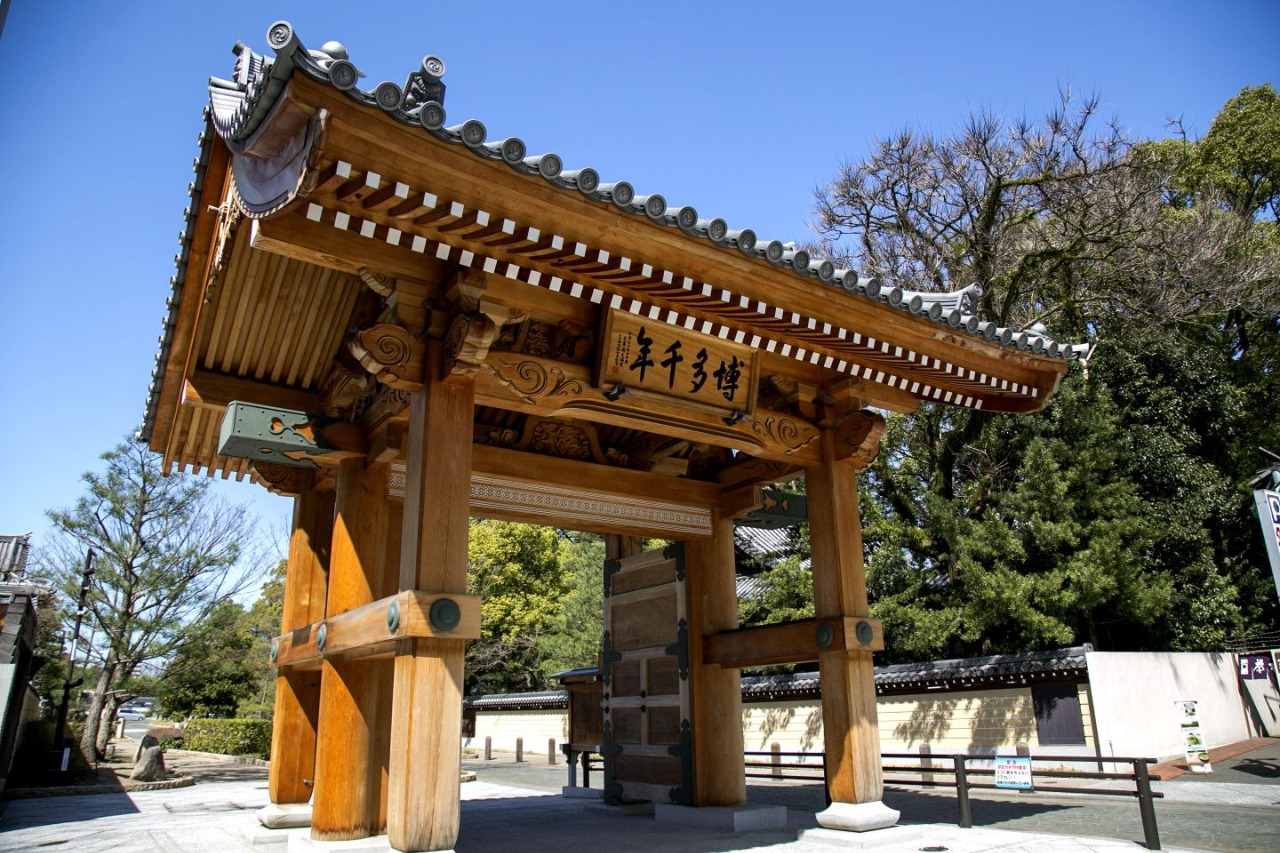
The welcome gate to Hakata Old Town: Hakata Sennennomon

Photo credit: Fukuoka City
Appropriately, the first stop on this trip through history is the welcome gate to Old Town area: Hakata Sennennomon.
Translating to Hakata Thousand-year Gate, this Old Town landmark is within walking distance of Hakata Station and has been welcoming visitors to the area since 2014. The proud wooden frame of the gate seems to exude an invitation to an era transcending history 1,000 years in the making.
All around the surrounding area ancient temples line the streets, making a walk through the neighborhood feel like stepping back in time. Just by taking a walk around the gate allows you to appreciate the rich history that Hakata has accumulated over the years.

Meet King Enma the ruler of the underworld at Kaigenji Temple

Next up on the itinerary is Kaigenji which can be found in a quaint and quiet part of the city. Within this temple are halls dedicated to King Enma, the lord of the underworld, and Kannon the Bodhisattva of compassion, both often frequented by locals as places to offer prayers.
An Enma Festival is held every year on January and August 16, and the tradition of offering konjac jelly to the statue of old lady Datsue-ba (middle of the bottom left photo) is still practiced then.

Enma Hall / Kannon Hall
Prayers to Datsue-ba are made to help heal illnesses in children, or to help mothers lactate when having children. These associations have led to her being affectionately termed granny konjac by supplicants.
Another popular aspect of the temple is the Enma lottery. A kind of gacha lottery game, by inserting 300 yen and twisting the lever a small capsule emerges containing a miniature King Enma. There are several different colors, with the golden one with a rate of about 1/50 per pull, making it quite rare. Evidently, Ryoumai became quite invested in the contraption: “These are so cute! We want to collect them all!” they said as they laughed.

Apart from these there are also King Enma face cutout boards that help contribute a bit of levity to the historical atmosphere.
❖Kaigenji Temple
Address: 10-5 Nakagofukumachi, Hakata-ku, Fukuoka City
Come see the giant seated Buddha at Tochoji Temple

Next up is the venerable Tochoji, a Shingon Buddhist temple that was established in 806 AD by Kukai, the founder of the Shingon sect and the first of the temples he opened in the country after returning from China. The beautiful vermillion lacquered five-layer pagoda made solely of hinoki cypress wood, the hidden wooden statue of Thousand-Armed Kannon only available to look at several days throughout the year, and many other important cultural properties besides can be found on the temple premises.
Standing in the tranquil temple grounds, one can feel one’s back straighten in the midst of the solemn atmosphere.

One of the temple’s main attractions is the 10-meter-tall seated wooden Buddha statue, the Fukuoka Daibutsu, which is among the largest of its kind in Japan. Standing 10.8 meters in height and with a whopping weight of 30 tons, the enormous statue of Japanese cypress was completed in 1992 after roughly four years of work. Carved into the wall behind the massive statue are depictions of the 7 incarnations of the Buddha as well as the 13 Buddhas and wisemen important to Shingon Buddhism, in addition to 5,300 other smaller Buddha statues. Impressed, Ryoumai could not help but express their admiration. “That such a spectacular statue of the Buddha is right in the middle of the city is kind of mind-blowing” they say with considerable surprise.

A mysterious tour of the Buddhist afterlife…

At the base of the giant Buddha statue there is a winding pitch-black corridor meant to represent hell and paradise in Buddhism respectively. At the entrance, a relief depicting the various hells of Buddhism welcomes pilgrims before they plunge into the darkness. The darkness is all-encompassing and impenetrable. You could not see your hand even if you held it out directly in front of your face. However, amid the darkness the ring of the Buddha can be found somewhere fixed to the wall, which is supposed to lead those who find it to paradise. Ryoumai also took the challenge, and upon emerging said, “Being in that kind of darkness is quite exciting!”
❖Tochoji Temple
Address: 2-4 Gokushomachi, Hakata-ku, Fukuoka City
A quick breather at Hakata Akachokobe

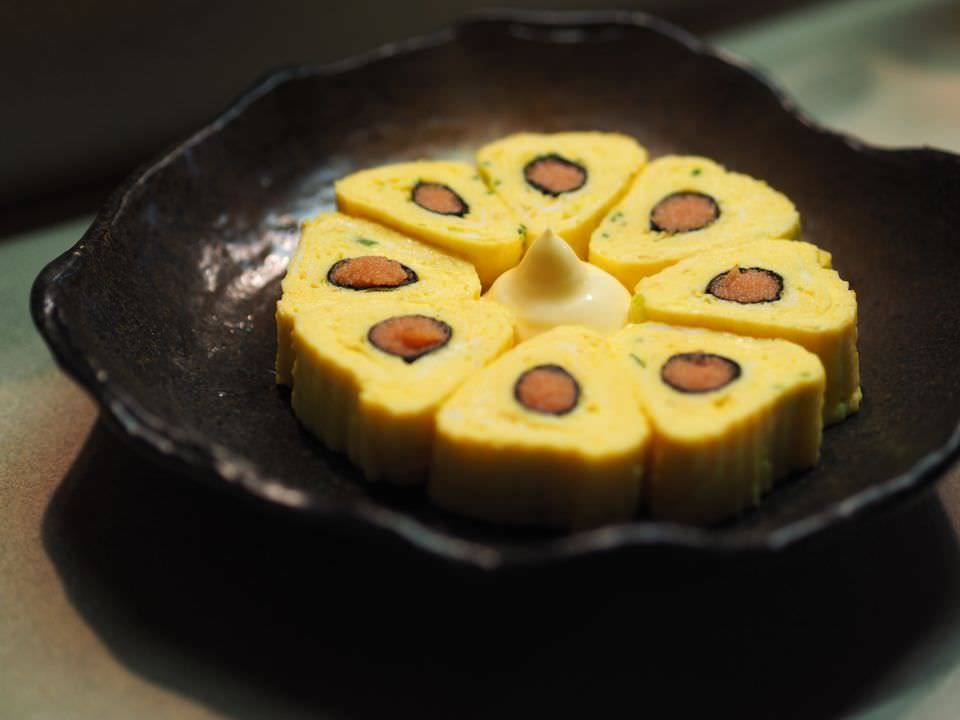
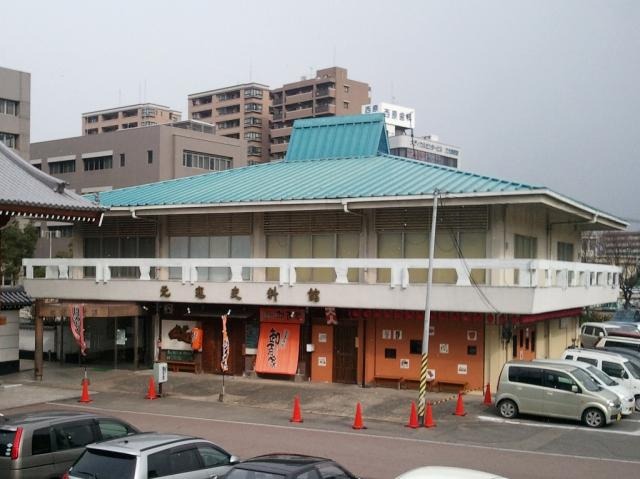
Before heading to the next destination, a quick pit stop at udon izakaya Hakata Akachokobe was in order.
Hakata is the birthplace to several famous Japanese dishes originating in China, among them udon, soba, manju, and uiro. For this reason, it is often considered the culinary gateway of Japan.
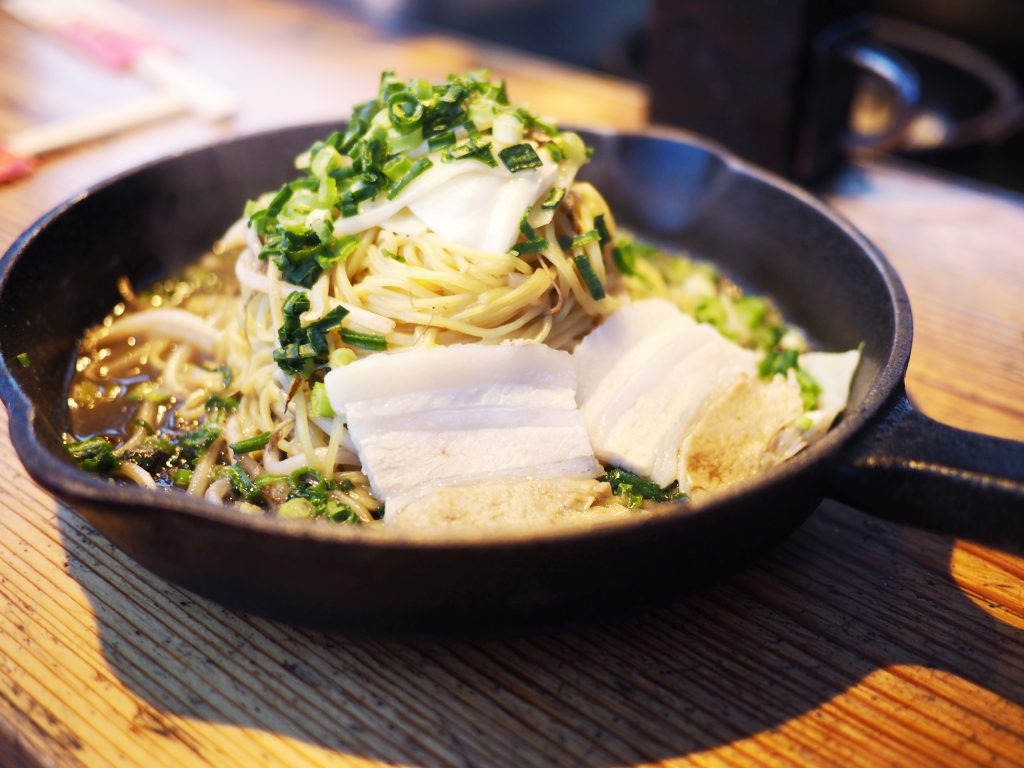
The udon that Hakata Akachokobe serves a specific kind of noodle called koshikihaigamen. This old-style noodle includes the wheat germ which has been kneaded into the dough, and as a result it has a springy texture and pleasant aroma that sets it apart from the usually very soft udon popular in the rest of the city.
Their specialty is their zubora-udon, featuring the unique presentation of serving the udon in a kettle, with the still piping hot strands of udon dipped in a sauce before being eaten. “The noodles have a smooth texture, making them really enjoyable to eat!” Ryoumai joyfully exclaim while eating.
If exploring Hakata, this restaurant is a must-visit for those seeking a unique bowl of noodles.


❖Hakata Akachokobe
Address: 7-10 Reisenmachi, Hakata-ku, Fukuoka City
Hours:
Weekdays: 11:30 ~ 14:00, 18:00 ~ 23:30
Saturdays: 18:00 ~ 23:30
Sundays: 11:30 ~ 14:00
Find the perfect souvenir at hakatatakara

After enjoying a walk through the historical streets of Hakata Old Town, it’s a good time to purchase a souvenir unique to Hakata. Hakatatakara, a store located in the product hall adjoining the Hakatamachiya Furusatokan Museum, is the perfect place to do just that.
Opened in April of 2025, hakatatakara is a shop that combines Hakata’s traditions with more modern sensibilities. The store features a café and sells sweets in addition to local handicrafts, allowing guests to enjoy various aspects of Fukuokan culture.
Among the many traditional items for sale are Hakata ori (Hakata tapestry) products, Hakata dolls, Hakata hariko (a kind of paper maché figure), Hakata magemono (containers made of bent strips of wood), and Hakata koma (spinning tops). Sweets such as DECO Choco (original print chocolates), Niwaka-baum, and Amaou strawberry Niwaka-baum are among the playful limited-edition sweets they have on offer. Other items include Hakata Gion Yamakasa and Niwaka mask themed folding fans, hand towels, and stickers. Design and local flair come together in this extensive line-up!

In the corner of the shop the café serves green tea from Mitsuyasuseikaen, a Fukuokan institution with over 300 years of experience making fragrant and aromatic tea. Coffee is made with beans roasted at STEREO COFFEE, a popular local brand in Fukuoka. Another must-try item is the bite-sized mochi confection Kofuku Mochi, created under the supervision of Ocha-cha Manju Honpo Fuki. They offer a selection of unique flavors you can only find here, such as yuzu pepper, mugwort, and even udon broth! Upon tasting them, Ryoumai exclaim “The udon flavor tastes exactly like udon dashi! The yuzu pepper has this slight sweetness combined with a spicy kick that’s totally unique!”


❖hakatatakara
Address: 6-10 Reisenmachi, Hakata-ku, Fukuoka City
Hours: 10:00 ~ 18:00 (café last order is at 17:30)
Days off: the fourth Monday of the month (if this falls on a holiday, the store closest on the next normal weekday instead)
Finish off with a visit to Kushida Shrine

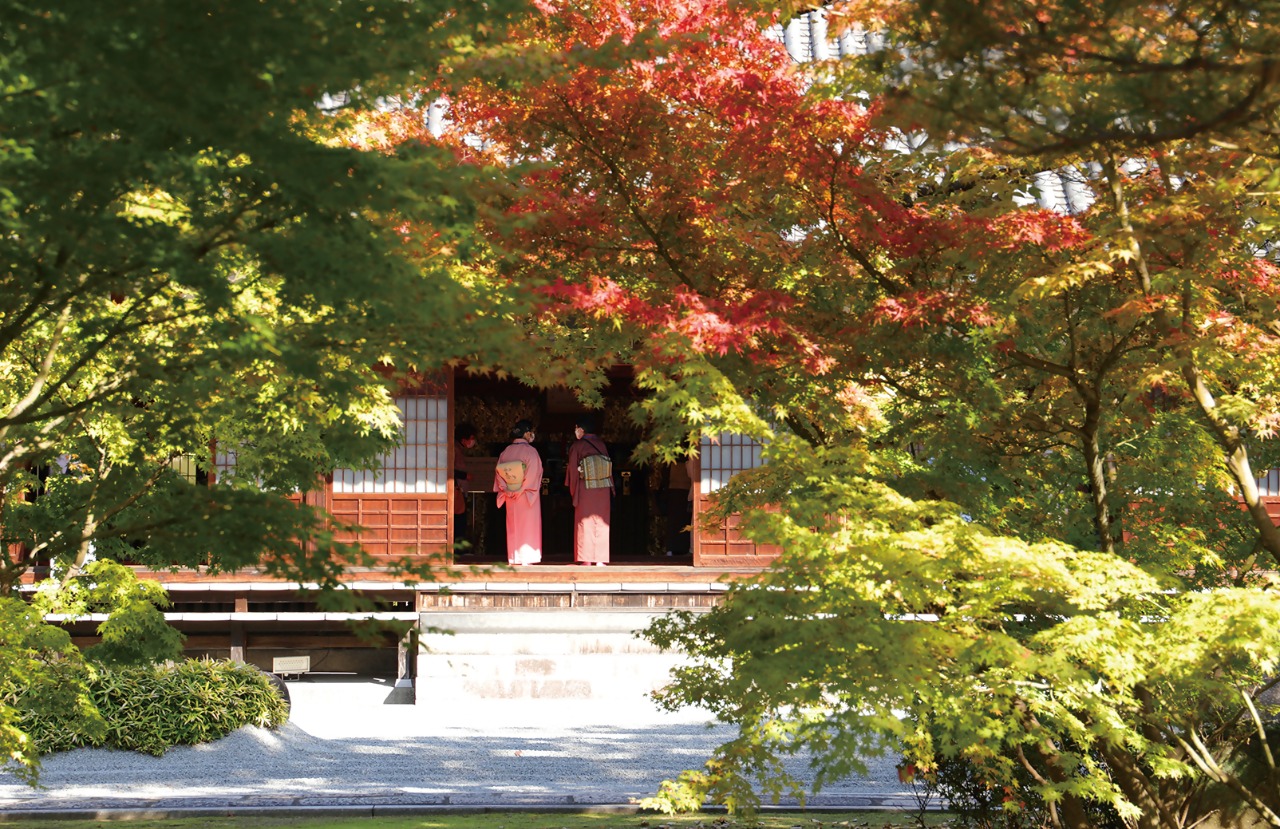
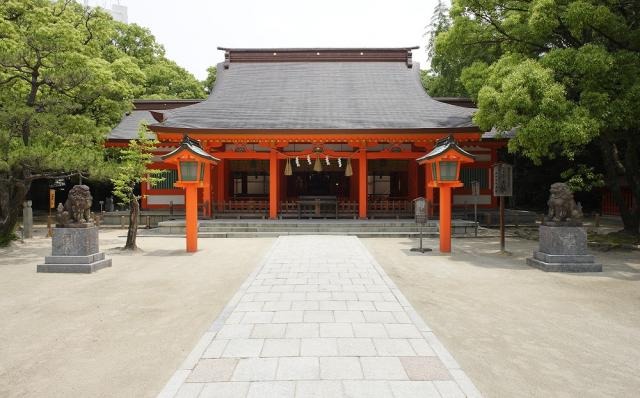
The final stop on this tour of the Hakata Old Town area is, appropriately enough, the tutelary shrine of the Hakata area, Kushida Shrine. Affectionately referred to by locals as “O-Kushida-san”, this shrine has protected the people of Hakata since ancient times. It is said to have been built in the Nara period (719-794 AD) and is known nationwide for being the votive shrine devoted to the Hakata Gion Yamakasa festival.
For this reason, the shrine has a permanent (except for June, when the Hakata Gion Yamakasa Festival is held) Kazariyama float from the festival on display. This gorgeous structure showcases all the craftmanship that goes into creating one of these massive art pieces and allows you to feel the excitement and passion of the event no matter what time of the year it is. Other attractions to check during your visit include the spring of immortality located next to the main hall where Oohatanushi-no-Mikoto is enshrined, as well as the shrine devoted to the god of prosperity in business, Meoto Ebisu.


The pulse of olden times still seems to beat at Kushida Shrine. Ryoumai mention how they want to come back during a different time of year to take in the change of scenery, as they reflect on what they have seen and experienced in the area.
❖Kushida Shrine
Address: 1-41 Kawabatamachi, Hakata-ku, Fukuoka City
Hours: 4:00 ~ 22:00
Office・shop: 9:00 ~ 17:00
The still living history of Hakata Old Town
With its 400 years of history, Hakata Old Town remains vibrant thanks to its confluence of the new and old. Even today people continue to live there, ensuring that those traditions continue to live on through the people residing there.
“When you first hear the word ‘history’ it sounds so imposing, but getting to see and learn about it up close is really fun!” Ryoumai say. We hope that those reading will also take the opportunity to create their own tale of Hakata by exploring this area where the past, present, and future all intersect. Each visit promises to reveal new aspects of this storied city.
[Trivia] Learn about Hakata’s old urban layout!
The roots of Hakata’s urban layout can be traced to the times of Hideyoshi Toyotomi’s Taiko urban layout project all the way back in 1587. At the time, Hakata was designed to almost resemble the layout of a Go board with a distinct grid-like plan. Due to the constant warring of that period Hakata had been reduced to a burnt field, and this project was initiated to help restore the city.

Photo provided by: https://www.lib.kyushu-u.ac.jp/ja/news/26383
The remains of this city planning can be seen most clearly at Taihaku-dori Avenue and in the Gokusho area. By walking through the area with map in hand you can get a sense for how systematic this project was, and how it set the stage for the city as we now know it.
READ MORE>>Modern Fukuoka’s Storied Past and Where to Find It