A Journey Through Fukuoka’s Four Major Yayoi-Period Sites
- Date
Share


Join Fukuoka’s Goodwill Ambassadors and explore the city’s rich history and culture.
Exploring Fukuoka with the Goodwill Ambassadors!
A Tour Through Historic and Cultural Sites
Join Fukuoka’s Goodwill Ambassadors and explore the city’s rich history and culture. Discover not only the classic spots, but also deeper stories, and overlooked views you might have missed. Spend your next day off uncovering Fukuoka’s historical treasures for a truly special experience!

▲2024–2025 Fukuoka Goodwill Ambassadors (Honoka Ueda (left in photo), Ayana Takahashi (center in photo), Narumi Kunisaki (right in photo))
In this fourth episode, join Honoka Ueda as she steps back in time to experience life in the Yayoi period!
A Journey Through Fukuoka’s Four Major Yayoi-Period Sites
Long before the modern city of Fukuoka took shape, settlements lined the rivers, paddy fields spread across the land, and life unfolded along these waterways and fields. In this installment, Honoka explores Fukuoka as it was in the Yayoi period by touring its historic sites. As you explore these places, taking in the mountains, rivers, and natural contours of the landscape, even familiar scenery may begin to look different. By following in the footsteps of the people who once lived here in harmony with nature, this will be a time to discover traces of the past still woven into the present-day landscape. You may even find yourself feeling a deeper connection to Fukuoka’s rich history and the enduring stories of its people.
One of Japan’s Oldest: The Birthplace of Rice Cultivation[Itazuke Ruins] (Nationally Designated Historic Site)
 |
 |
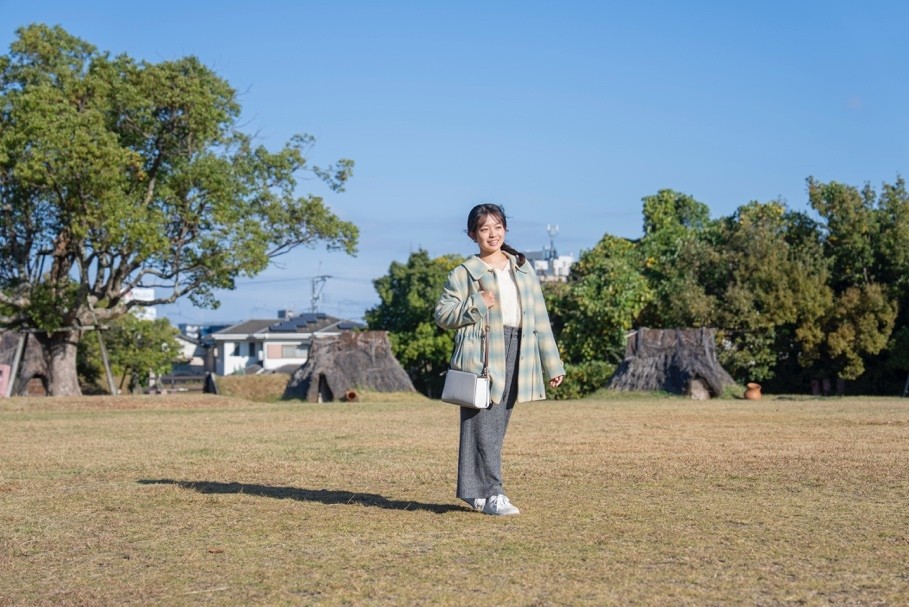
Located in Hakata Ward in Fukuoka City, the Itazuke Ruins are a must-visit for history enthusiasts, known as one of the earliest sites where rice cultivation began in Japan. The site spreads across a small plateau approximately 12 meters above sea level, slightly east of the center of the Fukuoka Plain, and is bordered by the Mikasa and Morooka Rivers.
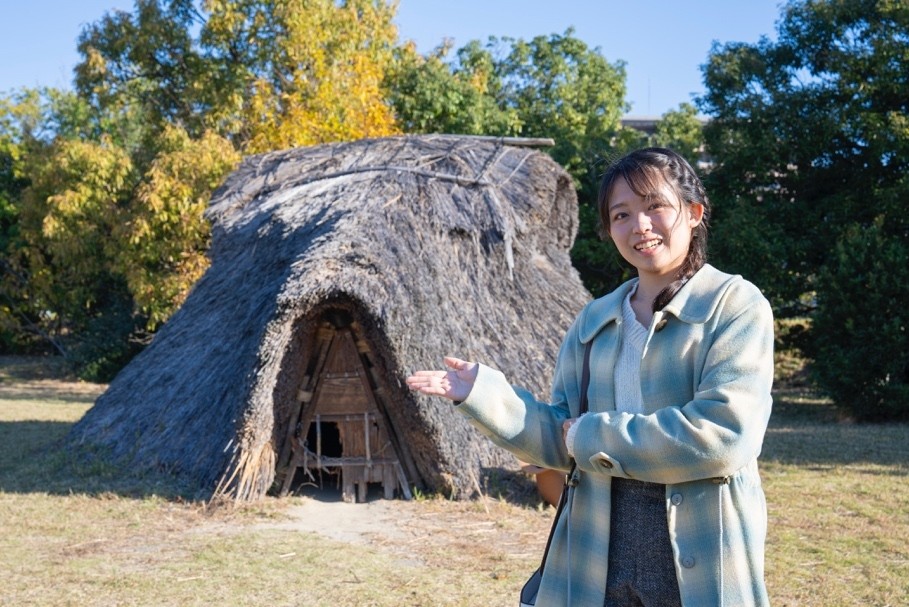
Surrounding the settlement on the plateau is a ditch known as a circular moat, with numerous storage pits discovered both inside and outside the enclosure, once used for rice and other food.
A highlight of the Itazuke Ruins is the paddy fields, which tell the story of the beginnings of rice cultivation. These paddies were equipped with irrigation and drainage channels that drew water from the former Morooka River, as well as weirs and water inlets and outlets, revealing the advanced civil engineering techniques that were introduced from the continent along with rice farming.
By the end of the early Yayoi period, the Itazuke Ruins had developed into one of the largest settlements in northern Kyushu. In 1916, jar-coffin graves called “kamekanbo,” which are distinctive to the region, were discovered on the southeastern side of the circular moat, along with bronze swords and spears found within.
Featuring a concentrated area of settlement remains, paddy fields, and burial grounds from the transitional period between the Jomon and Yayoi eras, the Itazuke Ruins are an essential destination for learning about life during the Yayoi period.
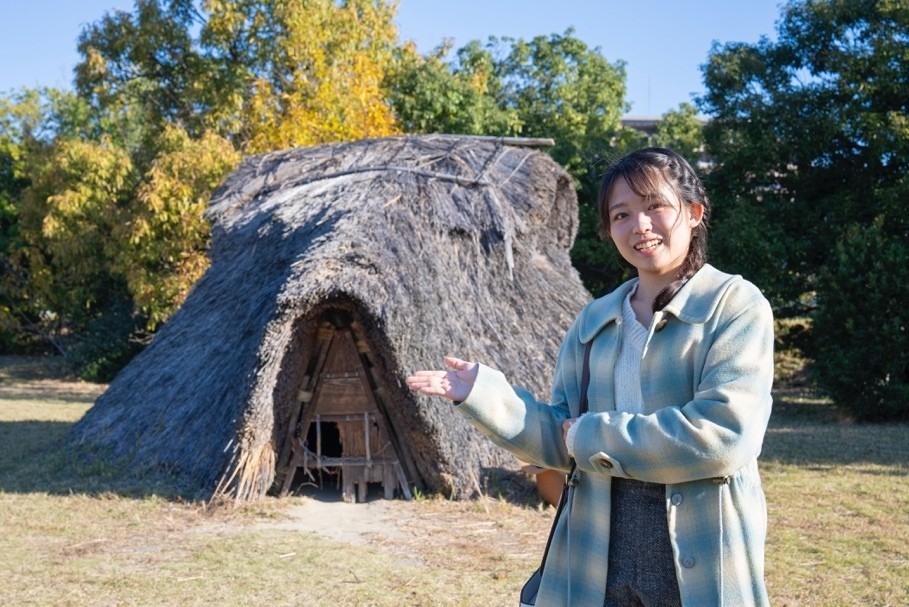
Today, pit dwellings and paddy fields have been reconstructed, with a rice-planting festival held in spring and a harvest festival in autumn.
 |
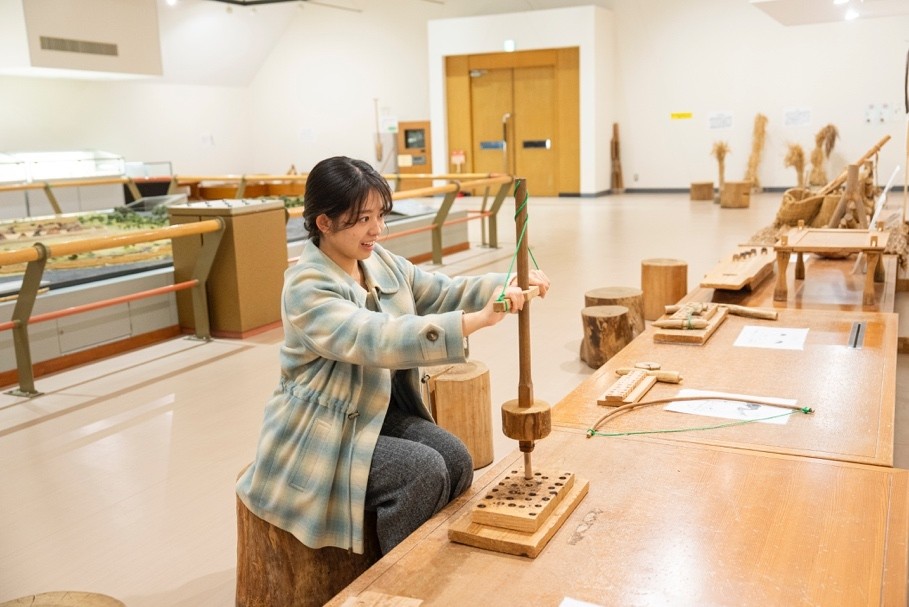 |
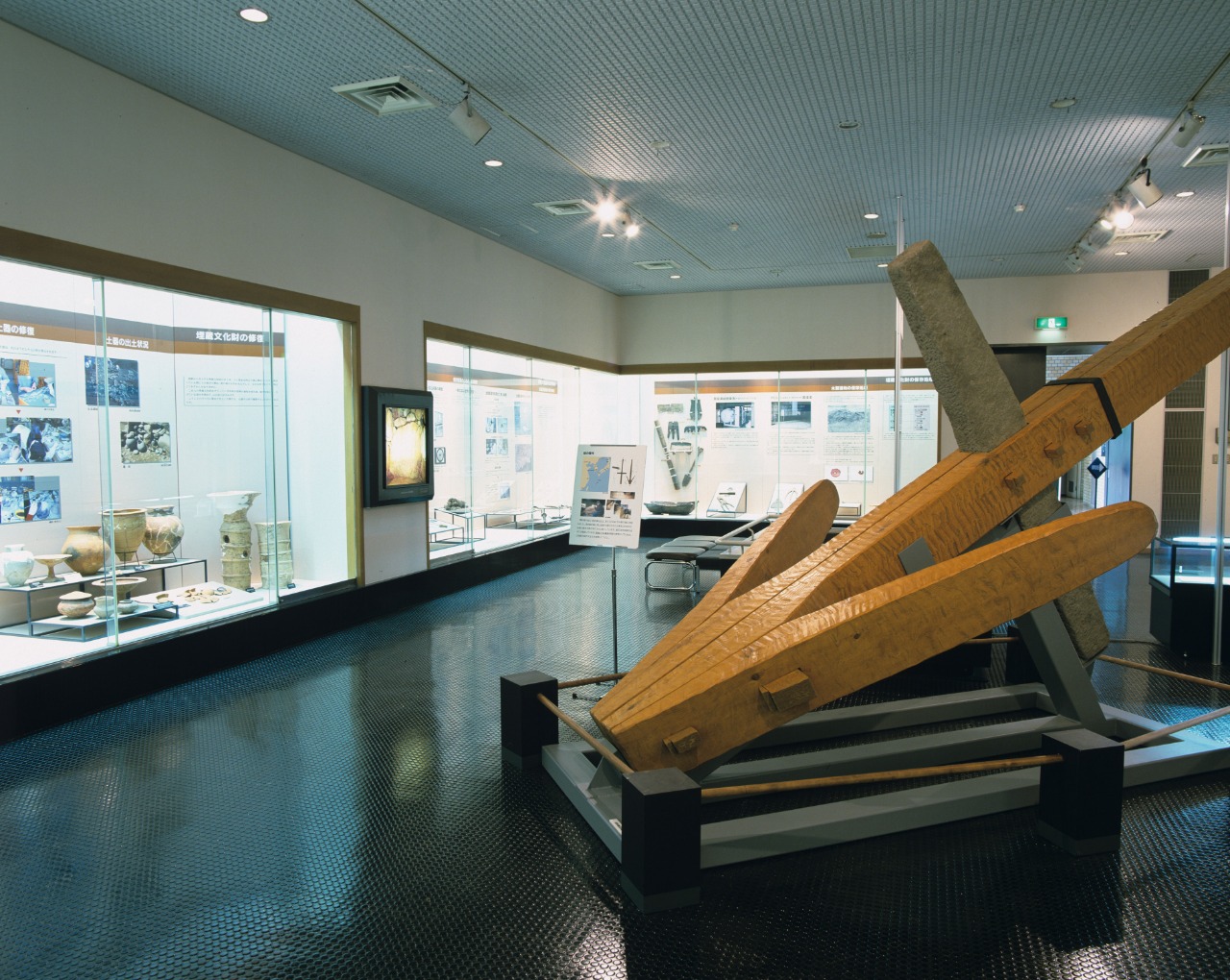
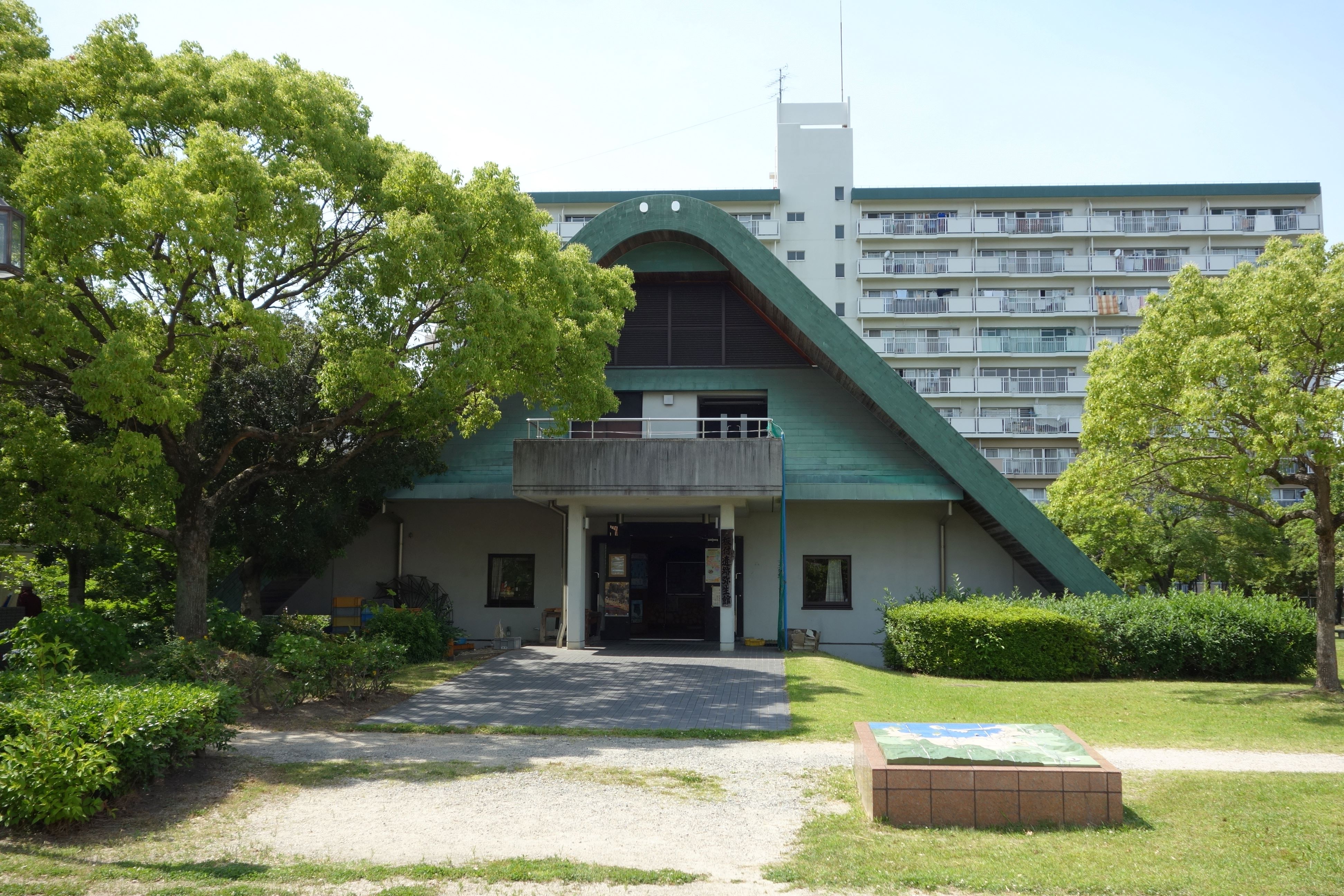
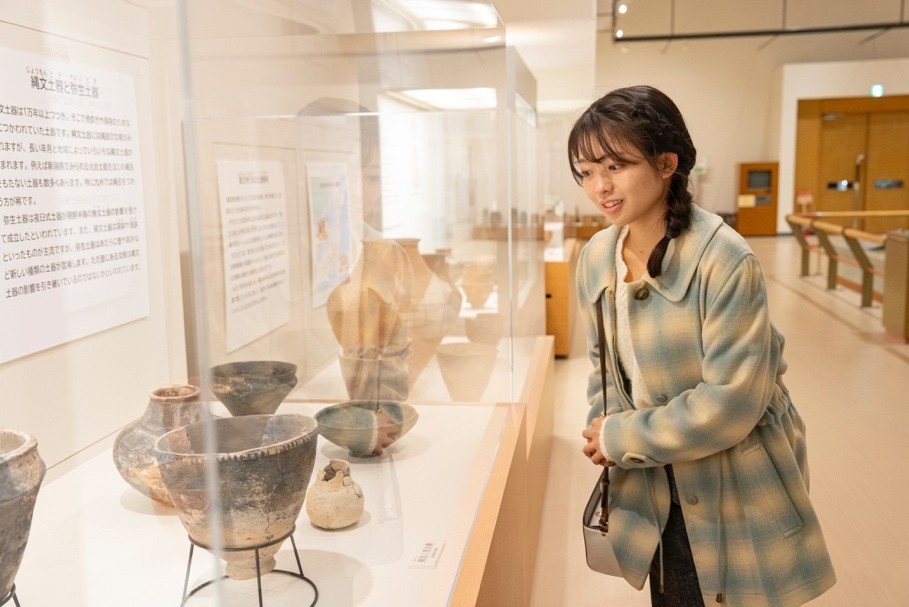
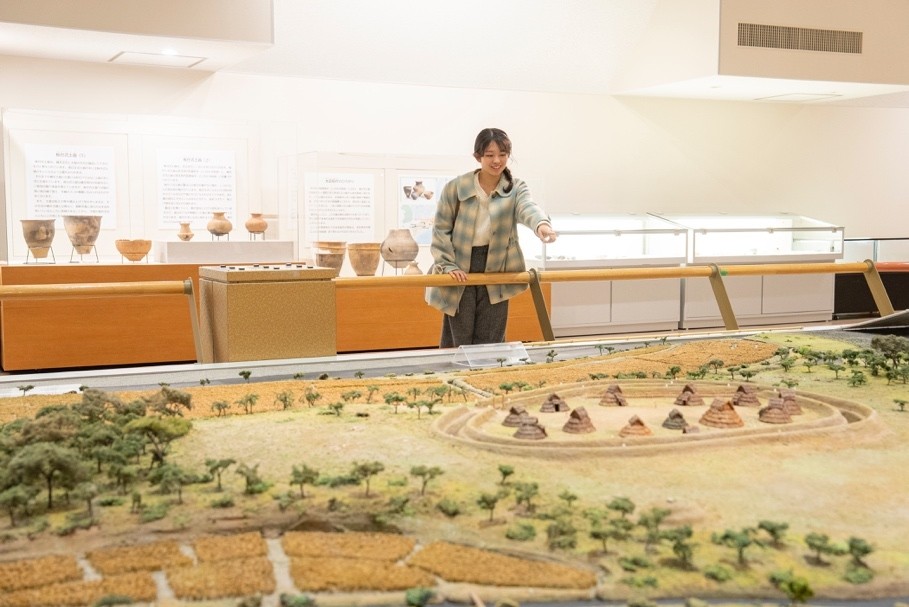
Across the road on the eastern side of the reconstructed settlement area is the Itazuke Ruins Yayoi-kan Museum. Here, visitors can view pottery and stone tools excavated from the site, and even try hands-on activities such as fire-making and rice harvesting with stone knives, just as the people who lived there once did.
Don’t miss the large-scale diorama recreating the landscape of the Yayoi period at the heart of the museum, as it offers visitors the chance to picture the natural environment and daily life of the time.
◎Itazuke Ruins
■Address:
2-Chome, 3-Chome Itazuke, Hakata Ward, Fukuoka City
■Opening Hours: 9:00 AM – 5:00 PM (Last admission at 4:30 PM)
■Closed: Dec 29 – Jan 3
■Phone: 092-592-4936
A Yayoi-Era Cemetery
[Kanenokuma ruins] (Nationally Designated Historic Site)
 |
 |
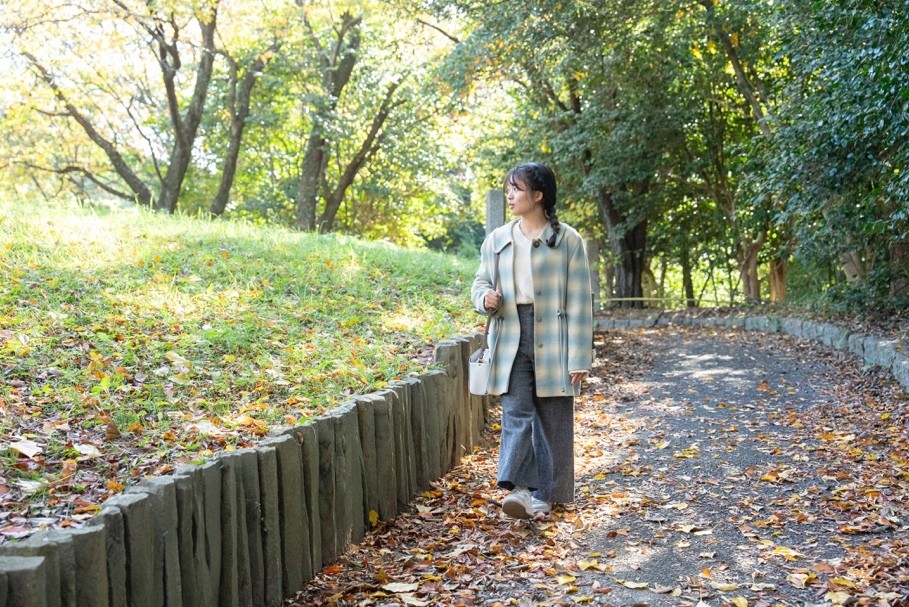
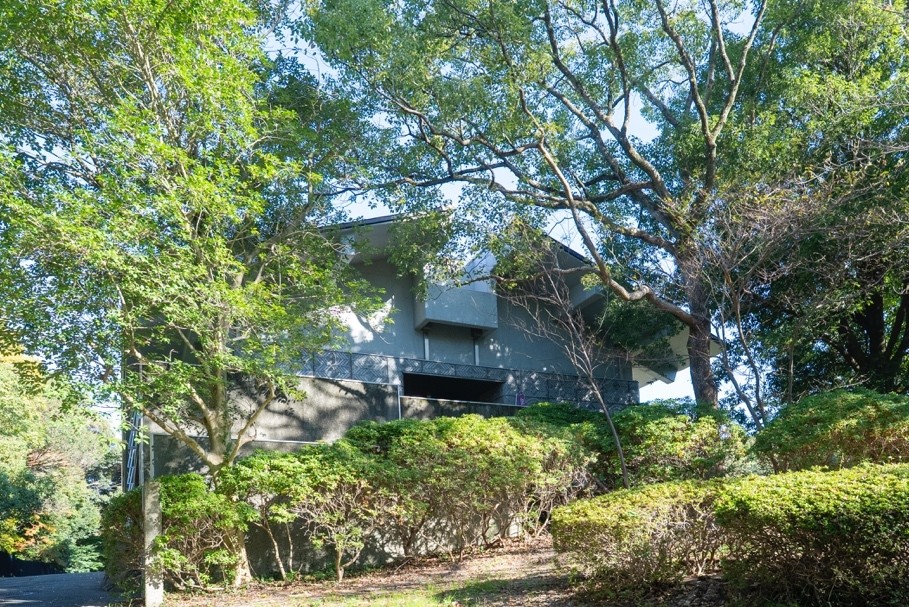
▲Yayoi Forest, located next to the exhibition hall, is a popular spot for a leisurely stroll.
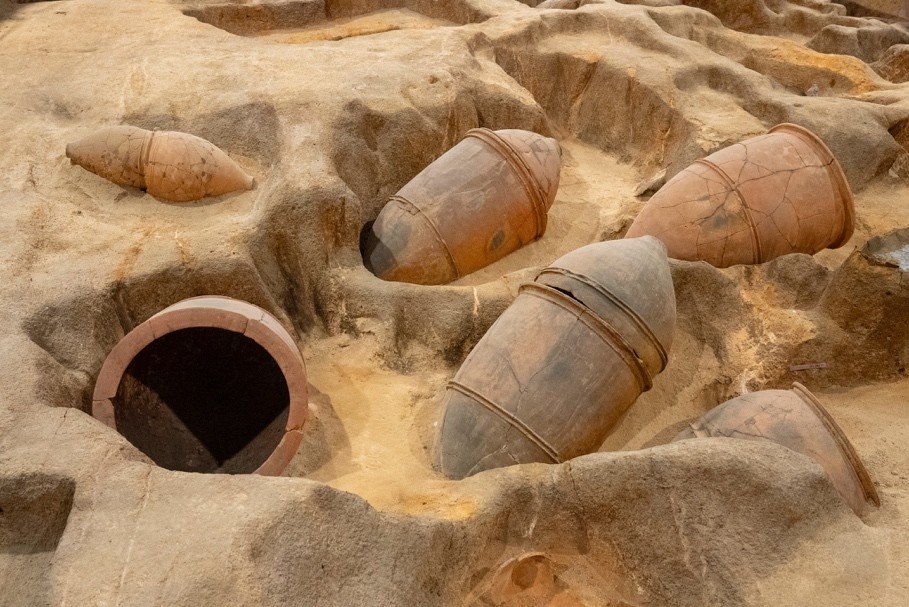
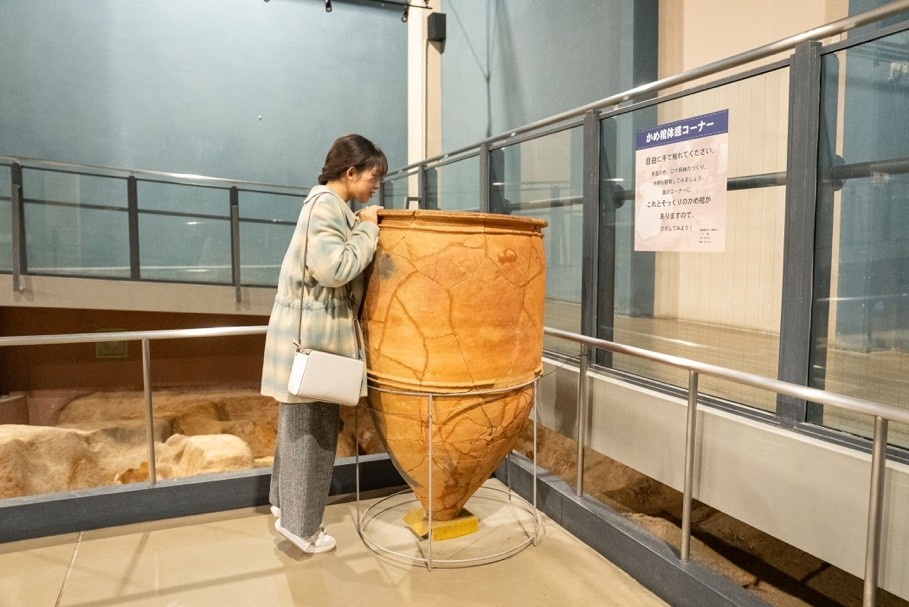
Located just a short distance from Fukuoka Airport, the Kanenokuma ruins are preserved within a historic park and are known as a communal graveyard from the Yayoi period. Today, an exhibition hall has been built while preserving a section of the site, and within it, jar coffins and human remains are displayed exactly as they were discovered. Visitors can explore the site as if looking directly into an active excavation, making for a truly fascinating experience. The Kanenokuma ruins sits atop a hill approximately 30 meters above sea level. A large number of graves dating from the early to late Yayoi period, a period spanning roughly 400 years, have been unearthed here. These include 348 kamekanbo (large earthenware jar-shaped coffins), “dokōbo” (simple pit graves in which bodies were buried directly in the ground), and two stone-coffin tombs. One particularly intriguing aspect is the clear “evolution” of burial practices over time—from pit graves to jar-coffin graves, and eventually to stone-coffin tombs.
Analysis of the skeletal remains of 136 individuals found in jar-coffin graves reveals that the average height at the time was approximately 162.7 cm for men and 151.3 cm for women. When compared with the people of the preceding Jomon period, they were several centimeters taller. Facial features also became more elongated, suggesting closer resemblance to people from the continent. This is thought to reflect increasing interaction and intermarriage with migrants who introduced rice cultivation and advanced technologies from the mainland to the Japanese archipelago.
Grave goods discovered at the site include bracelets made from Widest Pacific Conch shells, a species found only in the waters from Tanegashima to Australia, as well as stone swords and arrowheads, and even bead necklaces. These finds point to connections with cultures in mainland China and regions to the south. Taken together, the survey discoveries make the Kanenokuma ruins essential for understanding the physical characteristics, cultural exchanges, and burial practices of Yayoi-period people, and the remains were designated a National Historic Site in 1972. It is remarkable to think that such a site rich in historical value lies just next to the airport!
◎Kanenokuma ruins
■Address:
1-39-52 Kanenokuma, Hakata Ward, Fukuoka City
■Access:
5-minute walk from the Kanenokuma Iseki-mae stop of Nishitetsu Bus
■Opening Hours: 9:00 AM – 5:00 PM (Last admission at 4:30 PM)
■Closed:
Mondays (or the following weekday if Monday is a national holiday); Year-end and New Year holidays (Dec 29 – Jan 3)
■Phone: 092-503-5484
The Oldest Royal Tomb!?[Yoshitake-Takagi Ruins (Yayoi no Kaze Park)] (Nationally Designated Historic Site)
 |
 |
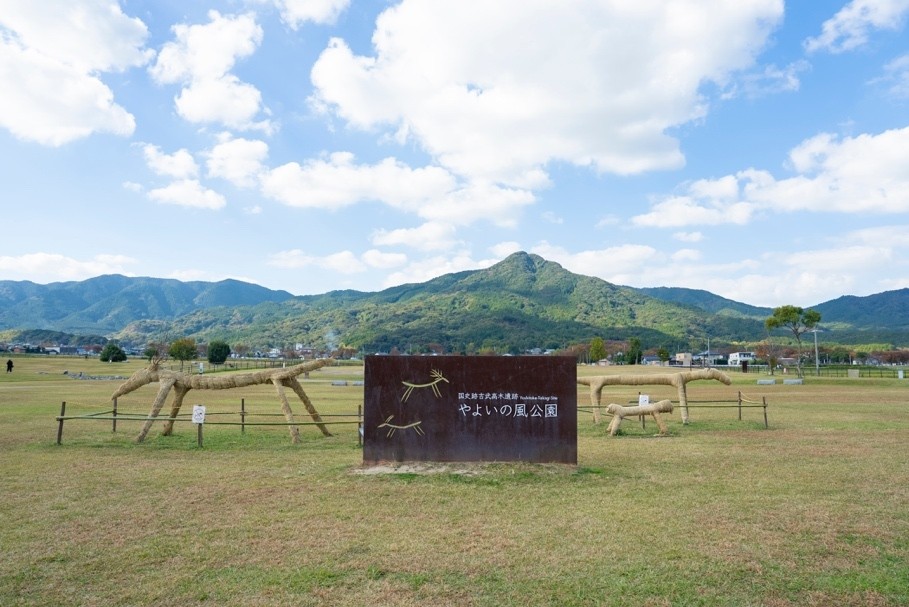
Located in Nishi Ward, Fukuoka City, the Yoshitake-Takagi Ruins is a National Historic Site. Today, it serves as a relaxing green public space known as Yayoi no Kaze Park, but underneath lies a site where remarkable treasures from the Yayoi period were discovered!
This area was once farmland and paddy fields. As pottery and stone tools were occasionally unearthed during farm work, people began to wonder if an archaeological site might lie hidden below. Subsequent excavations confirmed multiple sites spanning from the Old Stone Age to the Edo period across an area of approximately 40 hectares. At the heart of this area—now collectively known as the Yoshitake Site Complex—is the Yoshitake-Takagi Ruins, which primarily dates to the middle Yayoi period (around 2,000 years ago).
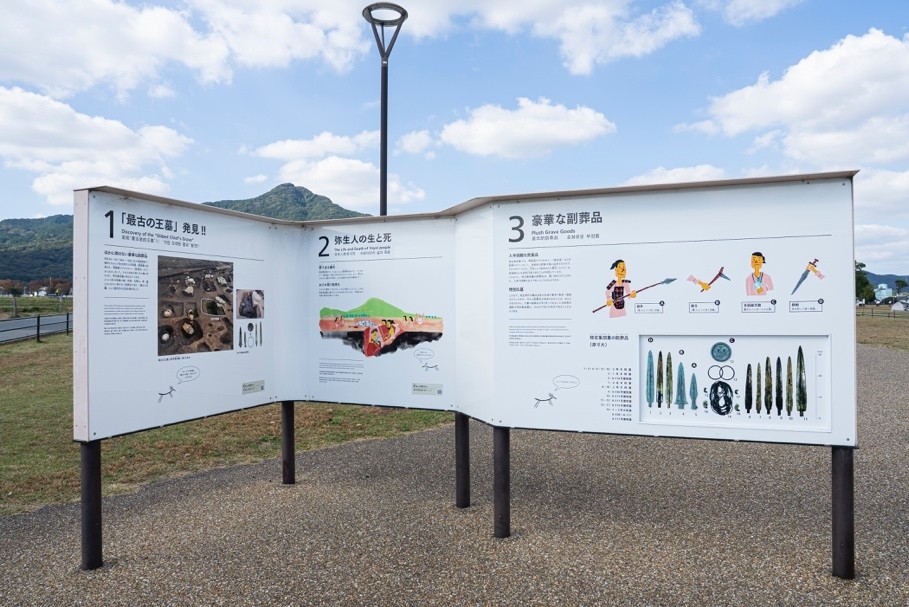
Among the many discoveries at the Yoshitake-Takagi Ruins, including large dwellings with pillars set directly in the ground and numerous jar-coffin graves, the most significant is Wooden Coffin Grave No. 3. Inside this large wooden coffin, archaeologists found jade magatama (comma-shaped beads highly prized at the time), along with a bronze sword and a bronze mirror. This combination of magatama, sword, and mirror is regarded as an early form of the “Three Sacred Treasures” of Japan. As the oldest known example of this set, the grave has come to be known as the “Oldest Royal Tomb.”
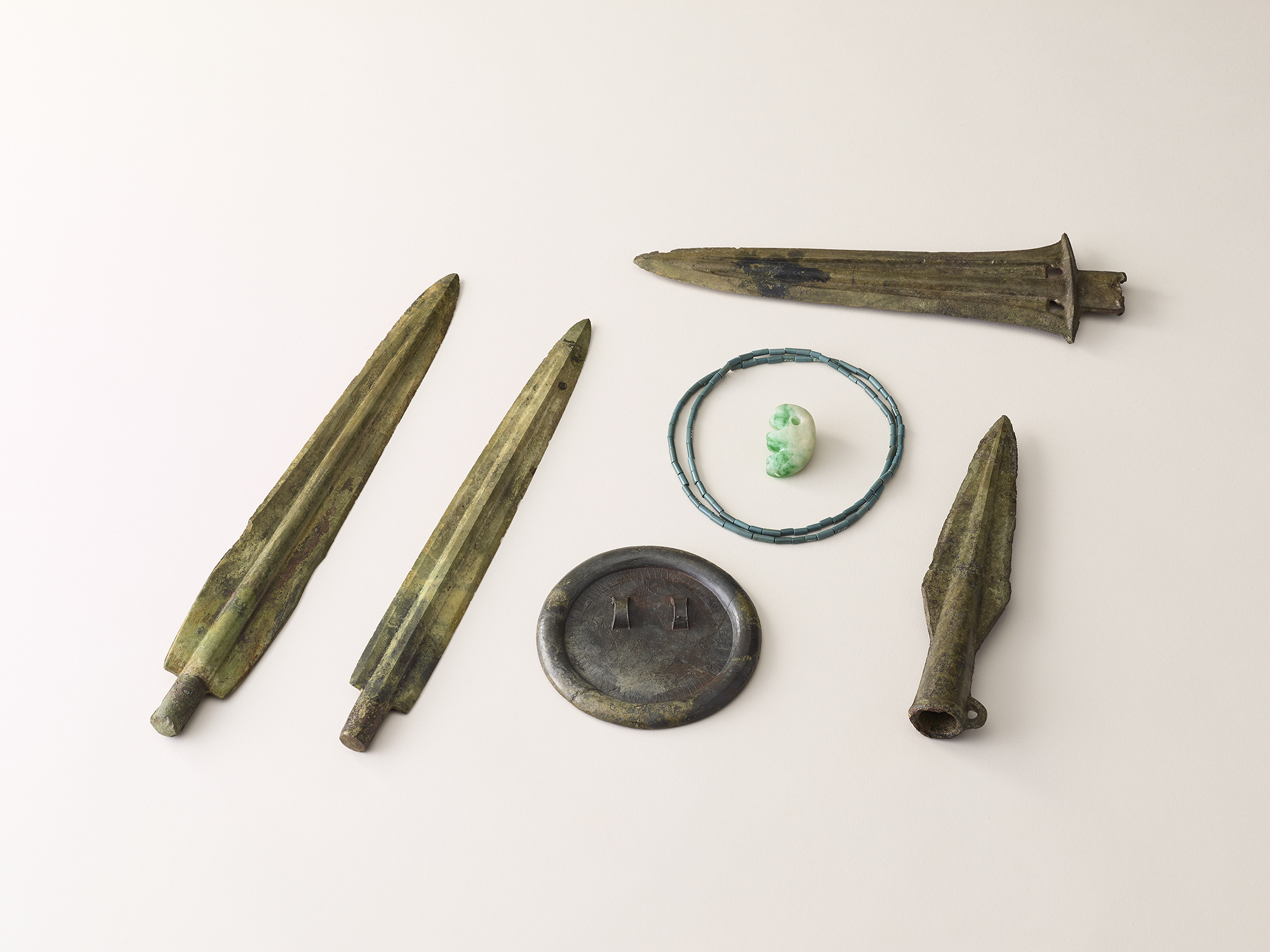
▲Held by the Agency for Cultural Affairs /Housed in the Fukuoka City Museum
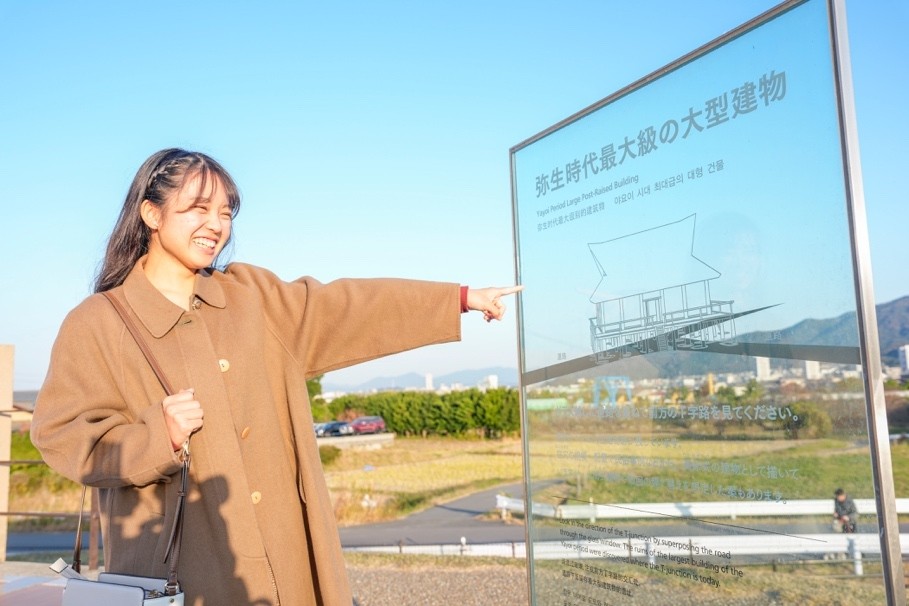
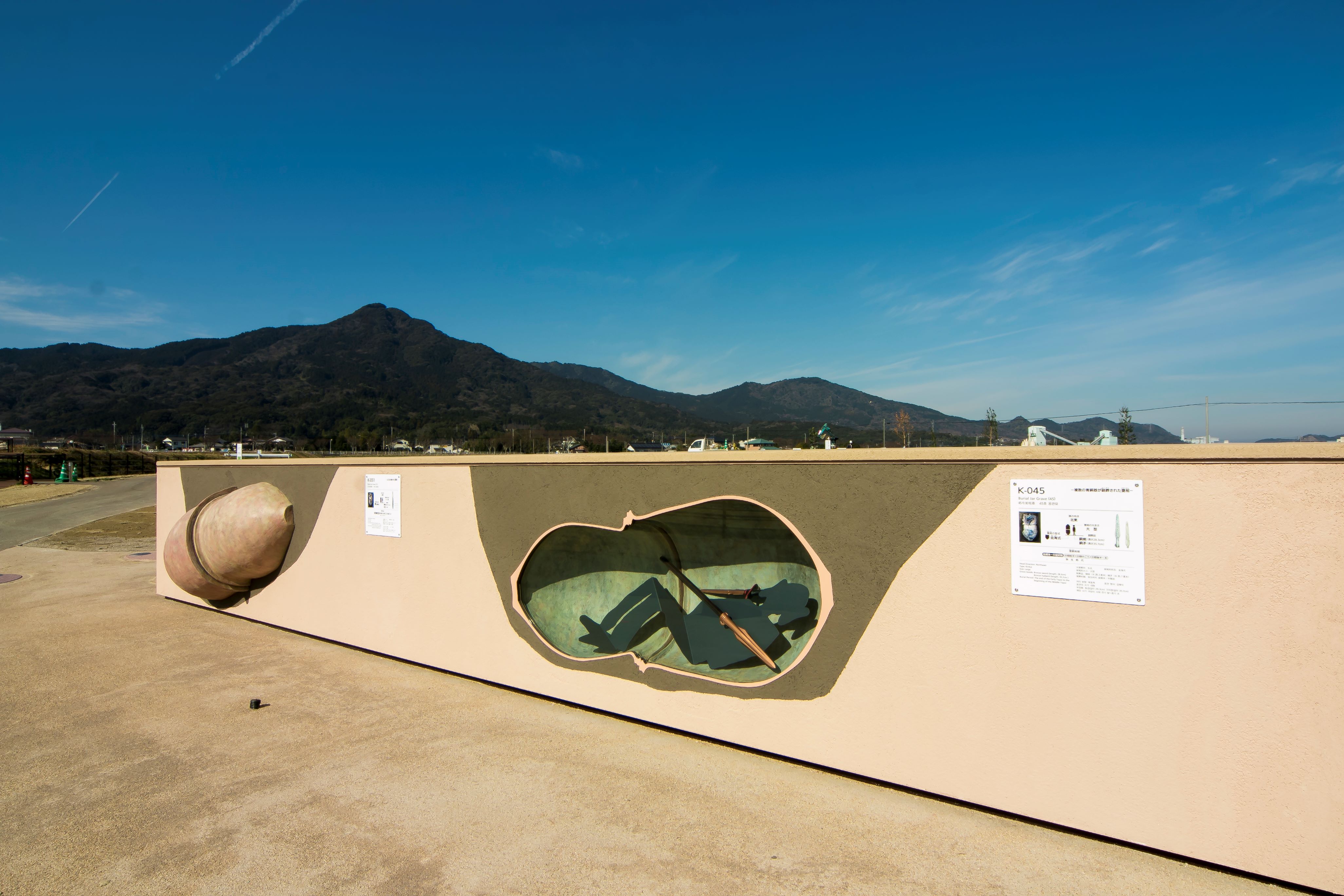
Today, the park recreates the landscape and vegetation of the Yayoi period and features life-size replicas of excavated artifacts, including bronze swords, mirrors, and jar coffins. One of the park’s highlights is the opportunity to stroll through the grounds at a leisurely pace while exploring informative displays such as “Oldest Royal Tomb,” “Jar Coffin Road,” and “Large Structures.”
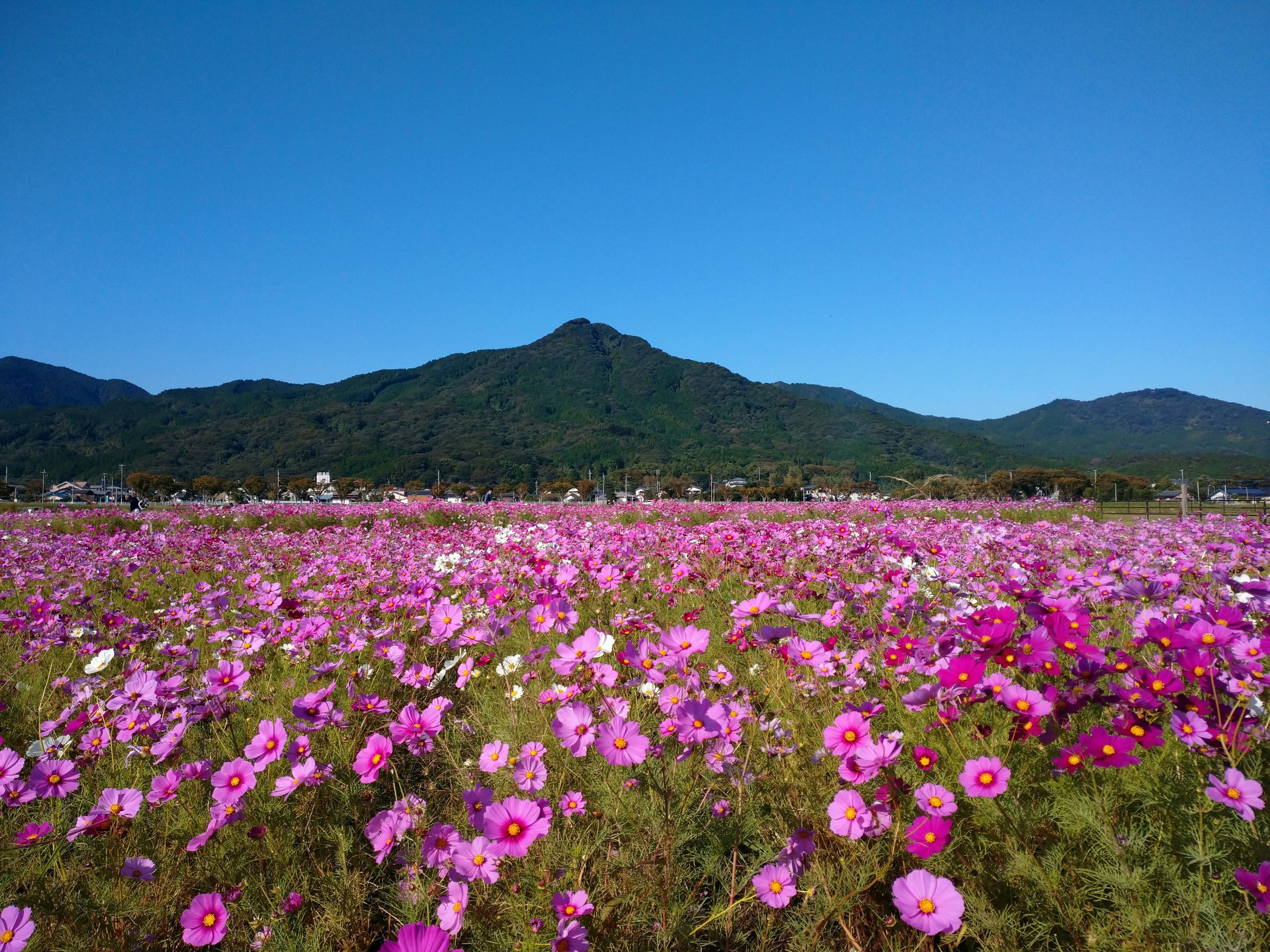
A cosmos flower field also blooms within the park, and a cosmos festival is held here each autumn.
◎Yoshitake-Takagi Ruins
■Address:
Yoshitake, Nishi Ward, Fukuoka City (approx. 600 m south of Seibu Sports Park)
■Access:
Approx. 15 minutes on foot from the Tamura 1-Chome [A45.1]stop of Nishitetsu Bus
■Opening Hours:
9:00 AM – 5:00 PM
■Phone:
092-711-4666 (Cultural Property Utilization Section, Cultural Property Utilization Department, Economy, Tourism & Culture Bureau of Fukuoka City)
■Official Website:
https://bunkazai.city.fukuoka.lg.jp/yoshitaketakagi/
From the Yayoi Period to the Kofun Period
[Nokata Site] (Nationally Designated Historic Site)
 |
|
 |
 |
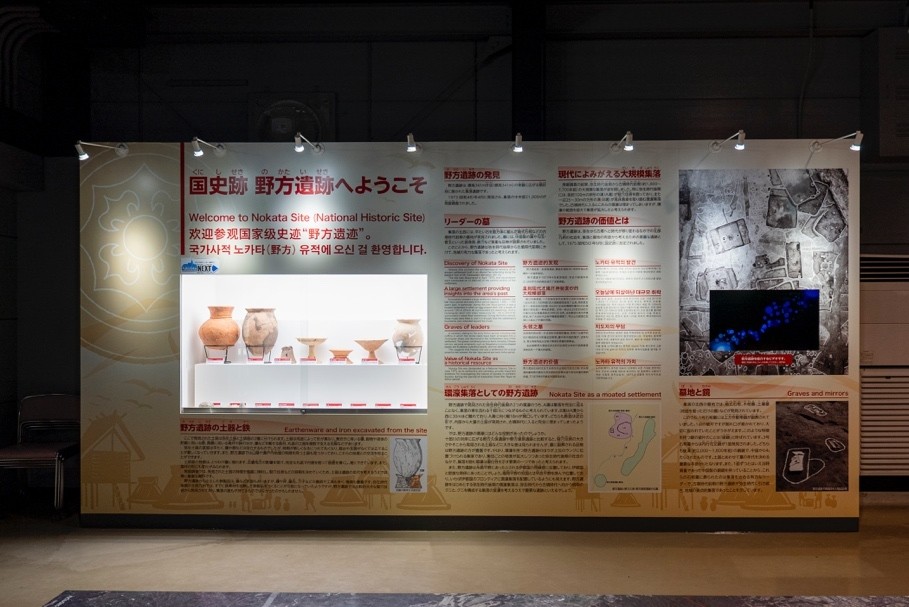
The Nokata Site is the remains of a large-scale settlement that flourished from the late Yayoi period to the early Kofun period, around 1,700 to 1,800 years ago.
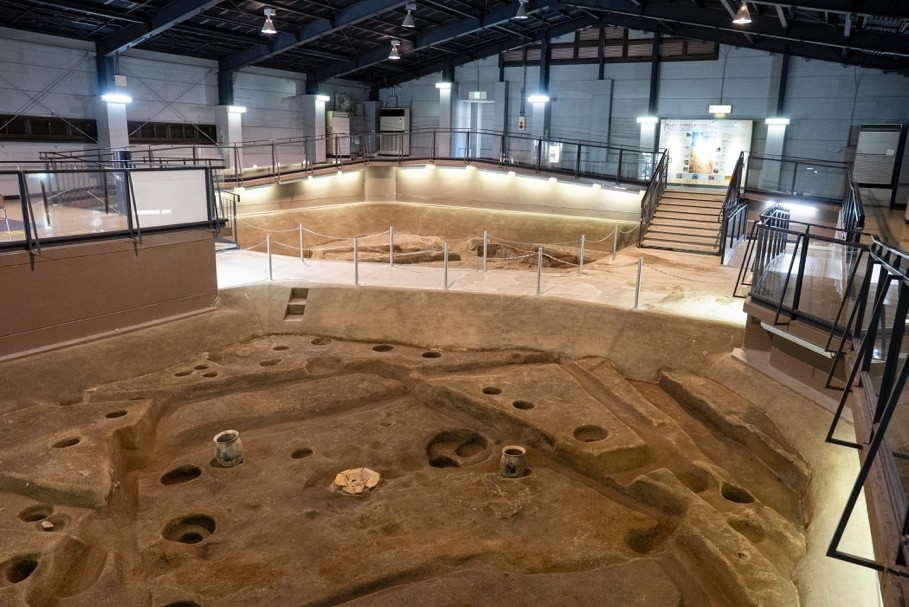
Surveys have revealed that during the Yayoi period, the settlement had two circular moats of different sizes. Within these, around ten pit dwellings were arranged in a row, each occupying a square plot measuring 25 to 30 meters and featuring an entrance on the eastern side. Raised-floor storehouses were also identified, suggesting that grains and other provisions were systematically stored and managed.
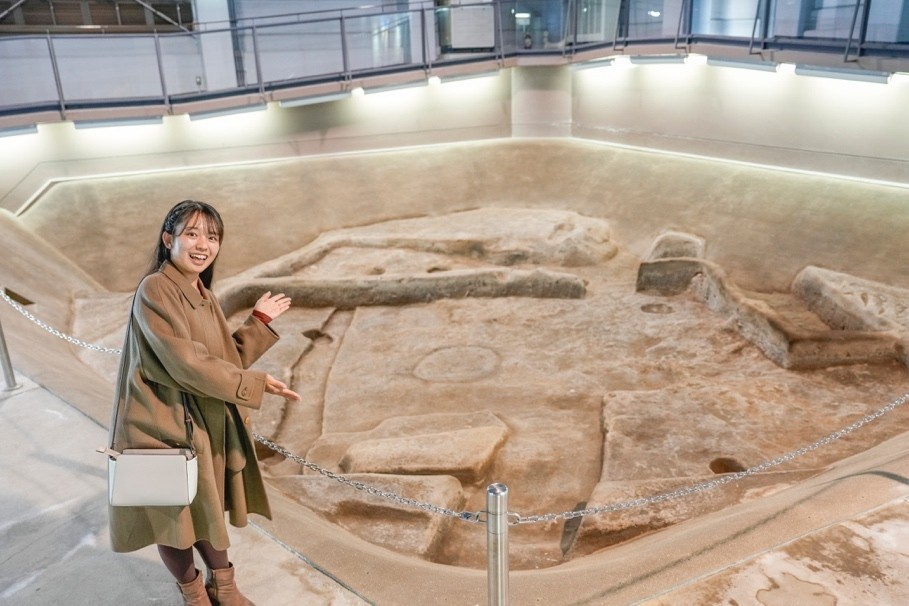
By the early Kofun period, the circular moats had been filled in and the settlement expanded further. Although only a portion of the site has been excavated so far, it has been confirmed that approximately 100 pit dwellings were built over a relatively short span of just over a century. It’s fascinating to imagine so many people living here in ancient times.
A cemetery was established on the outskirts of the settlement, where both stone and wooden coffin graves have been discovered. Artifacts unearthed from these graves include personal accessories like Chinese mirrors (mirror with animal design, mirror with lined bow pattern), iron swords, and tubular and glass beads. These findings suggest that the individuals buried here were powerful leaders who governed the settlement.
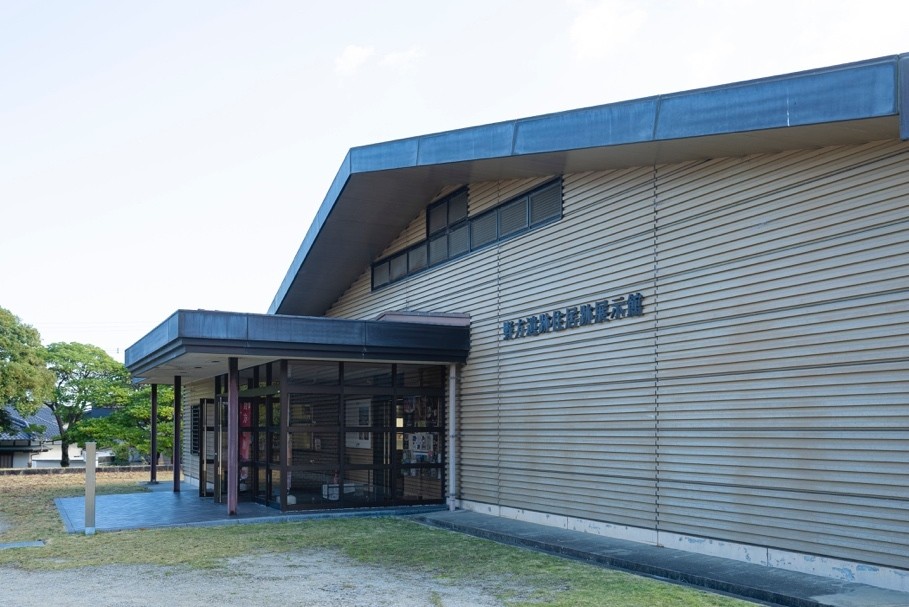
Based on these discoveries, the Nokata Site was designated a National Historic Site in 1975. Today, the exhibition hall preserves and displays the remains of dwellings from both the Yayoi and Kofun periods exactly as they were found during excavation. Even if you’re familiar with pit dwellings, seeing how they are uncovered offers a new perspective. Since the exhibits are indoors, the site can be enjoyed even on rainy days—making it a perfect stop for those looking to explore Fukuoka’s history in greater depth.
◎Nokata Site
■Address:
5-11-25 Nokata, Nishi Ward, Fukuoka City (Nokata Ruins Dwelling Ruins Exhibition Hall)
■Access:
Right next to the Nokata Iseki-mae stop of Nishitetsu Bus
■Hours:
9:00 AM – 5:00 PM (Last admission at 4:30 PM)
■Closed:
Mondays (or the following weekday if Monday is a national holiday); Year-end and New Year holidays (Dec 29 – Jan 3)
■Phone:
092-812-3710
Take in Present-Day Fukuoka with Panoramic Views
[Aburayama Katae Observatory]
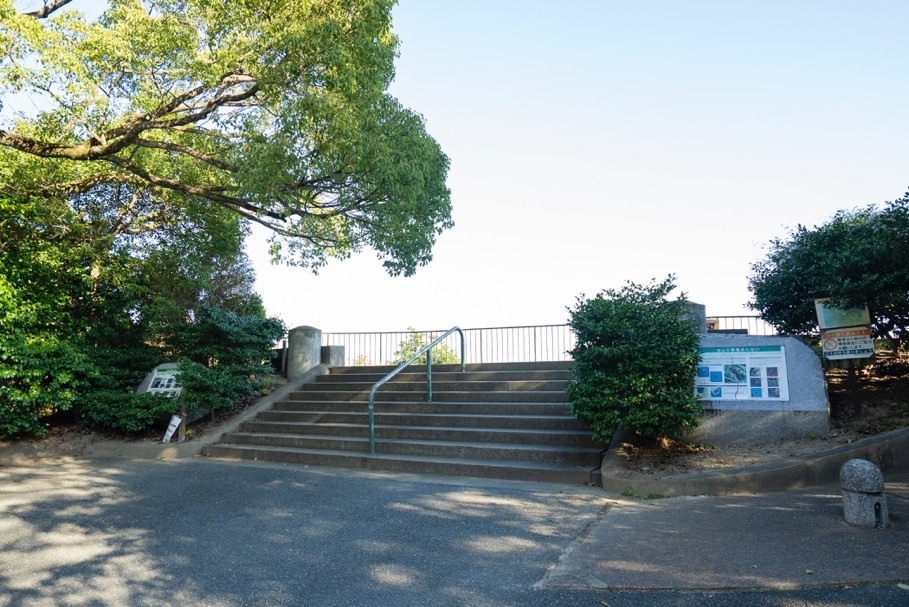
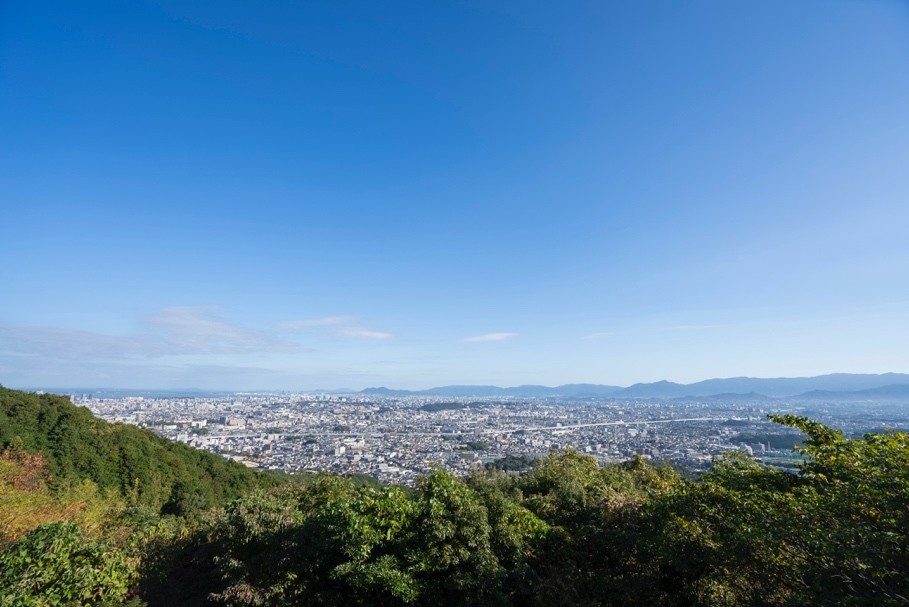
To wrap up your journey, head to the Aburayama Katae Observatory for sweeping panoramic views of Fukuoka City.
Located partway up Mt. Aburayama, this scenic viewpoint at an elevation of 597 meters offers a breathtaking vista of the city of Fukuoka. From here, you can sense the passage of time spanning over 2,000 years from the Yayoi period to the present day, a truly moving experience.
Near Katae Observatory you’ll find ABURAYAMA FUKUOKA, where you can enjoy activities such as camping, outdoor adventure courses, and barbecues—making it an ideal spot to relax and unwind in nature.
◎Aburayama Katae Observatory
■Address:
Katae, Jonan Ward, Fukuoka City, Fukuoka Prefecture
■Access:
About a 3-minute drive from the Aburayama Danchi stop of Nishitetsu Bus (parking and restrooms available)
■Phone:
092-711-4984 (Local Tourism Promotion Section of Fukuoka City)
All of the sites introduced here are invaluable for understanding Japan’s Yayoi period. While many mysteries of this era remain, clues to uncovering them may still lie buried beneath the ground across Fukuoka City. Why not visit these sites and let your imagination wander back to the lives of the people who lived here during the Yayoi period?
◎List of visited spots
・Itazuke Ruins
・Kanenokuma ruins
・Yoshitake-Takagi Ruins(Yayoi no Kaze Park)
・Nokata Site
・Aburayama Katae Observatory