Fukuoka Hatsumode 2026: 12 Shrines to Visit for Good Luck & New Year Blessings
- Date
Share


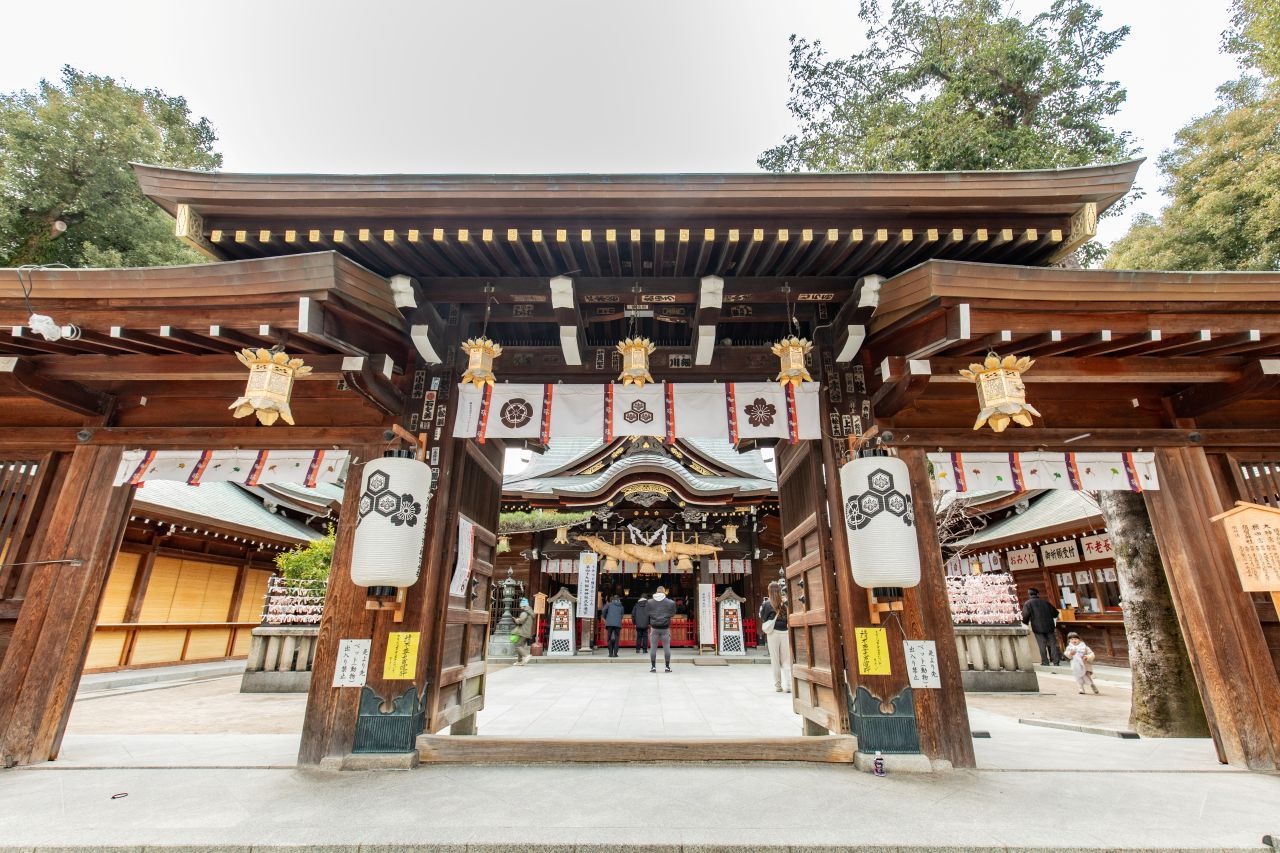
In Fukuoka did you know that it is customary to visit three shrines during the New Year Holidays?
The practice of visiting three shrines to welcome the new year with hopes for happiness and peace is a custom deeply ingrained not only in Fukuoka, but also throughout Kyushu and the Chukoku region.
In Fukuoka, many visit Hakozaki Shrine to ward off evil spirits and pray for success in business, Kushida Shrine is famous for being the main tutelary shrine of Hakata, and for purging evil Wakahachimangu Shrine is often visited. All three are very popular New Year Shrine visit destinations! Other candidates include the shrine of the god of learning, Dazaifu Tenmangu Shrine, which is popular with families and students preparing to take their exams.
Visiting three shrines might be just the way to power-up your luck in time for the new year! Of course, the charms and fortunes that you can find at these shrines are also great perks. Without further ado, here is a list of shrines you can visit!
Contents
Kushida Shrine

The tutelary shrine of Hakata, “O-Kushida-san” is the affectionate name bestowed upon this Shinto shrine by the people of Hakata. Originally built in 757 AD, it is the shrine with the oldest history in Hakata.
Famed as the location where the renowned Hakata Gion Yamakasa Festival is venerated, on the shrine precincts there is even a 13-meter-tall yamakasa float that can be viewed almost year-round, except for June when the festival takes place.

On the ceiling of the romon gate that leads to the shrine there is a zodiac painted on the roof with an arrow that is adjusted on New Year’s Eve to reflect the lucky direction for that year.
Kushida Shrine
Address: 1-41 Kamikawabatamachi, Hakata-ku, Fukuoka City
Hakozaki Shrine

With the patriotic words “Defeat to enemy countries” inscribed, the meaning has come to symbolize success in competition, making it a popular place for the two major sports teams in Fukuoka, the Fukuoka Softbank Hawks and Avispa Fukuoka, to visit.


The main hall, romon gate, and torii gates are all regarded as important cultural artefacts, and the spirit of Japanese mythology and history can be felt throughout the shrine. Many come to pray for victory in contests and competitions, making this a beloved and respected shrine by visitors.
Hakozaki Shrine
Address: 1-22-1 Hakozaki, Higashi-ku, Fukuoka City
Kashii Shrine

Enshrined in Kashii Shrine are the 14th Emperor of Japan, Emperor Chuai and his wife Empress Jingu. As a result, the shrine is today regarded as having a deep connection with married couples.

Traditionally regarded as a national shrine of major grade, even today the shrine is visited by imperial envoys who attend important ceremonies here. The main shrine hall is renowned for its Kashii style of construction and is a nationally designated cultural asset.
Kashii Shrine
Address: 4-16-1 Kashii, Higashi-ku, Fukuoka City
Toka Ebisu Shrine

Toka Ebisu Shrine is located in Yoshizuka Higashi Park, Hakata Ward, Fukuoka City. Legend has it that over four hundred years ago, members of the Takeuchi family of Hakata found two statues of Ebisu while walking along the shore on their way back from visiting Kashii Shrine and Hakozaki Shrine. They built a shrine to enshrine them, which is said to be the origin of this shrine.
The deities enshrined here are Ebisu, also known as Sarutahiko-no-Okami, and Okuninushi, also known as Okuninushi-no-Okami.


The Ten-Day Ebisu Shrine New Year Festival, held annually from January 8th to 11th, is always bustling with excitement!
Worshippers flock to pray for prosperous business and family fortune, while over 400 vendors line the approach to the shrine.
Toka Ebisu Shrine
Address: 7-1 Higashi Park, Hakata Ward, Fukuoka City
Sumiyoshi Shrine

Sumiyoshi Shrine is located in the Hakata Ward, famous for being the place where the three gods of Sumiyoshi are enshrined. For this reason, it has been used to ward off disaster at sea and for protection since ancient times.
Said to be the origin of nearly 2,000 Sumiyoshi Shrines located throughout Japan, prayer and worship at this shrine primarily focuses on bringing in luck, warding off disaster, safe seafaring, and the protection of ships among other things. The main hall is a designated nationally important cultural property, and the bronze sword located within is a prefectural cultural property.


Safe passage at sea, banishing bad luck and bringing in the good, and even connections to sumo wrestling and the performing arts are said to have connections to this shrine, an unexpected oasis of green in the middle of one of Fukuoka’s busiest districts. A moment of peace and tranquility will put your mind at ease.
Sumiyoshi Shrine
Address: 3-1-51 Sumiyoshi, Hakata-ku, Fukuoka City
Waka Hachimangu Shrine

Waka Hachimangu Shrine’s deity is most often invoked to banish bad luck, and for this reason has received several names in Japanese that reflect this such as ‘Yakuhachiman’ and ‘Yakuyokehachiman’ (with yaku- in either case referring to the evil that is banished). During New Year’s Eve, deep into the night many come to pray to be cleansed of any negative energy that may remain from the previous year.

Unlucky years are divided into the pre-unlucky year, the main unlucky year, and the post-unlucky year. It is said that if you visit the shrine for these three consecutive years, you will be rid of misfortune the following year.
Waka Hachimangu Shrine
Address: 1-29-47 Hakataeki-mae, Hakata-ku, Fukuoka City
Torikai Hachimangu Shrine

Torikai Hachimangu Shrine is said to have connections with marriage, convalescence from illness, victory in competitions, traditional performing arts, and the removal of bad luck.
 |
 |
 |
 |

In 2022, the main hall and worshipping halls were both rebuilt after 205 years, with the new thatched roofing and giant stones being big highlights. These modern touchups lend an atmosphere of refinement to the shrine.
Torikai Hachimangu Shrine
Address: 2-1-17, Imagawa, Chuo-ku, Fukuoka City
Kego Shrine
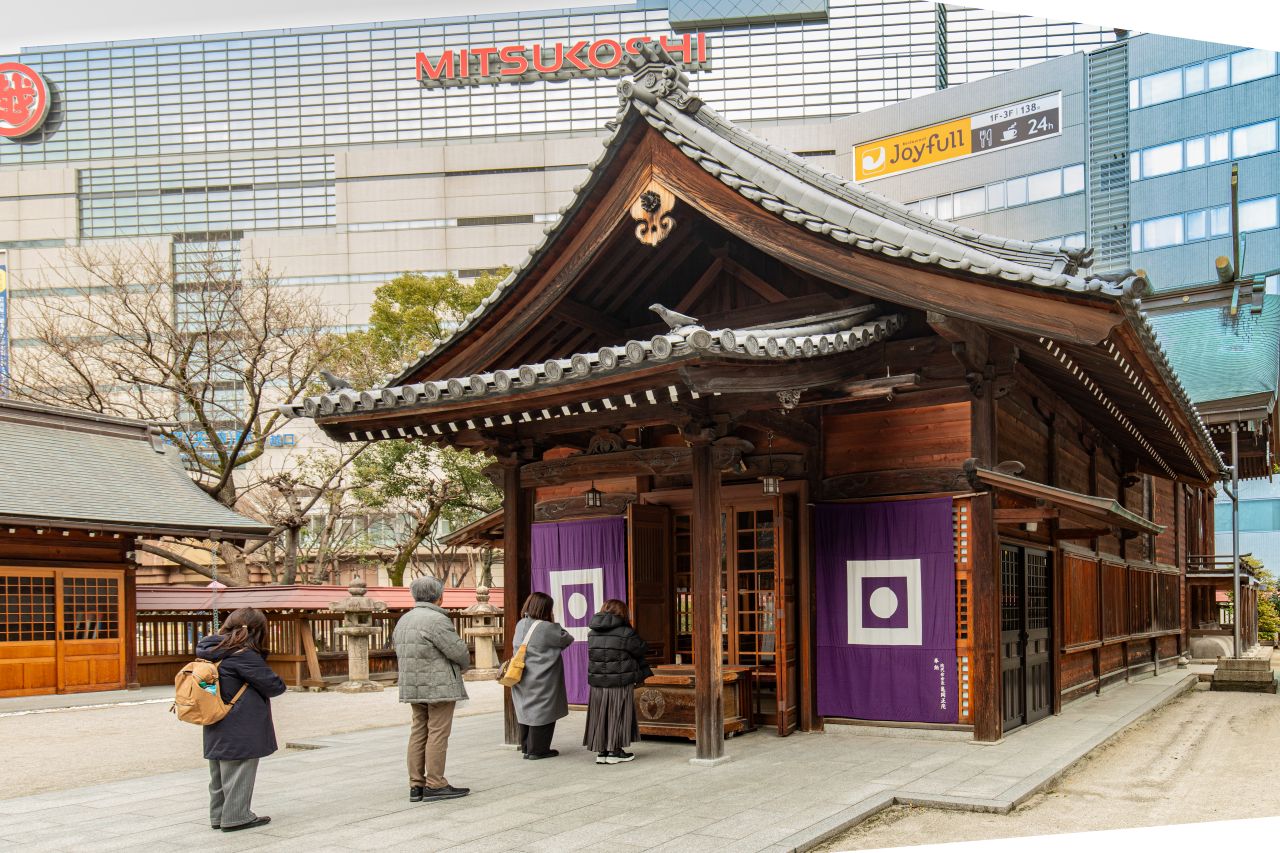
The name Kego originates from the Kego-no-sho, a defensive facility of the Dazaifu government office established near the Korokan. It is also a shrine deeply revered by successive feudal lords as the guardian deity of Fukuoka Castle and the birth deity of Kuroda Tadayuki, the second lord of the Fukuoka domain.


Easily accessed in the Tenjin downtown area, the neighboring Kego Park is a popular place for locals to relax.
Kego Shrine
Address: 2-2-20, Tenjin, Chuo-ku, Fukuoka City
Atago Shrine

The oldest shrine in Fukuoka, it also happens to be one of the three great Atago shrines in Japan.
Banishment of evil, good luck, success in studies, safety at home, success in business, marriage, and protection from fires are just a few of the benefits of praying here. It is said to be effective for promoting abstinence from alcohol and smoking, attracting many visitors from both within and outside the prefecture. It is also very popular as a place for viewing the first sunrise of the New Year, and the sakura blossoms that bloom in spring.


Standing 68 meters above sea level, the shrine sits atop Mt. Atago, and from the summit one can take in the view of both the city skyline as well as 2,000 sakura trees.
Atago Shrine
Address: 2-7-1 Atago, Nishi-ku, Fukuoka City
Shikaumi Shrine

Located on top of a small hill next to the coast, Shikaumi Shrine watches over and protects Shikanoshima Island. Often called the head shrine for all shrines of the sea in Japan, it is considered a strategic location for maritime transportation and the main protective shrine for the Bay of Hakata.


When visiting the shrine, purify your body with the sacred sand known as Oshioi. Oshioi is piled at the base of the stone steps leading to the shrine grounds and at the worship hall.
Shikaumi Shrine
Address: 877 Shikanoshima, Higashi-ku, Fukuoka City
Fukuoka Gokoku Shrine

Located next to Ohori Park and the ruins of Fukuoka Castle, this lush shrine exists to pray for the continued peace and stability of Japan.


On the side adjacent to Ohori Park, the large wooden torii gate stands at 13 meters and is among the largest of its kind in Japan. Apart from the peace of Japan, the shrine is also associated with the safety of one’s household and traffic safety.
Fukuoka Gokoku Shrine
Address: 1-1-1 Ropponmatsu, Chuo-ku, Fukuoka City
Dazaifu Tenmangu Shrine

Associated with the Japanese god of learning Sugawara Michizane, now known as Tenjin-sama, students and test takers regularly come here to offer prayers throughout the year.
The shrine offers many souvenirs with historical significance, such as “Uso Mochi”—a rice cake that comes with a doll of the bullfinch bird, associated with the deity Tenjin, wrapped in gyuhi mochi infused with shiso—and “Oni-gawara Monaka,” a wafer sandwich modeled after the “oni-gawara” (demon-faced roof tiles) excavated from the ruins of the Dazaifu Government Office.
※Note: Dazaifu Tenmangu Shrine is undertaking a major renovation of its Important Cultural Property, the Main Hall, starting in May 2023. This project, the first in 124 years, will take approximately three years to complete. For details, please see here.
Dazaifu Tenmangu Shrine
Address: 4-7-1 Zaifu, Dazaifu City